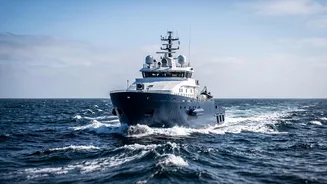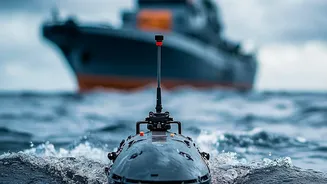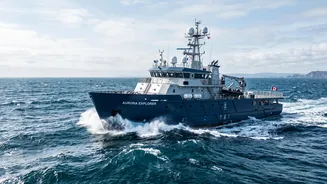







The dream of autonomous ships crisscrossing our oceans promises a revolution in trade, but it comes with a monumental challenge: how do you ensure a 300-metre-long vessel can navigate safely on its own? IIT Madras has unveiled an answer.
The High Stakes of Autonomous Seas
Self-driving ships
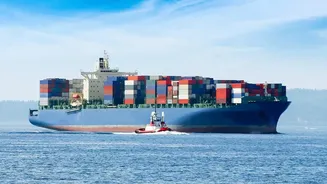
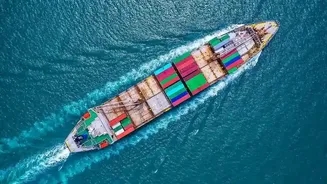
represent the next frontier for the global shipping industry, which handles over 80% of world trade. The potential benefits are enormous: optimised routes, reduced fuel consumption, and a significant drop in accidents, as human error is currently blamed for about 75% of maritime incidents. Fully autonomous vessels could operate continuously, be built without crew accommodations, and ultimately lower the cost of transporting goods across the planet. However, before these crewless ships can become a reality, their complex navigation systems must be proven to be completely safe. Testing these artificial intelligence (AI) algorithms in the real world is not only incredibly expensive and complex but also extremely hazardous. One wrong move by an autonomous system during a sea trial could lead to a catastrophic collision or environmental disaster, making physical testing a major bottleneck for innovation.
Enter SeaNav: A Digital Ocean in a Lab
Researchers at the Indian Institute of Technology (IIT) Madras have developed a groundbreaking solution called 'SeaNav'. It is a real-time digital twin platform designed specifically to test, validate, and train autonomous maritime navigation systems in a completely virtual environment. Developed by the Department of Ocean Engineering, SeaNav creates a high-fidelity simulation where everything from ocean waves and vessel movements to sensor data and surrounding ship traffic can be replicated with incredible accuracy. This allows developers to put their autonomous navigation AI through its paces in thousands of scenarios without a single ship ever leaving port. According to Dr. Suresh Rajendran, an Associate Professor at the department, SeaNav combines digital twins, AI, sensor fusion, and virtual reality to create a safe and efficient training ground for both autonomous systems and human operators.
How the Virtual Proving Ground Works
Built on the powerful Unity3D engine, SeaNav essentially creates a digital replica of the maritime world. Researchers can simulate a specific vessel, such as the 320-meter benchmark tanker they used for calibration, and subject its virtual counterpart to a barrage of tests. They can create complex traffic situations, simulate rough seas and extreme weather, and even mimic sensor failures to see how the navigation system responds under pressure. The platform allows for the verification and validation (V&V) that is crucial for regulatory approval and certification. This virtual testing is essential because traditional methods are inadequate for the sheer variety of real-world scenarios an autonomous ship might face. By running these simulations, SeaNav can confirm the system's reliability in a controlled, risk-free setting, dramatically accelerating the development cycle.
A Boost for India's Maritime Vision
The development of SeaNav is a significant step for India's ambitions in the maritime sector. The technology aligns perfectly with national initiatives like the 'Sagarmala Programme' and 'Maritime India Vision 2030', which both emphasize the adoption of digital technologies and smart port solutions. Furthermore, this innovation is part of a larger ecosystem of maritime research at IIT Madras, which includes the National Technology Centre for Ports, Waterways and Coasts (NTCPWC) and work on autonomous surface vehicles. The institution has a history of developing indigenous maritime technology, and SeaNav positions India as a key player in the global race towards autonomous shipping. The platform is expected to strengthen safety at major Indian ports like Chennai, Mumbai, and Kochi by aiding the development of AI-assisted navigation to reduce collisions and groundings.
Beyond Commercial Shipping
While the primary focus of SeaNav is on making commercial shipping safer and more efficient, its applications extend much further. The platform's ability to simulate multiple vessels at once makes it a valuable tool for coastal surveillance, coordinated search-and rescue operations, and even maritime defence strategies. By enabling smarter navigation, the technology can also lead to reduced fuel consumption, lower carbon emissions, and a minimised risk of environmental accidents like oil spills. As the world moves towards greater automation, tools like SeaNav are not just enablers of new technology; they are essential guardians of safety and efficiency on the open seas.