



The New Transparency Mandate
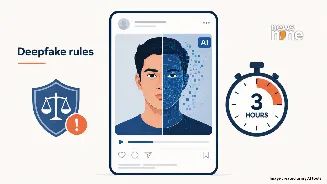
Both India and the European Union have recently rolled out significant new regulations aimed at making the digital world more transparent. As of early August 2026, new rules require creators and platforms to clearly label content that has been generated
or significantly manipulated by artificial intelligence. In India, amendments to the IT Rules of 2021 now mandate that AI-generated content must carry clear labels and traceable metadata. This move is designed to help users easily identify synthetic material. Similarly, the EU's AI Act, specifically Article 50 which took effect on August 2, 2026, imposes transparency obligations on any AI-generated videos, audio, and images that could be mistaken for reality. This applies not just to companies in the EU, but to anyone whose AI content is seen by users within the bloc. The core idea behind both sets of regulations is to tackle the spread of disinformation and deepfakes by giving people a crucial piece of context about what they are consuming.
How Labels Are Meant to Help
On the surface, the solution seems straightforward. A simple “AI-generated” tag should act as a clear signal, prompting viewers to apply an extra layer of scrutiny. The goal is to prevent deception. For instance, if a photorealistic advertisement shows a product in a situation that never occurred, or a news report uses a synthetic voiceover, a label becomes mandatory. This is meant to empower users. By knowing the origin of a piece of media, the theory goes, we can make more informed judgments about its credibility. Technical standards like the C2PA (Coalition for Content Provenance and Authenticity) are being adopted by major tech companies to embed this information directly into files, creating a sort of digital birth certificate that tracks a file's origin and edits. In an ideal world, this system would create a clear distinction, making source verification as simple as checking for a label.
The Practical Limits of Labels
Unfortunately, labels are not a silver bullet. One major issue is what some researchers call the “liar's dividend.” Bad actors who create malicious deepfakes or propaganda were never going to follow the rules anyway. By making labels mandatory for legitimate uses, their absence on unlabelled disinformation might actually make it seem more credible. Studies have shown that users tend to rely heavily on the presence or absence of a label, leading them to trust false, unlabelled content more and doubt true, but labelled, content. Furthermore, research indicates that simply knowing a text is AI-generated doesn't necessarily make it less persuasive. The labels themselves can even have paradoxical effects, sometimes reducing the credibility of true information while boosting the perceived credibility of false claims, a phenomenon dubbed the 'truth-falsity crossover effect'. There is also the question of what gets labelled. Basic edits like colour correction are exempt, but the line for what constitutes a “significant modification” can be blurry.
Source Verification in a Post-Label World
The introduction of AI labels fundamentally changes, but does not eliminate, the need for critical source verification. It shifts the burden. Instead of just asking, “Is this real?” we now have to ask, “What does the label—or lack of one—actually mean in this context?” This new landscape requires a more sophisticated level of digital literacy. We can no longer take labels, or their absence, at face value. Verification now involves considering the publisher's reputation, looking for corroboration from trusted sources, and using reverse image searches or other tools to check for manipulation, regardless of what a label says. The new rules in India, for example, place a heavy burden on platforms to take down illegal content within just three hours, but this focuses on illegal content, not just all synthetic content. The case for source verification hasn't disappeared; it has become more complex. The label is just one data point among many, and it's one that can be missing, misleading, or misinterpreted.