




First Priority: Fly the Plane
In any emergency, pilots live by a simple, powerful mantra: "Aviate, Navigate, Communicate." This principle dictates the order of operations, and the first step is always to aviate—fly the aircraft. The pilot flying (PF) takes firm control, focusing entirely
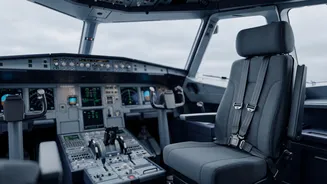
on maintaining a stable flight path, including the plane's attitude, altitude, and airspeed. This might seem obvious, but history has shown that crews can become so distracted by a problem that they forget their primary job. To prevent this, one pilot's sole responsibility is to fly the plane, ignoring the specific issue at hand until the aircraft is stable. The other pilot, known as the pilot monitoring (PM), then begins to work the problem.
The Lifesaving Backup Instruments
Modern airliners feature sophisticated "glass cockpits" with large digital displays. If these primary systems fail, pilots immediately shift their focus to a separate, independent set of standby instruments. These are designed to work even with a total electrical failure, often powered by a dedicated backup battery. The Integrated Standby Instrument System (ISIS) combines critical data—attitude (the plane's orientation relative to the horizon), airspeed, and altitude—into a single compact display. These backup systems are a lifeline, providing the essential information needed to fly the aircraft manually and safely. Pilots train extensively for these "partial panel" scenarios, where they must rely solely on these basic gauges to control the plane.
Navigating to Safety
Once the aircraft is under stable control ("aviate"), the next step is to "navigate." The crew determines their position and plots a safe course of action. This might involve diverting to the nearest suitable airport. Pilots pre-plan for such events, always maintaining awareness of potential alternate airports along their route. Even with primary navigation systems out, pilots can use standby equipment or request assistance from Air Traffic Control (ATC), which can provide vectors (headings) to guide the aircraft. The goal is to get the aircraft on a clear path to a safe landing, away from terrain or bad weather.
Communicating with the Ground
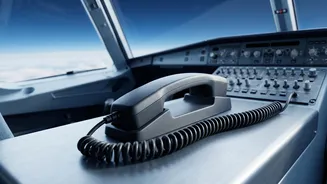
Only after the aircraft is stable and a navigation plan is in place does the crew focus on "communicate." The pilot monitoring will contact ATC, declare an urgency or emergency, and explain the nature of the problem. This communication is critical for getting the support needed on the ground, such as priority landing, emergency services on standby, and guidance for the approach. The crew also communicates with the cabin, with the flight attendants preparing passengers for a potential diversion or emergency landing. Clear, calm communication ensures everyone on the ground and in the air is coordinated.
Crew Coordination and Checklists
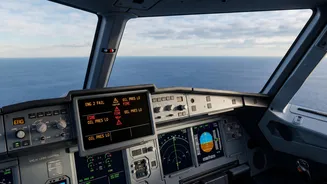
A cockpit disruption is managed through disciplined teamwork. The pilot flying maintains control while the pilot monitoring diagnoses the issue using checklists. Modern aircraft have electronic checklists that can pop up automatically when a fault is detected. The PM systematically works through these procedures, which are designed to either rectify the problem (like resetting a generator) or secure the failed system to prevent further issues. This division of labour is crucial; it prevents the flying pilot from getting distracted while ensuring the problem is handled methodically. This entire process is drilled repeatedly in flight simulators, building the muscle memory and calm decision-making needed for a real-world crisis.