

Jaipur has earned a nod from National Geographic as a top global destination, and it's easy to see why. The Pink City, celebrating its 300th anniversary in 2027, is a treasure trove of history, defined by the majestic forts and palaces that dominate its landscape.
Amber Fort: The Hilltop Citadel
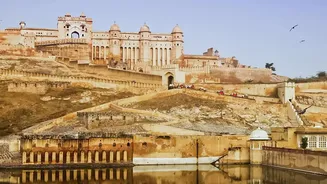
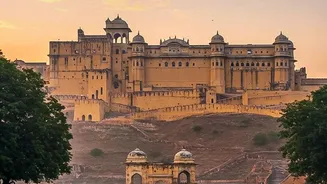
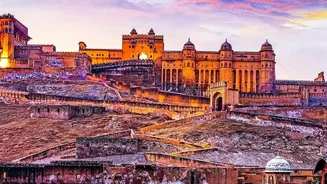
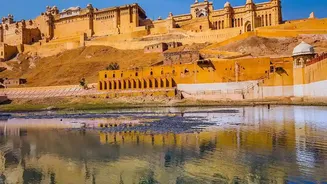
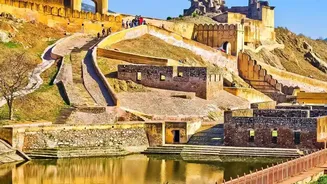
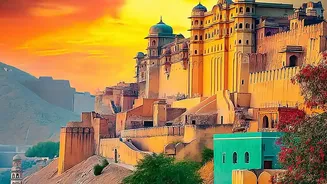
Often the first stop for visitors, Amber Fort (also called Amer Fort) is a breathtaking blend of Hindu and Mughal architectural styles perched atop a hill. Commissioned in 1592 by Raja Man Singh, its sprawling complex of courtyards, palaces, and gardens is built from striking red and yellow sandstone and white marble. The climb to the entrance reveals panoramic views of Maota Lake and the surrounding Aravalli Hills. Inside, the Diwan-i-Aam (Hall of Public Audience) impresses with its many pillars, but the true jewel is the Sheesh Mahal, or Mirror Palace. This mesmerising chamber is covered in intricate mirror mosaics that glitter like thousands of stars when lit, creating an unforgettable spectacle.
Hawa Mahal: The Palace of Winds
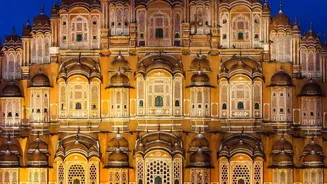
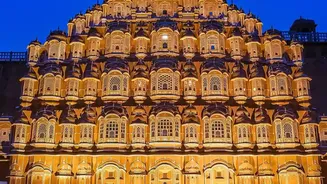
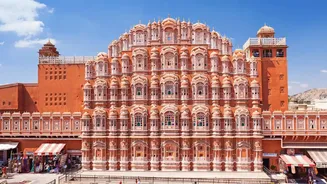
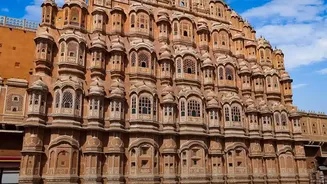
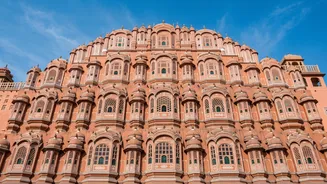
No image of Jaipur is more iconic than the five-storey, honeycomb facade of Hawa Mahal. Built in 1799 by Maharaja Sawai Pratap Singh, this 'Palace of Winds' was not a residence but an elaborate screen. Its 953 intricately latticed windows, or 'jharokhas', were designed to allow the royal women to observe street festivals and daily life unseen, adhering to the strict 'purdah' system. This ingenious design also allows cool breezes to flow through the structure, making it a masterpiece of natural ventilation. Crafted from the city's signature red and pink sandstone, its unique architecture is said to be inspired by the crown of the Hindu deity Krishna.
City Palace: A Living Royal Residence
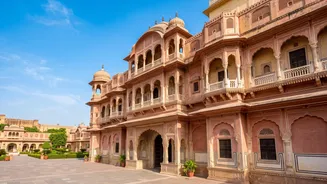
Located in the heart of the old city, the City Palace is a testament to Jaipur's enduring royal legacy. Founded by Maharaja Sawai Jai Singh II in the 18th century, the sprawling complex is still home to Jaipur's royal family today. Its architecture is a stunning fusion of Rajput, Mughal, and even European styles, visible in its grand courtyards, gardens, and pavilions. Key highlights include the Mubarak Mahal, which now houses a museum of royal costumes, and the seven-storey Chandra Mahal. The palace provides a fascinating glimpse into the opulent lifestyle and rich history of the Maharajas of Jaipur.
Nahargarh Fort: The Sunset Watchtower
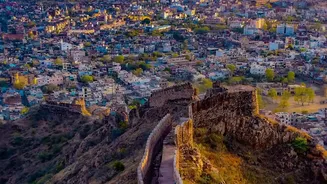
For the most spectacular panoramic views of Jaipur, a trip to Nahargarh Fort is essential. Perched high in the Aravalli hills, its name translates to 'abode of tigers', and it once formed a formidable defensive ring for the city along with Amber and Jaigarh forts. While its walls are impressive, Nahargarh is most famous as a sunset destination. As the sun goes down, the entire Pink City unfolds below, its grid-like plan becoming clear as the city lights begin to twinkle. It offers a moment of quiet reflection and a true sense of Jaipur's scale and historic planning.
Jaigarh Fort: The Fortress of Victory
Overlooking the Amber Fort is the rugged and imposing Jaigarh Fort, a purely military structure built to protect the palace complex below. Connected to Amber by subterranean passages, it was a critical part of the city's defence. Jaigarh is less about delicate palaces and more about martial might. Its main claim to fame is housing the Jaivana, once the world's largest cannon on wheels, a testament to the engineering prowess of the time. A visit here offers a stark contrast to the opulence of Amber, highlighting the strategic brilliance that protected the Kachwaha Rajput dynasty for centuries.