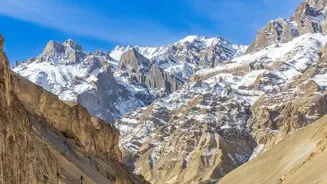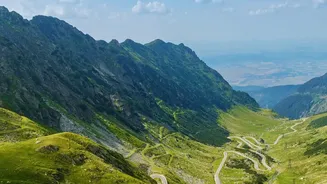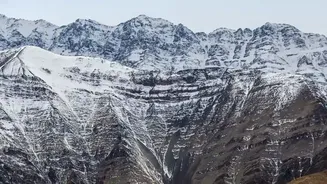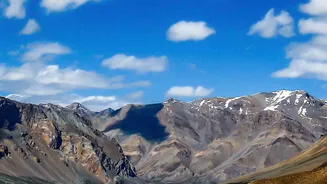





Prioritise Acclimatisation Above All
Acute Mountain Sickness (AMS) is a serious risk in Spiti, where you'll consistently be above 3,500 metres. The golden rule is to ascend gradually. If possible, choose the route from Shimla to Kaza, as it provides a slower, safer, stair-step increase in altitude
over several days. The Manali-Kaza route involves a rapid ascent over high passes like Kunzum La (around 4,551 metres), which significantly increases AMS risk for the unacclimatised. Regardless of your route, plan to spend at least two nights in Kaza (3,800 metres) to let your body adjust before venturing to higher villages like Komic or Hikkim. Listen to your body: a persistent headache, nausea, and unusual fatigue are warning signs. If symptoms appear, do not ascend further. Rest, hydrate, and if they worsen, descend to a lower altitude immediately.
Monitor Road and Pass Status Daily
Autumn is a transitional season. While September often offers stable conditions, October sees a sharp drop in temperature and an increased chance of snowfall, especially on high passes. Kunzum Pass, the gateway from Spiti to Lahaul, typically closes for the winter sometime from mid-October onwards. A sudden spell of snow can close the pass without much warning. Before starting your journey each day, check the latest road status with local taxi unions, your hotel in Kaza, or official Border Roads Organisation (BRO) updates. Do not rely on a plan made weeks in advance. Always have buffer days in your itinerary to account for potential delays caused by road closures. Driving at night is extremely hazardous and should be avoided entirely.
Pack for Four Seasons in One Day
Layering is the only effective clothing strategy for Spiti in autumn. Daytime sun can feel pleasant, but temperatures can plummet below freezing the moment the sun sets. Your packing list is non-negotiable and must include a base layer of thermals, a mid-layer of fleece, and a windproof, waterproof outer jacket. Heavy woollen socks, a warm beanie, gloves, and a scarf or buff are essential to protect against the biting wind at high passes. Sturdy, waterproof trekking shoes are a must, as you will be walking on uneven, rocky terrain. Sunglasses with UV protection are crucial, as the sun's intensity is much higher at altitude.
Prepare Your Vehicle and Yourself
Whether you are driving a car or riding a motorcycle, ensure your vehicle is in top condition. The stretch from Gramphu to Losar via Kunzum Pass is notoriously rough, with unpaved sections and water crossings. A vehicle with high ground clearance is strongly recommended. Carry a basic toolkit, a puncture repair kit, and know how to use them. For bikers, a windproof riding jacket with a thermal liner, and waterproof gloves are vital. For yourself, hydration is key to preventing AMS; aim to drink 3-4 litres of water daily. Carry a thermos to have access to hot water. Eat carbohydrate-rich meals, which your body can process more easily at altitude. Avoid alcohol for the first few days.
Carry Cash and Offline Essentials
Do not rely on digital infrastructure in Spiti. The ATM in Kaza is the only one in the valley and is often out of cash or non-functional. Carry enough cash from Manali or Reckong Peo to last your entire trip. Mobile connectivity is patchy at best; BSNL and Jio have some presence in Kaza and nearby areas, but other networks are mostly absent. Download offline maps (like Google Maps offline) for navigation before you lose signal. Pack a well-stocked medical kit that includes medication for headaches, nausea, and diarrhoea, along with any personal prescriptions. Consider consulting a doctor about carrying Diamox for acclimatisation. A power bank is essential as electricity can be intermittent, especially in smaller villages.