
The Sun’s Violent Temperament
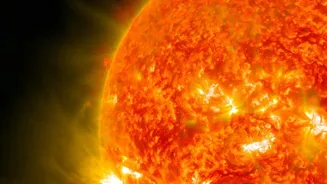
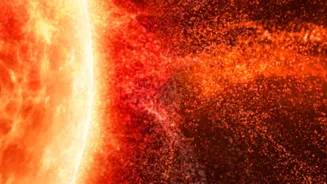
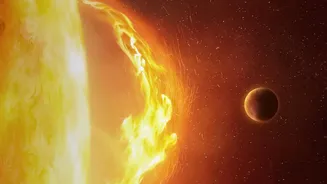
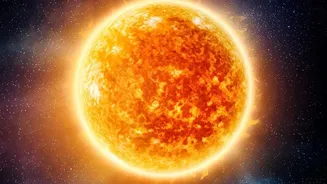
The Sun, the star that makes life on Earth possible, has a volatile side. It periodically unleashes massive bursts of energy and matter known as solar flares and Coronal Mass Ejections (CMEs). These events create what is known as 'space weather'. When
a powerful CME is aimed at Earth, it can trigger a geomagnetic storm, a major disturbance of our planet’s magnetic shield. In our hyper-connected world, this isn't just an astronomical curiosity; it's a direct threat. A severe solar storm could cripple power grids, knock out communication satellites, disrupt GPS navigation, and endanger astronauts in orbit. As our reliance on technology grows, so does our vulnerability to these celestial tantrums, making the ability to predict them more critical than ever.
Aditya-L1: India’s Eye on the Sun
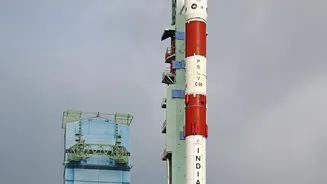
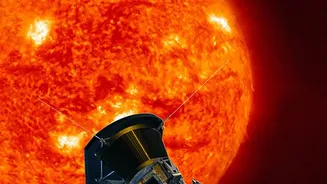
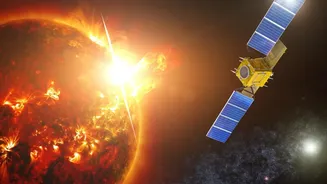
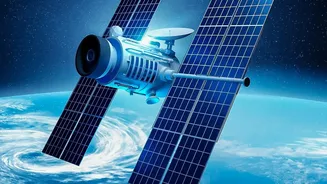
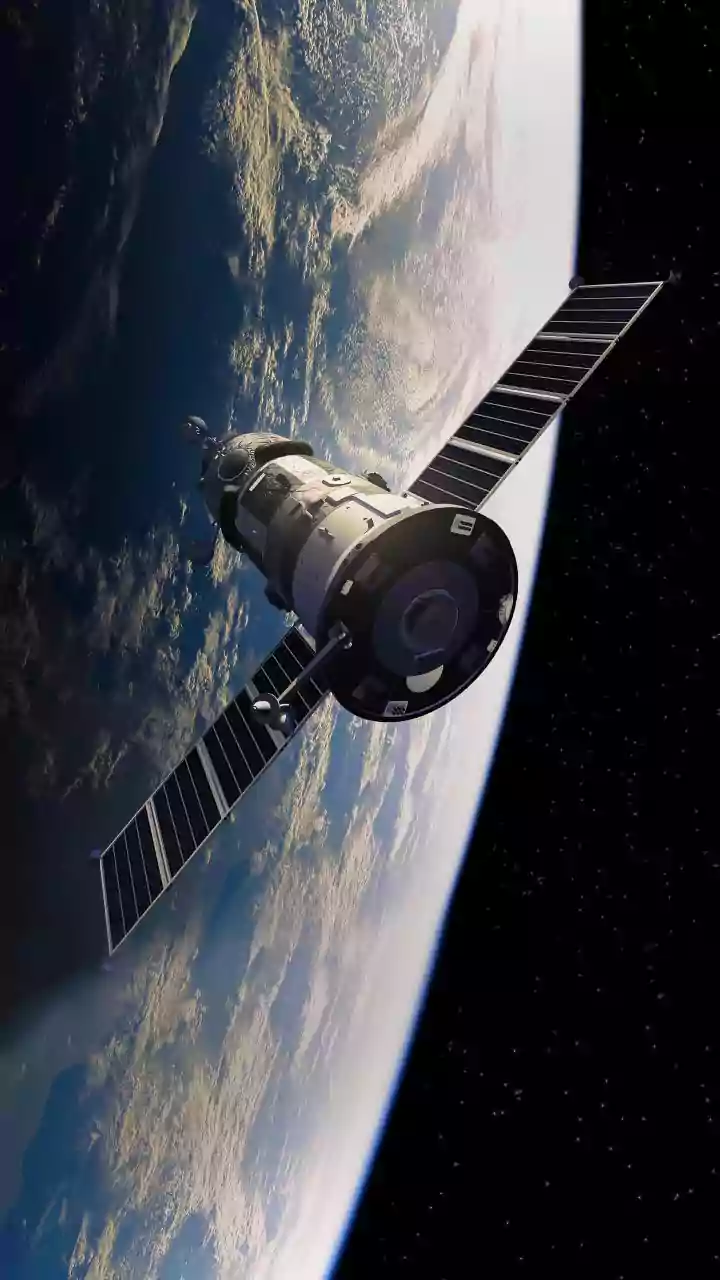
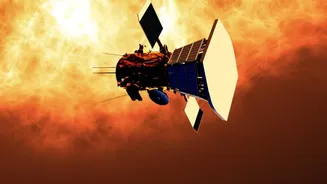
Enter ISRO's Aditya-L1. Launched in September 2023, this state-of-the-art observatory is India's first mission dedicated to studying the Sun. It is strategically positioned at Lagrange Point 1 (L1), a spot 1.5 million kilometres from Earth where the gravitational pulls of the Sun and Earth balance out. This unique vantage point allows Aditya-L1 to have a continuous, uninterrupted view of the Sun, without being blocked by the Earth or Moon. It's like having a permanent weather station in space, constantly monitoring the Sun's activity. Its suite of seven instruments is designed to observe different layers of the Sun, from the photosphere and chromosphere to the outermost corona, providing a comprehensive picture of solar dynamics.
The Breakthrough in Prediction
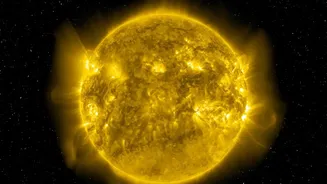
While a single, perfect prediction system isn't ready yet, recent findings from Aditya-L1 represent a significant leap forward. Scientists analyzing the mission's data have identified new patterns in solar activity that act as precursors to major events. One study highlighted how analyzing the turbulent region of a solar storm, identified with Aditya-L1's help, revealed how it severely compressed Earth's magnetic field, providing critical information for assessing the impact on satellites. Another key finding involves detecting tiny energy bursts, almost like tremors, that occur before a major solar flare erupts. By consistently observing these pre-flare signals across multiple events, scientists are building a new model for early warnings. The data from Aditya-L1's instruments, particularly the Solar Ultraviolet Imaging Telescope (SUIT), allows scientists to see the very beginning of a flare in wavelengths that were previously difficult to observe, filling a crucial gap in our knowledge.
Understanding the 'How' and 'Why'
Beyond just 'when' a storm might hit, Aditya-L1 is helping us understand 'how' they evolve. Recent observations of a CME in July 2024 showed how the Sun's magnetic field can deflect the path of the ejected plasma. Knowing this direction of travel is fundamental for accurately predicting if a CME will hit Earth. Furthermore, very recent data published around August 14, 2026, has provided major clues to the long-standing mystery of why the Sun's corona is millions of degrees hotter than its surface. The findings suggest that the constant reconfiguration of the Sun's magnetic fields provides the vast majority of the energy required, a discovery that fundamentally improves models of solar energy transfer and, by extension, space weather.
What This Means for India and the World
The enhanced forecasting ability enabled by Aditya-L1 has tangible benefits. An earlier and more accurate warning of an incoming solar storm—potentially extending the warning time from hours to perhaps even days in the future—gives authorities crucial time to take preventative measures. Power grid operators can prepare their systems, satellite operators can put their spacecraft into a safe mode, and airlines can reroute flights to avoid communication blackouts and radiation risks. This mission is shifting India from being a user of global space weather data to a key producer. The insights from Aditya-L1 not only build a protective shield for India's own critical infrastructure but also contribute invaluable knowledge to the global scientific community, strengthening our collective ability to safeguard our technology-dependent civilization.