
A New Cosmic Record
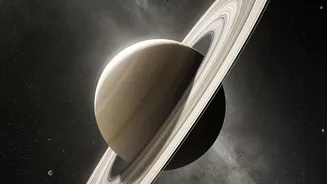
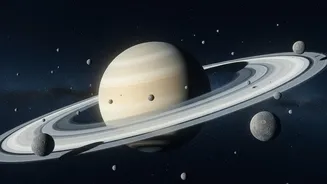
For years, Jupiter held the title for the most moons. But a series of recent discoveries has put Saturn firmly in the lead. Since early 2023, astronomers have been on an incredible run, adding dozens of new moons to Saturn's family. A batch of 62 was
announced in May 2023, followed by a massive addition of 128 in March 2025. More announcements in 2026, including 11 in March and another batch in June, pushed the total to its current high of 293. These discoveries have cemented Saturn's status as a planet with a vast and complex system of natural satellites, ranging from the gigantic Titan, which is larger than Mercury, to tiny moonlets just a few kilometres across.
Hunting for Faint Ghosts
Finding these new moons is a monumental task. They are incredibly small and faint—some are 100 million times fainter than anything visible to the naked eye. Astronomers use powerful ground-based telescopes, like the Canada-France-Hawaii Telescope, to repeatedly survey the sky around Saturn. They use a technique called "shift and stack," where they combine multiple images taken over several hours. This method allows the faint light from a potential moon to build up, making it visible against the dark background of space. It's like taking a long-exposure photograph, but for objects that are moving across the cosmos. The initial sighting, however, is just the first step in a long journey.
The Slow Path to Confirmation
A faint dot of light in an image isn't enough to declare a new moon. The real challenge is proving it. To be confirmed, an object must have a stable orbit around the planet. Astronomers must track the object's movement over months, or more often, years. This requires follow-up observations to plot its trajectory and ensure it's gravitationally bound to Saturn, not just a passing asteroid. Sometimes, these new detections can be linked back to faint objects spotted in archival images from years, or even decades, earlier that couldn't be confirmed at the time. Only after its full orbit is determined and it's clear the object isn't a previously known moon does it get a provisional designation from the International Astronomical Union's (IAU) Minor Planet Center, the official clearinghouse for these discoveries.
What Counts as a Moon?
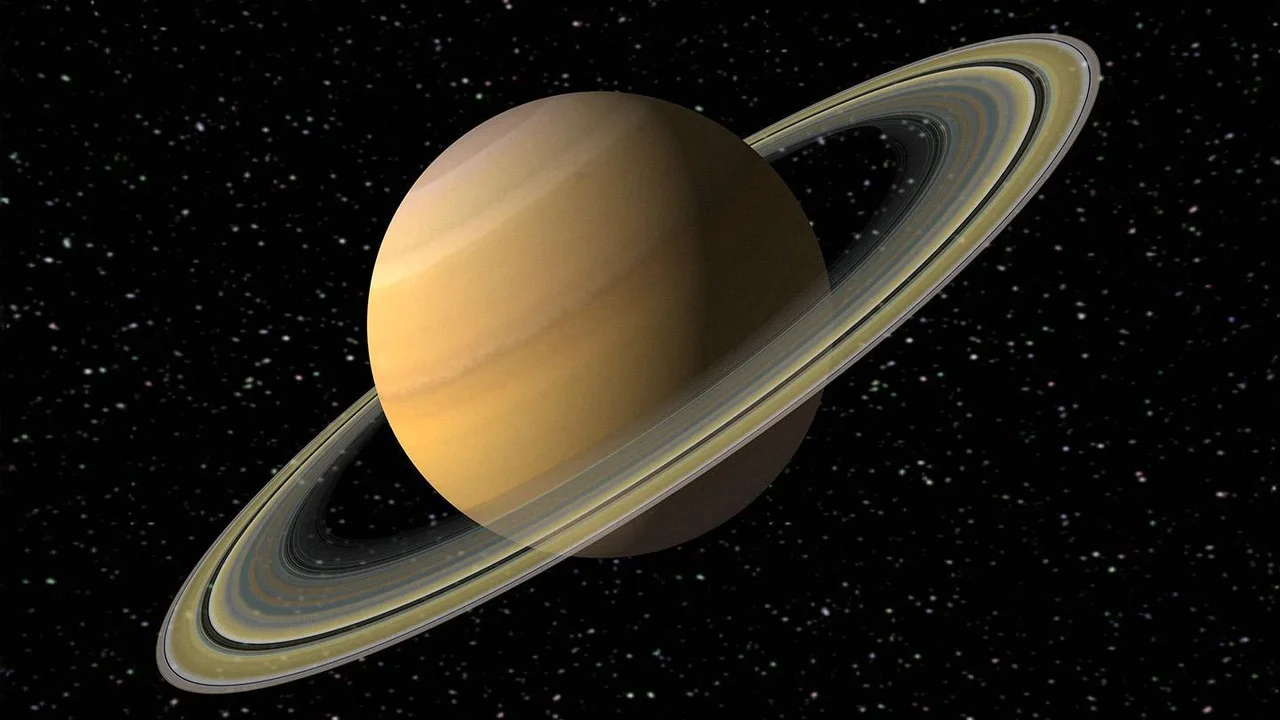
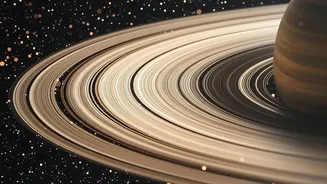
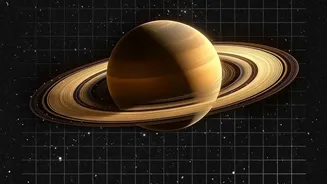
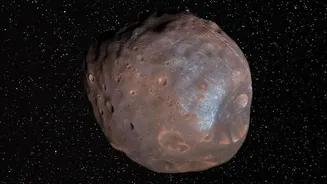
There is no strict size definition for a moon, which further complicates the counting process. Saturn’s famous rings are made of countless icy particles ranging from microscopic dust to objects hundreds of metres across, all orbiting the planet. So where do you draw the line between a large ring particle and a tiny moon? The deciding factor is whether the object has a stable, predictable orbit of its own, rather than being part of the collective chaos of the ring system. Most of the newly found moons are classified as "irregular." Unlike large, spherical moons like Titan or Rhea that have circular orbits close to the planet's equator, these are small, oddly shaped bodies. They often have distant, tilted, and elongated orbits, suggesting they were once passing objects captured by Saturn’s immense gravity.
A Never-Ending Tally
Once a moon is confirmed and receives a provisional name (like S/2023 S 51), it joins the official list. The discoverers can then suggest a permanent name, which must follow themes set by the IAU—in Saturn’s case, names are chosen from Gallic, Inuit, and Norse mythology. However, with 228 irregular moons still unnamed as of April 2026, the naming committee has its work cut out for it. The count of 293 is not a final number but a snapshot in time. As telescope technology improves and data analysis techniques become more sophisticated, astronomers are certain to find more of these tiny, hidden worlds. Each discovery not only changes the record books but also provides clues about the violent, chaotic history of our solar system and how planetary systems form and evolve.