






Beyond Just a Touch of Green
Many urban balconies and terraces are filled with popular, eye-catching ornamental plants that often originate from entirely different climates. While beautiful, these exotic species can demand a lot of effort. They frequently require specific, non-native
soil conditions, regular feeding with chemical fertilisers, and a constant battle against pests they have no natural defence against. More critically, they often need significant amounts of water to survive India's hot summers, placing a strain on a precious resource. In essence, creating that perfect green corner can become a high-maintenance, resource-intensive chore. These gardens look pretty, but they often function as isolated islands of green, offering little support to the local urban ecosystem.
The Low-Effort, High-Impact Upgrade
The eco-friendly upgrade is simple: switching to native plants. These are species that have evolved in your specific region for thousands of years. Because they are perfectly adapted to the local climate, soil, and rainfall patterns, they offer tremendous advantages. Once established, native plants typically require far less water, making them naturally drought-resistant and ideal for a water-conscious lifestyle. They are also naturally resilient to local pests and diseases, which drastically reduces the need for chemical pesticides. This translates into a garden that is not only cheaper and easier to maintain but also healthier for you and the environment. You spend less time worrying and more time enjoying.
Your Balcony: A Living Ecosystem
Perhaps the most magical benefit of going native is the life your garden will attract. Native plants and local wildlife share a deep, evolutionary connection. Their flowers, nectar, and leaves provide the perfect food source for native birds, bees, butterflies, and other pollinators. Planting a native Hibiscus, Marigold, or Jasmine (Mogra) doesn't just add colour; it sends an open invitation to these vital creatures. Your balcony is no longer just a collection of plants; it becomes a functioning mini-habitat, a crucial pit stop for pollinators navigating the urban landscape. By creating these small sanctuaries, city dwellers can help build 'green corridors' that support urban biodiversity and bring the cheerful buzz of nature right to their doorstep.
Easy Native Plants for Your City Garden
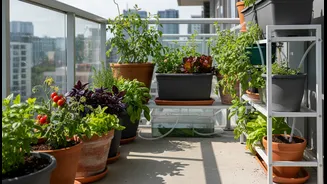
Getting started is easier than you think, as many beloved Indian household plants are natives. You can find them at most local nurseries. For a pot or a balcony, consider these hardy and beautiful options: Tulsi (Holy Basil): Sacred, medicinal, and incredibly resilient, Tulsi thrives in sunny spots and is known to repel pests. Marigold (Genda): These cheerful, easy-to-grow flowers love the rain and sun, and also act as a natural pest repellent. Jasmine (Mogra/Chameli): The intoxicating fragrance of these flowers is a classic feature of Indian evenings. They love the heat and are perfect for a sunny balcony. Curry Leaf (Kadi Patta): A must-have for any Indian kitchen, this plant is fragrant, low-maintenance, and grows well in pots in a spot with partial or full sun. Hibiscus (Gudhal): With its large, vibrant blooms, this tropical shrub loves sunlight and adds a burst of colour while attracting pollinators. Sadabahar (Periwinkle): True to its name, this plant flowers almost all year round and is famously low-maintenance, tolerating both heat and dry conditions.
A Greener City, One Balcony at a Time
This shift is more than just a gardening trend; it's a grassroots movement to re-wild our cities from within. Across India, organisations and communities are working to reintroduce native species into urban spaces to combat pollution, reduce the urban heat island effect, and restore ecological balance. Every balcony garden, terrace, or window box planted with native species contributes to this larger goal. It's a powerful reminder that individual actions, when multiplied across a city, can create significant environmental change. Your small patch of green becomes part of a collective effort to make our urban centres healthier, more resilient, and more beautiful for everyone.