
September's Celestial Double Feature
As the monsoon clouds recede, India's skies in September begin to clear, offering a prime window for stargazing. This month presents two unmissable celestial events that require no special equipment: the planet Venus at its most brilliant and the celebrated
Harvest Moon. These sights are perfect for both seasoned astronomers and curious beginners looking for a reason to explore the night sky. With the nights getting longer after the autumnal equinox, it's an ideal time to plan a quiet evening of sky-watching.
The Evening Star: Venus at Its Brightest
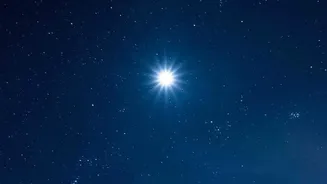
Throughout September, Venus will dominate the western sky shortly after sunset. On September 22, the planet reaches its peak brightness for the year, shining at a dazzling magnitude of -4.8. For context, that's significantly brighter than any star in the sky. This brilliance is why it’s often called the “Evening Star.” On September 1, look for Venus near the bright star Spica. A particularly beautiful sight occurs on September 14, when a waxing crescent Moon will pass near Venus, creating a stunning pairing low on the horizon. This lunar occultation of Venus will be visible across much of Asia.
How to Spot Venus
Finding Venus is simple: look towards the west in the hour after sunset. You won’t need a telescope or binoculars to see it; its intense, steady light is unmistakable. However, because the planet will be relatively low on the horizon for observers in the Northern Hemisphere, finding a spot with an unobstructed western view is key. While it will be visible all month, its position will shift, appearing lower each evening as September progresses. If you do have a pair of binoculars or a small telescope, you might be able to observe its phase; like the Moon, Venus appears as a crescent during this point in its orbit.
The Golden Glow of the Harvest Moon
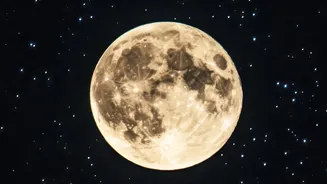
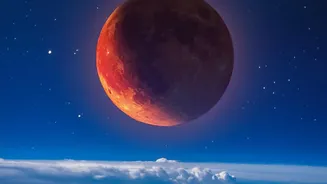
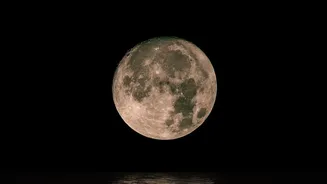
The Harvest Moon is the name given to the full moon that occurs closest to the autumnal equinox (September 22 in 2026). Its name comes from agricultural traditions, when its bright light would help farmers work late into the night to bring in their crops. One of the most unique characteristics of the Harvest Moon is that it appears to rise at nearly the same time for several consecutive evenings, providing extended moonlight just after sunset. This happens because the Moon's orbital path makes a narrow angle with the horizon in the evenings around the autumn equinox. In India, the period also aligns with Pitru Paksha in the Hindu calendar, a time for honouring ancestors.
When to Watch the Harvest Moon
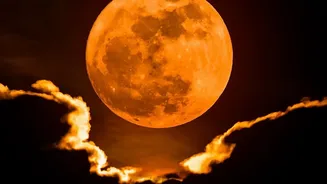
In 2026, the Harvest Moon will reach its peak illumination over India at 10:19 PM IST on Saturday, September 26. The Moon will appear full and bright on the nights of both September 26 and September 27. For the most dramatic view, watch for the moonrise on the evening of the 26th. As it climbs above the eastern horizon, it often takes on a stunning golden or orange hue. This colour is caused by its light travelling through more of Earth's atmosphere, which scatters the blue light and lets the red light pass through. You might also notice that it looks unusually large near the horizon, an optical effect known as the Moon illusion.
Tips for the Best Viewing Experience
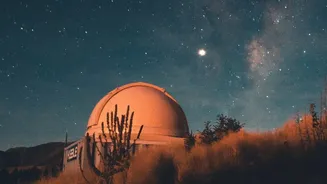
To make the most of these celestial events, find a location away from bright city lights. Light pollution can wash out all but the brightest objects. Give your eyes about 20-30 minutes to fully adapt to the darkness; this means avoiding looking at your phone screen. While Venus and the full Moon are easily visible to the naked eye, other sights will join them. The planet Saturn will be visible near the Moon on the night of the 26th, appearing as a bright, star-like object. Early risers can also spot Jupiter and Mars in the pre-dawn sky. Check your local weather forecast for clear skies and enjoy the show.