








More Than a Moon Landing
For decades, the Indian Space Research Organisation (ISRO) was a symbol of quiet, consistent competence. Its achievements were celebrated but often remained within the domain of scientific journals and niche news reports. That all changed in August 2023.
The successful landing of Chandrayaan-3 on the lunar south pole was a watershed moment, broadcast live into millions of homes. It was followed swiftly by the launch of Aditya-L1, India’s first solar observatory. These back-to-back successes transformed ISRO’s public image from a government agency into a source of immense national pride and, crucially, inspiration. The images of cheering scientists at mission control became as iconic as a match-winning six. This wasn't just science; it was a national spectacle that captured the collective imagination, proving that India could achieve world-class feats on a frugal budget.
The Rise of 'Space-Preneurs'
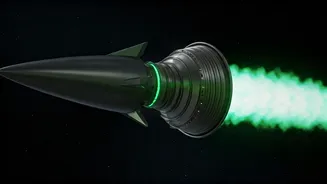
This newfound excitement is translating into tangible economic activity. Sensing the shift, the Indian government has actively opened up the space sector, historically a state monopoly, to private enterprise through the establishment of IN-SPACe (Indian National Space Promotion and Authorisation Center). The result has been an explosion of space-tech startups. Companies like Skyroot Aerospace, which launched India's first privately developed rocket, Vikram-S, and Agnikul Cosmos, known for its 3D-printed rocket engines, are no longer outliers. They are the new face of India’s space ambition. These startups, often founded by young engineers in their 20s and 30s, are attracting significant venture capital and creating a vibrant ecosystem for innovation in launch vehicles, satellite technology, and downstream data applications. They are demonstrating that a career in space is not limited to a job at ISRO; it can also mean building the next big aerospace company from the ground up.
From Textbooks to Launchpads
The ripple effect is profoundly felt in education. Engineering colleges are reporting a significant spike in applications for aerospace and aeronautical engineering programmes. But the inspiration starts much earlier. Schools are establishing astronomy clubs, participating in ISRO's cyber-space competitions, and organising trips to science centres. Online educational platforms have seen a surge in courses related to rocketry, satellite design, and astrophysics. This grassroots enthusiasm is creating a pipeline of talent that will fuel both ISRO’s future missions and the burgeoning private sector. The abstract concepts of physics and mathematics in textbooks now have a direct, exciting application: sending a rocket to Mars or designing a satellite that can monitor climate change. The narrative has shifted from rote learning to ambitious problem-solving.
A New Breed of National Hero
In a nation often dominated by cricketers and film stars, a new category of role model has emerged: the scientist. ISRO chiefs like S. Somanath and former leaders like K. Sivan have become household names, celebrated for their leadership and humility. Their press conferences are watched with the same intensity as a post-match analysis. This cultural shift is significant. It tells young people that intellectual prowess, dedication to science, and public service are qualities to be admired and emulated. When children today say they want to be a 'rocket scientist', it’s no longer a vague fantasy. They can point to real, relatable figures who look and sound like them, who have achieved the extraordinary and made the nation proud. This provides a powerful alternative to more traditional aspirational figures.