






Understanding the Currency Advantage
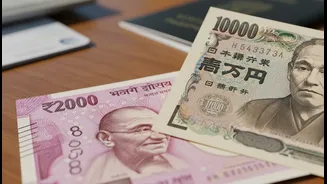
The primary reason for Japan's newfound affordability is the significant weakening of the Japanese Yen (JPY). While the yen has fallen against major global currencies, it has also become cheaper relative to the Indian Rupee (INR). A few years ago, one
yen cost around ₹0.68 to ₹0.72; now, it hovers closer to the ₹0.59 mark. This might seem like a small change, but it translates to a roughly 20-25% discount on almost everything you purchase in Japan compared to pre-pandemic prices. This favourable exchange rate is the secret key that unlocks a more budget-friendly Japanese holiday, making it a compelling option over other popular international destinations.
What It Means for Your Daily Spending
This cost advantage becomes tangible when you look at day-to-day expenses. A bowl of world-class ramen that costs ¥1,000 would have set you back about ₹700 in the past; today, it’s closer to ₹590. This saving applies across the board—from your morning coffee and train tickets to temple entry fees and hotel rooms. Some travellers report that daily expenses in Japan can now be even lower than in Singapore, a traditional go-to for Indian tourists. For a comfortable mid-range trip, a daily budget of ₹6,000 to ₹8,000 per person is now a realistic target, covering meals, local transport, and attractions.
Affordable Stays Without Compromise
Accommodation is one of the biggest expenses on any trip, but the weak yen softens the blow considerably. Japan offers a vast range of clean, safe, and efficient lodging options. Business hotel chains provide comfortable private rooms and are surprisingly affordable, often costing between ₹4,000 and ₹6,000 per night. For solo travellers or those on a tighter budget, capsule hotels and hostels offer excellent value, with prices ranging from ₹2,000 to ₹5,000 per night. Even a stay in a traditional Japanese inn, or 'ryokan,' which was once a major splurge, is now more attainable.
Eating Well on a Budget
Japanese cuisine is a highlight of any visit, and it doesn't have to drain your wallet. Beyond the savings on restaurant meals, Japan offers incredible value for foodies. Convenience stores, known as 'konbini' (like 7-Eleven or FamilyMart), are a game-changer. They offer high-quality, delicious, and cheap meals, from onigiri (rice balls) to bento boxes, that are perfect for a quick lunch. Furthermore, many restaurants offer inexpensive set lunches ('teishoku'), and standing ramen bars provide hearty meals for under ¥1,000. The consistent pricing across the country means you won't find inflated tourist prices in popular areas.
Smart Transport and Sightseeing
Japan's public transport is legendary for its efficiency. While the Japan Rail (JR) Pass has been a staple for tourists, a recent price increase means it is no longer an automatic choice. For itineraries that don't involve multiple long-distance Shinkansen (bullet train) trips, buying individual tickets is often cheaper. Major cities like Tokyo and Kyoto have excellent subway systems with affordable day passes. Many of Japan's most beautiful sights are also free to visit, including the Fushimi Inari Shrine in Kyoto, Nara Park (famous for its bowing deer), and the vibrant Dotonbori district in Osaka. Another key saving for Indians is the visa fee. While Japan recently increased visa costs globally, the fee for Indian passport holders remains a nominal ₹500, plus service charges.