


An Eruption 150 Million Kilometres Away
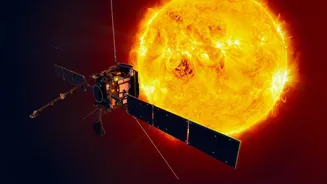
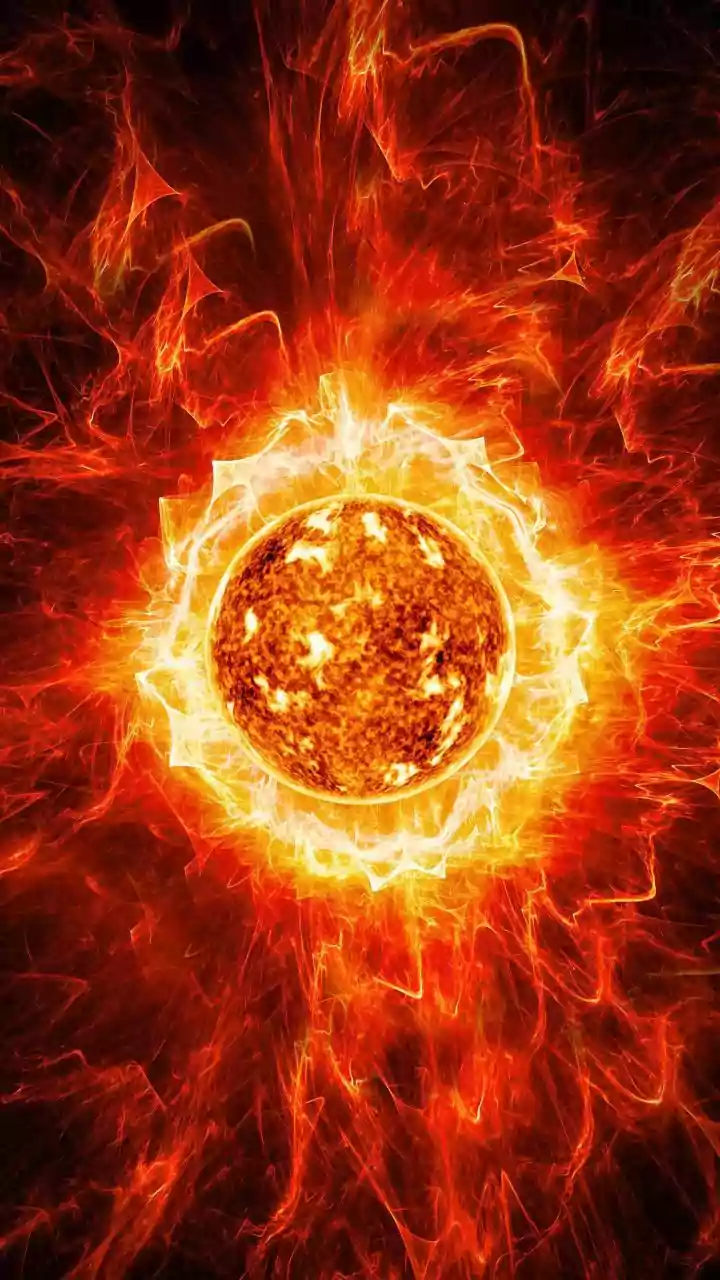
The process begins on the surface of the Sun. Occasionally, the Sun's complex magnetic fields become twisted and snap, releasing tremendous amounts of energy in what are known as solar flares or, more consequentially for Earth, Coronal Mass Ejections
(CMEs). A CME is a colossal expulsion of plasma and magnetic field from the Sun's outer atmosphere, the corona. These clouds of magnetised particles, weighing billions of tonnes, travel through space at immense speeds. If a CME is aimed towards Earth, it embarks on a journey that can take anywhere from one to several days to complete, crossing the vast distance to our planet.
Earth's Magnetic Shield Under Siege
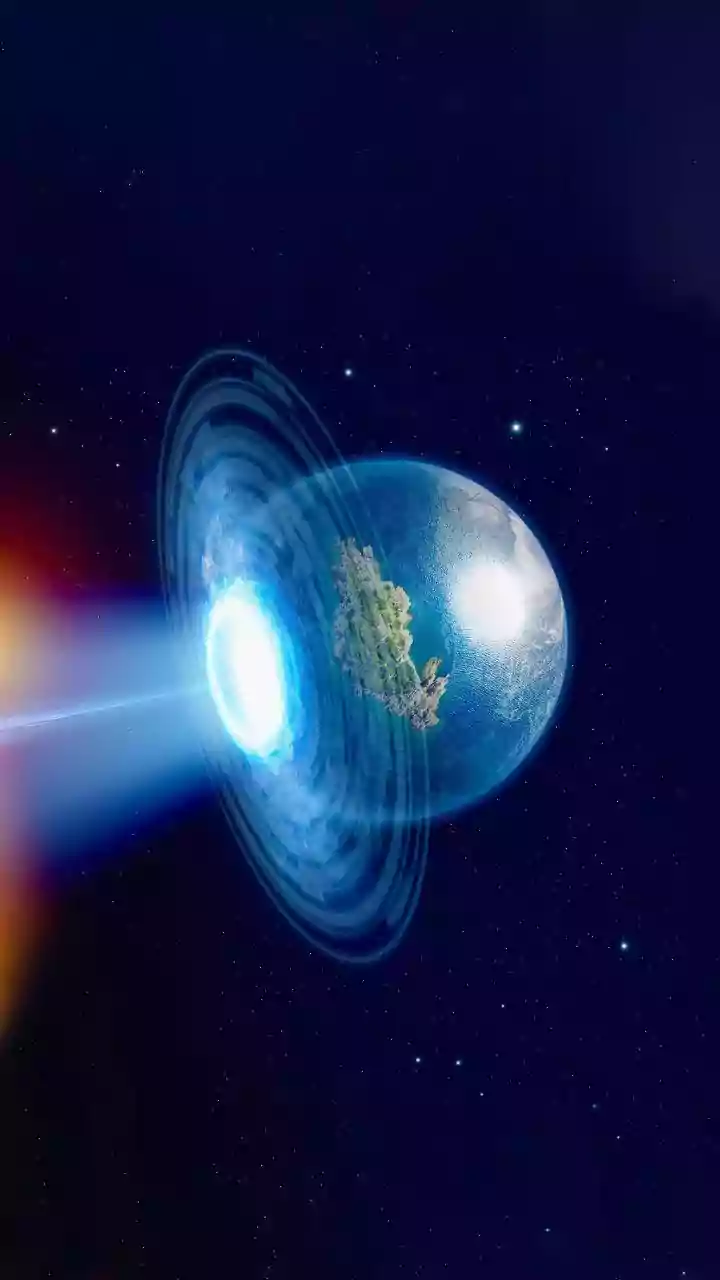
When this blast of solar material reaches Earth, it collides with our planet's protective magnetic field, the magnetosphere. This shield normally deflects the solar wind, but a powerful CME can cause a major disturbance, compressing the shield on one side and stretching it on the other. This interaction energises particles and dramatically alters the magnetic field surrounding our planet. This entire phenomenon is called a geomagnetic storm. While it produces beautiful auroras (the Northern and Southern Lights) by funnelling particles towards the poles, it also sets the stage for chaos on the ground.
Creating Current From Thin Air
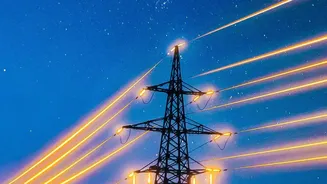
The core of the problem lies in a 19th-century physics principle: Faraday's law of induction. This law states that a changing magnetic field will induce an electric current in a nearby conductor. During a geomagnetic storm, the Earth's magnetic field fluctuates wildly. This rapid change induces a powerful, low-frequency electric field at the planet's surface. This, in turn, drives currents through the ground itself, known as telluric currents. Long, man-made conductors, such as power transmission lines, pipelines, and communication cables, provide an easy path for these currents to flow. The result is a 'geomagnetically induced current', or GIC, surging into our electrical grid.
The Transformer's Worst Nightmare
Power grids are designed to handle alternating current (AC), which rapidly switches direction. Geomagnetically induced currents, however, behave like a quasi-direct current (DC), flowing in one direction. When this DC-like current enters a high-voltage transformer—the backbone of the grid—it causes a serious problem called half-cycle saturation. Essentially, the GIC pushes the transformer's magnetic core into saturation, preventing it from operating correctly. The transformer starts to draw huge amounts of reactive power from the grid to sustain its magnetic field, and the distorted current generates excessive harmonics. This chain reaction can cause protective relays to trip, taking parts of the grid offline.
From Overheating To Blackout
The most dangerous effect of this saturation is severe internal heating. The transformer's core, no longer able to contain the magnetic flux, allows stray flux to heat up steel support structures and other components not designed for such energy. This can cause the transformer's insulating oil to break down and can physically damage the windings, leading to premature aging or catastrophic failure. A famous example is the March 1989 geomagnetic storm which collapsed the Hydro-Québec grid in Canada in under 90 seconds, leaving millions in the dark for hours. The same storm destroyed a large transformer at a nuclear plant in the US. A single damaged high-voltage transformer can cost millions and take months or years to replace, highlighting the severe risk to the entire grid.
Building Resilience Against Space Weather
Given the risk, what can be done? The first line of defence is forecasting. Agencies like ISRO and NOAA constantly monitor the Sun to provide warnings of incoming CMEs, giving grid operators time to prepare. On the ground, power companies can implement operational procedures like reducing load or temporarily reconfiguring the grid to lessen the impact. Technologically, there are solutions. Devices known as neutral blocking devices or series capacitors can be installed to block GICs from entering transformers. Hardening the grid by upgrading older transformers and having strategic spares are also key strategies. While India is more vulnerable than polar regions, a severe storm could still have an impact, making solar physics and grid resilience a matter of national security.