







From Minnesota to the Stars
Dr. Anil Menon's path to becoming a NASA astronaut is a story of exceptional drive and diverse expertise. Born and raised in Minneapolis, Minnesota, to a family with Indian and Ukrainian immigrant roots, his journey was marked by academic and professional
excellence from the start. After earning a degree in neurobiology from Harvard, he didn't choose between medicine and engineering—he pursued both, attaining a medical degree and a master's in mechanical engineering from Stanford University. His connection to India isn't just ancestral; he spent a year in the country as a Rotary Ambassadorial Scholar, where he was involved in studying and supporting polio vaccination efforts. This blend of cultural heritage and a multifaceted career in medicine, engineering, and military aviation set the stage for his selection into NASA's exclusive astronaut corps.
The Making of an Astronaut
Menon was selected from a pool of over 12,000 applicants to join NASA’s 2021 Astronaut Candidate Class, nicknamed 'The Flies'. He reported for duty in January 2022 to begin a rigorous two-year training program. This training is designed to prepare candidates for the extreme challenges of spaceflight, covering everything from operating International Space Station (ISS) systems and robotics to spacewalk training and mastering the Russian language for international collaboration. Before his selection, Menon had already built a formidable resume in aerospace. He served as a flight surgeon in the U.S. Air Force, was a first responder to disasters in Haiti and Nepal, and worked with the Himalayan Rescue Association to care for climbers on Mount Everest. His experience was further solidified when he became the first-ever flight surgeon for SpaceX, where he helped build the medical program for the company's historic first human flights.
Pioneering the Field of Space Medicine
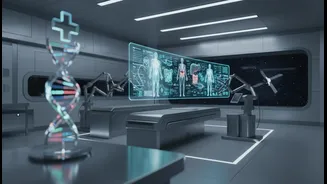
At the heart of Menon's work is space medicine, a critical field focused on keeping astronauts healthy in the hostile environment of space. Long-duration missions expose the human body to microgravity, radiation, and isolation, leading to a host of physiological challenges. These include bone density loss, muscle atrophy, and changes to the cardiovascular system. Menon's role involves not just treating astronauts but researching and developing new ways to counteract these effects. His research will examine how microgravity impacts vein structure and blood circulation. One of his key experiments will involve testing technology that can produce intravenous fluids from the space station's own water supply—a potential lifesaver on future deep-space missions to the Moon and Mars where resupply is impossible.
The Mission to the ISS
Menon is scheduled to embark on his first mission to space on July 14, 2026. He will launch aboard a Roscosmos Soyuz MS-29 spacecraft from Kazakhstan, alongside cosmonauts Pyotr Dubrov and Anna Kikina. The crew will serve as part of Expedition 74 and 75 on the International Space Station. Their mission is slated to last approximately eight months, with a return to Earth planned for the spring of 2027. As a flight engineer, Menon's duties will be multifaceted. He will be both a researcher and a test subject, participating in a range of scientific investigations. His work will contribute to NASA's Artemis program, which aims to establish a sustainable presence on the Moon and prepare for future missions to Mars.
Benefits Beyond the Cosmos
The research conducted in space often has significant benefits for life on Earth. Menon's work in space medicine is a prime example. For instance, he will perform ultrasounds using augmented reality and artificial intelligence, a technique that could one day allow for remote medical diagnostics in rural or underserved areas on Earth. He will also work on bioprinting vascular structures in microgravity to better understand the aging process, which could advance treatments for age-related diseases. Other research includes refining the production of semiconductor crystals in space, which could lead to breakthroughs in high-performance computing and medical devices back on the ground.