



The Beauty of the Blur
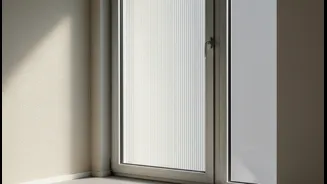
So, what exactly is fluted glass? Also known as reeded or ribbed glass, it’s a type of textured glass with vertical grooves. These grooves are pressed into the glass during manufacturing, creating a distinct, decorative pattern. Unlike clear glass, which
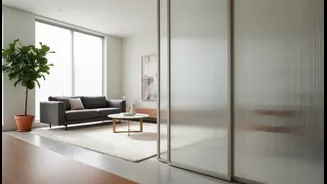
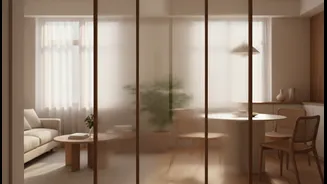
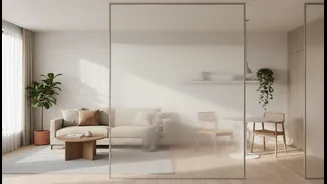
offers no privacy, or frosted glass, which can feel heavy and block light, fluted glass strikes a unique balance. It obscures direct views by distorting what’s behind it, creating a soft, blurred effect. This means you can see movement and shapes but not sharp details, offering a sense of privacy while still feeling connected to the larger space.
Light Without Full Exposure
The magic of fluted glass lies in its interaction with light. Its textured surface diffuses light beautifully, scattering it to create a soft, ambient glow and reduce harsh glare. This is the key to its success in small homes. While a solid wall would block light entirely and make a room feel cramped, a fluted glass partition allows natural light to flow freely from one area to another. This maintains the bright, airy feel that makes open-plan living so desirable, all while providing a functional visual barrier. It’s the perfect compromise between the complete openness of a studio and the rigid separation of walled-off rooms.
Zoning for Modern Living
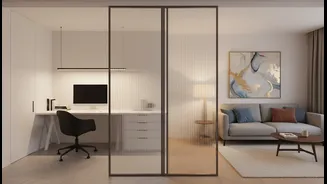
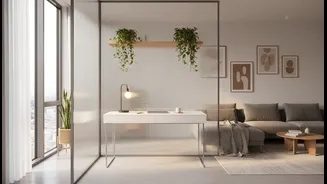
In compact homes where a single room might serve as a living, dining, and work area, creating distinct zones is essential. Fluted glass partitions are an elegant way to achieve this. A strategically placed fluted glass screen can separate a home office nook from the main living area, hiding desk clutter while still allowing the worker to feel part of the household. Similarly, it can be used to delineate the kitchen from the dining space, containing cooking messes from view without creating a closed-off kitchen. These partitions can be fixed or designed as sliding or bi-fold doors, offering flexibility to open up or close off spaces as needed.
More Than Just a Divider
The versatility of fluted glass extends far beyond large partitions. Interior designers are incorporating it in a variety of creative ways to add texture and sophistication. It’s a popular choice for kitchen cabinet doors, allowing you to subtly display glassware while concealing less organised shelves. In bathrooms, fluted glass shower screens offer privacy without making the room feel smaller, a significant advantage in often-cramped spaces. It can even be found on wardrobe doors, furniture like sideboards, and as a decorative accent in lighting fixtures, bringing its unique play of light and shadow to smaller elements of a room’s design.
A Versatile Style Statement
One of the reasons for the growing popularity of fluted glass is its incredible stylistic versatility. With its clean lines, it fits seamlessly into modern and minimalist interiors. However, its history is rooted in the Art Deco and mid-century movements, making it a perfect fit for retro-inspired designs as well. When paired with a black metal frame, it takes on an industrial character. Framed in gold-finished steel, it feels luxurious and glamorous. The glass itself can also be customised, available in different tints like grey or bronze, and with varying widths of flutes to create more or less distortion, allowing it to be tailored to any home's aesthetic.