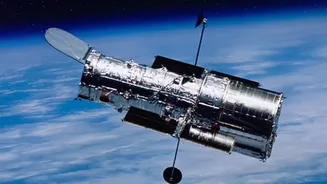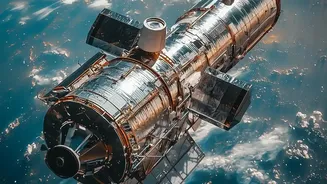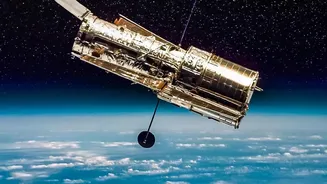





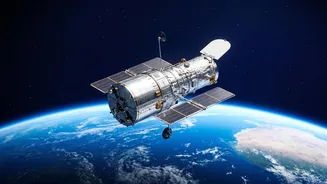
For over three decades, the Hubble Space Telescope has been humanity’s eye on the cosmos. But its time is running out as its orbit slowly decays. Now, NASA is turning to the private sector for a solution, opening a new chapter for the business of space.
An Icon in a Slow Descent
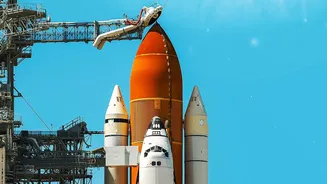
Since its launch in 1990, the Hubble Space Telescope has fundamentally changed our understanding of the universe. It has captured iconic images of distant galaxies, helped determine the age of the cosmos, and provided evidence for supermassive black holes. After five servicing missions by Space Shuttle astronauts that repaired and upgraded its instruments, Hubble remains a scientific powerhouse. But the telescope has no propulsion of its own. It is in a constant, slow-motion battle with Earth’s upper atmosphere. Atmospheric drag, though faint at its altitude, continuously pulls the school bus-sized observatory downward. Without a boost, NASA projects Hubble could re-enter the atmosphere sometime between 2033 and 2034.
A Public Call for Private Ideas
Faced with this timeline, and with the Space Shuttle program long retired, NASA is trying a new approach. The agency has issued a formal 'Request for Information' (RFI), essentially putting out a call to the commercial space industry for concepts. This isn't a formal contract to go and rescue Hubble just yet. Instead, NASA is market testing, asking companies to submit their ideas, technical approaches, potential costs, and timelines. The request outlines three main possibilities: a mission to capture Hubble and boost it to a higher, more stable orbit of at least 600 kilometers; a more ambitious mission that also includes servicing and upgrading its systems; or a final option to guide the telescope to a safe, controlled disposal. Companies have until November 30 to submit their concepts.
The Potential Rescuers
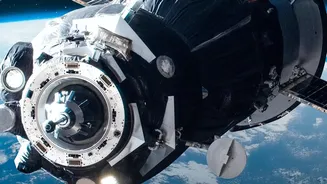
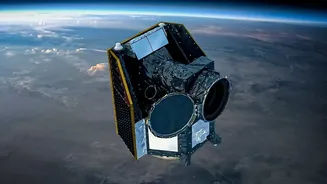
This isn't the first time a commercial boost for Hubble has been discussed. In 2022, SpaceX and the Polaris Program, a private human spaceflight initiative funded by billionaire Jared Isaacman, proposed a study with NASA to explore the feasibility of using a Dragon spacecraft to reboost the telescope. That non-exclusive study, which came at no cost to the government, concluded that such a mission was technically possible, setting the stage for this broader RFI. SpaceX is a likely respondent, but the field is wider now. Companies like Northrop Grumman, through its subsidiary SpaceLogistics, already have experience with satellite servicing using its Mission Extension Vehicles (MEVs). Other players in the growing on-orbit servicing market include Astroscale and Maxar Technologies, who are developing technologies for debris removal and extending the life of satellites.
A New Business Model for Space
This call for ideas is about more than just saving one beloved telescope. It represents the next logical step in NASA's strategy of fostering a commercial space economy. The agency has successfully used public–private partnerships to create commercial cargo and crew transportation to the International Space Station, saving taxpayer money and stimulating a new industry. Applying this model to satellite servicing could unlock a massive new market. Governments and companies operate billions of dollars worth of hardware in orbit, much of which is simply abandoned when it runs out of fuel or a single component fails. A proven capability to affordably service, refuel, or relocate these assets could transform the economics of space operations. A successful Hubble mission, conducted by a private firm, would be the ultimate demonstration of this new commercial frontier.