







Beyond the Air We Breathe
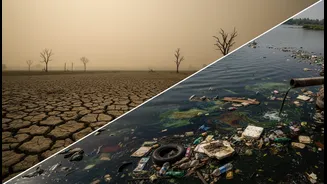
For years, the environmental narrative in India has treated air pollution and water scarcity as two distinct problems. One is about smog, respiratory illness, and vehicular emissions; the other is about dry taps, contaminated rivers, and failing monsoons.
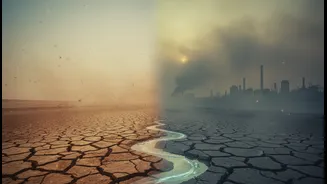
The landmark State of India's Environment 2026 report argues this separation is a dangerous illusion. It demonstrates that the pollutants choking our cities don't simply vanish; they fall from the sky, directly contaminating our water sources and altering the very climate patterns that provide our water. This process, known as atmospheric deposition, means that what goes up as smoke and exhaust inevitably comes down as a threat to our water security. Every particle released from a factory smokestack or a vehicle's tailpipe can eventually find its way into our rivers, lakes, and groundwater.
From Polluted Skies to Acidic Rivers
The most direct link highlighted by the report is the increasing prevalence of acid rain. When pollutants like sulfur dioxide and nitrogen oxides—emitted by power plants, industry, and vehicles—mix with atmospheric moisture, they form sulfuric and nitric acids. This acidic water falls back to earth, poisoning water bodies and soil. Rainwater samples across India have shown a definitive trend towards greater acidity, a phenomenon once considered a problem for other parts of the world. This acid deposition leaches essential nutrients from the soil, impacting agriculture, and releases toxic heavy metals into our lakes and rivers like the Ganga. Studies have confirmed that airborne pollutants are a significant source of heavy metal contamination in surface water, turning our rain into a carrier of industrial and urban waste.
Choking the Monsoon Engine
Perhaps the most alarming connection is the impact of air pollution on the monsoon. The report synthesizes growing evidence showing that aerosols—tiny suspended particles like soot and dust—are disrupting India's lifeblood. These particles can alter cloud properties in complex ways. Some studies suggest aerosols can suppress rainfall by creating a larger number of smaller cloud droplets that are less likely to fall as rain. Research from the Indian Institute of Tropical Meteorology (IITM) has shown that increasing pollution can lead to a significant drop in rainfall from monsoon cloud clusters. This means that high pollution levels during the pre-monsoon and monsoon seasons could weaken the entire system, delaying rainfall and affecting water availability for hundreds of millions who depend on it for agriculture and drinking water.
Melting Our Water Towers
The Himalayas, often called Asia's 'water towers,' are facing a dual threat from global warming and regional air pollution. The 2026 report draws urgent attention to the role of black carbon, or soot, which originates from sources like diesel engines, brick kilns, and biomass burning across the Indo-Gangetic plains. When this black carbon travels and settles on the pristine white snow and ice of the glaciers, it darkens the surface. This 'albedo effect' causes the glaciers to absorb more sunlight and heat, dramatically accelerating the rate of melt. This melt feeds the great rivers of North India, including the Indus, Ganga, and Brahmaputra. While it might temporarily increase river flow, the long-term consequence is the rapid depletion of these critical freshwater reserves, threatening water security for over a billion people.
A Unified Path Forward
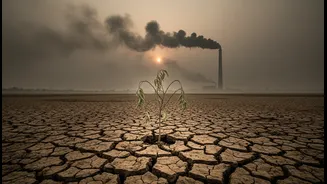
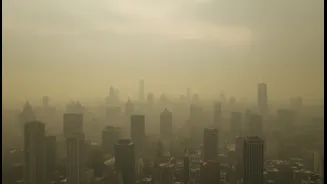
The inescapable conclusion of the State of India's Environment 2026 is that our policies must evolve to reflect this interconnected reality. We cannot solve our water problems without cleaning our air. Efforts to reduce vehicular emissions, regulate industrial pollution, and stop biomass burning are not just air quality initiatives; they are fundamental water conservation strategies. An integrated approach that views the atmosphere, land, and water as one system is no longer optional. It requires breaking down silos between government ministries and recognizing that a clean air action plan is also a water security plan. The report serves as a critical guide, urging policymakers and citizens alike to see the invisible threads connecting a hazy sky to a dry riverbed and to act with the urgency this unified crisis demands.