

The Science of the Lean
That distinct lean your plant develops towards a window is a natural survival instinct called phototropism. In simple terms, plants grow towards their light source to maximise their ability to perform photosynthesis, the process of turning light into
energy. This is driven by growth hormones called auxins, which accumulate on the shaded side of the stem. These auxins cause the cells on the darker side to grow longer and faster, which physically bends the plant toward the light. While brilliant for a plant in the wild, indoors it results in uneven, lopsided growth, with a full front and a sparse back. Regular rotation helps counteract this, ensuring all parts of the plant get their turn in the sun for stronger, more symmetrical development.
The Quarter-Turn Rule
The most recommended and easiest method for rotating plants is the quarter-turn. The idea is to give your pot a 90-degree turn on a consistent schedule. This systematic approach ensures that over a period of time, every side of the plant will have faced the primary light source, encouraging balanced foliage and preventing a permanent lean in one direction. While some sources suggest a turn every few days, a more manageable and equally effective routine is to link the rotation to another plant care task. A popular and easy-to-remember habit is to give your plant a quarter-turn every time you water it. This frequency is generally sufficient to prevent significant leaning without becoming a demanding chore. For faster-growing plants, a weekly turn is a good benchmark, while slower growers might only need a turn every two to four weeks.
Recognising the Signs
Your plants will give you clear visual cues when they are in need of rotation. The most obvious sign is a visible lean, where the stems and leaves are all straining toward the window. You might also notice that the side of the plant facing the light is significantly fuller and denser, while the side facing the room is sparse or has smaller leaves. In some cases, the leaves on the shaded side may even begin to turn yellow and drop off, as the plant directs its energy to the leaves that are more efficient at photosynthesis. If you notice your plant becoming noticeably 'front-heavy' or developing long, stretched-out stems (a condition known as etiolation) on the shady side, it's a clear signal that it’s time to turn it and share the light.
Are There Exceptions to the Rule?
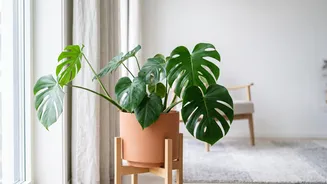
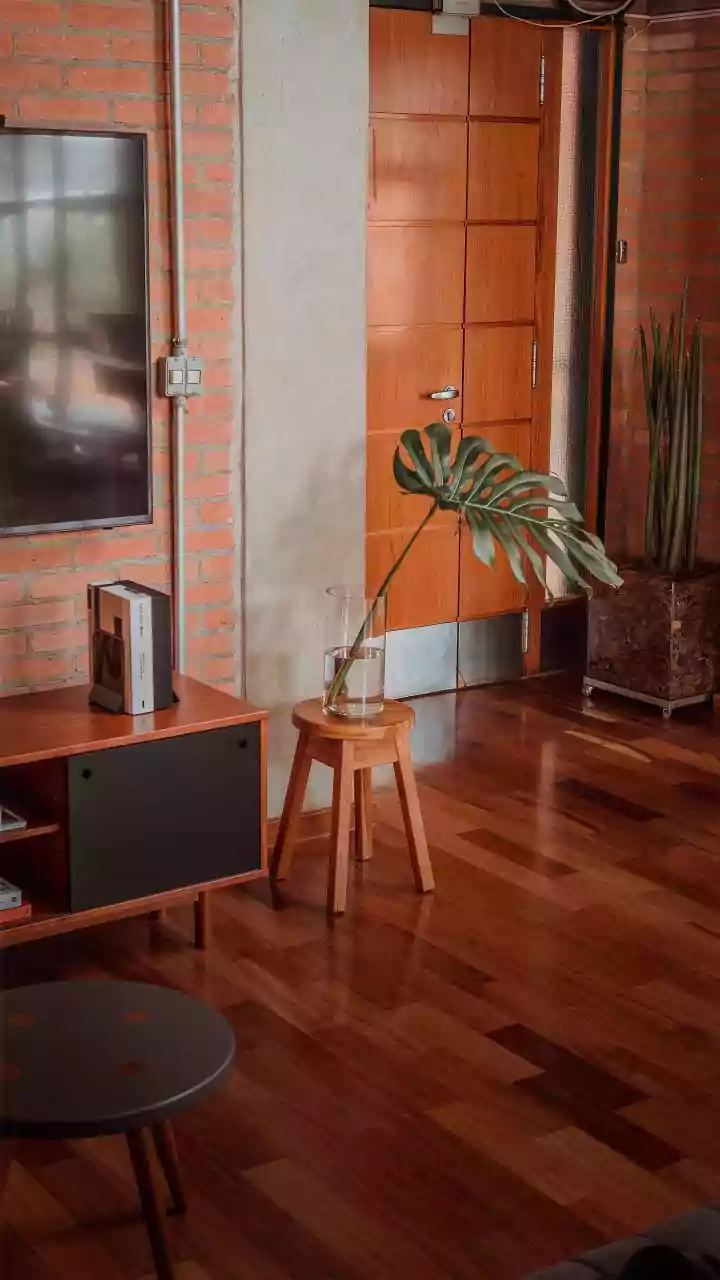
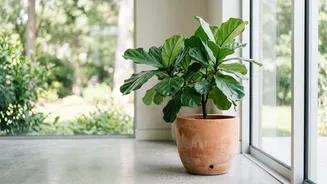
While most common houseplants benefit from regular rotation, it is not a universal rule. Some plants are sensitive to being moved and may react negatively. For instance, flowering plants that have already set buds, such as certain orchids or a Christmas Cactus, can sometimes drop their buds if their orientation to the light is suddenly changed. Plants that have a distinct 'front' and 'back', like a Monstera that is trained to climb a pole, can become confused and grow in awkward directions if rotated frequently. Similarly, notoriously fussy plants like the Fiddle Leaf Fig can sometimes drop leaves in response to environmental changes, including rotation. For these sensitive types, it's best to either avoid rotation or do it very gradually over a longer period. Observe your specific plant's reaction to determine what works best.
Correcting a Serious Lean
What if you’ve forgotten to rotate a plant and it has already developed a dramatic, almost horizontal lean? Don't worry, it can usually be corrected. The solution is to rotate the plant 180 degrees, so the sparse, shaded side is now facing the light source. The plant will naturally begin to correct its posture as the previously shaded leaves start reaching for the sun, a process that can take several weeks or even months. For a very severe lean, this sudden full turn can cause some stress. A gentler approach is to perform a series of quarter turns over a few weeks to gradually encourage it to straighten up without shocking the plant. Be patient, as the plant took time to grow crooked and will need time to grow straight again.