






The Sedentary Trap: What Sitting Does to Your Body
When you spend eight hours a day sitting, your body adapts to that position. The primary victims are your hips and spine. The hip flexor muscles at the front of your hips remain in a shortened position, becoming tight and stiff. This can pull your pelvis
forward, creating an exaggerated curve in your lower back and leading to discomfort. At the same time, your gluteal muscles, which are meant to be powerful supporters of your posture, effectively switch off. This phenomenon, sometimes called "gluteal amnesia," forces other muscles to compensate, often leading to strain. Your spine also feels the pressure—literally. Prolonged sitting, especially with slouching, compresses the discs in your spine, which can contribute to premature degeneration and chronic pain. The lack of movement reduces blood flow and lubrication to your joints, making you feel creaky and stiff.
The Mobility Solution: A Daily Reset Button
The idea that a short, 10-minute routine can counteract hours of sitting might seem too good to be true, but it’s rooted in how the body responds to movement. The goal isn't to burn calories; it's to reintroduce the ranges of motion that sitting steals. Mobility is more than just passive stretching. It is the practice of moving your joints through their full, controlled range. This type of active movement increases circulation, lubricates the joints, reactivates dormant muscles, and releases tension. Think of it as a daily reset. Consistent, short sessions are often more effective than one long, infrequent workout because they repeatedly signal to your body that movement is the priority, helping to prevent the long-term structural changes that a sedentary lifestyle can cause.
Drill 1: Cat-Cow for a Mobile Spine
This classic yoga pose is one of the best ways to gently introduce movement back into a stiff spine. Start on your hands and knees, with your wrists under your shoulders and knees under your hips. On an inhale, drop your belly, lift your chest and tailbone, and look forward (Cow Pose). This creates extension in your spine. On an exhale, press into your hands, round your upper back, tuck your chin to your chest, and scoop your tailbone under (Cat Pose). This creates flexion. Moving slowly between these two positions for 60-90 seconds warms up the entire spine, from your neck to your lower back, and improves its ability to move segment by segment.
Drill 2: The Kneeling Hip Flexor Lunge
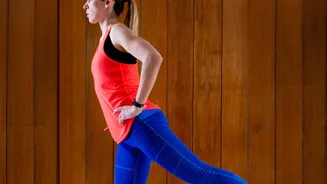
To directly counteract the tight hip flexors from sitting, the kneeling lunge is essential. Start in a kneeling position and bring one foot forward so your front knee is bent at 90 degrees and your ankle is directly under it. Keeping your torso upright, gently squeeze the glute of your back leg and press your hip forward until you feel a stretch in the front of your hip and thigh. Avoid arching your lower back; the movement should come from the hip. Hold for 30-45 seconds on each side, breathing deeply. This stretch lengthens the muscles that have been shortened all day, helping to restore proper pelvic alignment and reduce strain on your lower back.
Drill 3: Glute Bridges to Wake Up Your Glutes
After a day of sitting, your glutes need a reminder to fire up. The glute bridge is the perfect exercise for this. Lie on your back with your knees bent, feet flat on the floor hip-width apart, and your arms by your sides. Press through your heels and lift your hips toward the ceiling, squeezing your glutes at the top. Your body should form a straight line from your shoulders to your knees. Hold for a moment before slowly lowering back down. Performing 15-20 repetitions helps reactivate these crucial postural muscles, providing better support for your hips and taking pressure off your lower back.
Drill 4: 90/90s for Hip Rotation
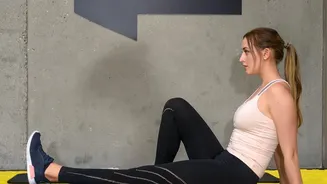
Sitting locks your hips in one plane of motion, but they are designed to rotate. The 90/90 stretch is excellent for restoring this crucial movement. Sit on the floor and position your legs so that your front shin is parallel to your body and your back shin is perpendicular, with both knees bent at a 90-degree angle. Try to sit up tall, keeping both sitting bones on the floor if possible. You can then gently lean your torso forward over your front leg to deepen the stretch. Hold for 30 seconds before switching sides. This drill improves both internal and external rotation of the hips, which is vital for fluid movement in daily activities like walking and squatting.