








Understanding the Weight of the Problem
In our homes across India, our cats have become cherished family members. However, the comfort of indoor living often comes with a hidden cost: a tendency towards a sedentary lifestyle. Unlike their ancestors who hunted and roamed, our domestic cats often spend
their days napping, moving only between the food bowl, the litter box, and their favourite sunning spot. This lack of activity, combined with easily accessible, calorie-dense food, has led to a quiet epidemic of feline obesity. Vets report that over half of domestic cats are now considered overweight or obese. This extra weight isn't just a cosmetic issue; it puts them at a significantly higher risk for serious health problems like diabetes, arthritis, heart disease, and urinary tract issues, potentially shortening their lifespan and reducing their quality of life.
Think Beyond the Food Bowl
When we notice our cat is getting heavy, our first instinct is often to cut back on their food. While portion control and a balanced diet are absolutely critical components of weight management, they are only half the story. The other, often overlooked, part of the equation is exercise and mental stimulation. A bored cat is an inactive cat. Providing what experts call 'environmental enrichment' is key to encouraging natural behaviours like climbing, jumping, and exploring. By making your home a more engaging playground, you can inspire your cat to move more, burn calories, and flex their muscles, all while having fun. This approach transforms weight management from a chore into a form of play.
The Untapped Potential of Vertical Space
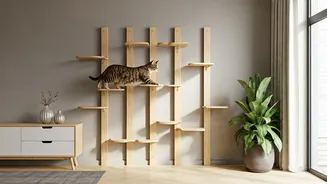
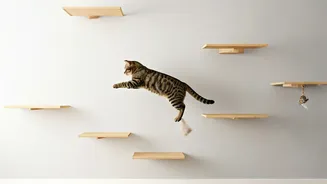
Cats are natural climbers. In the wild, verticality means safety, observation, and advantage. They climb trees to survey their territory, escape threats, and find resting spots. This instinct doesn't disappear just because they live indoors. Your walls, shelves, and the tops of your cupboards represent a vast, untapped wilderness for your feline companion. Creating a 'cat superhighway' using modular wooden steps allows you to turn this unused vertical space into an exciting and challenging environment. It gives them a designated path to explore upwards, providing both the physical exercise of climbing and the mental satisfaction of reaching a high vantage point.
What Are Modular Wooden Steps?
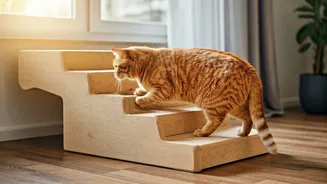
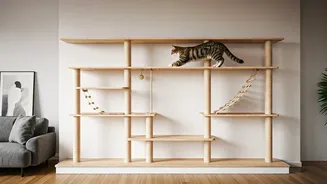
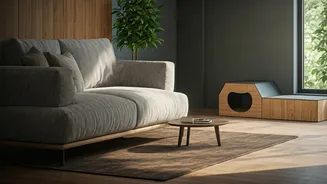
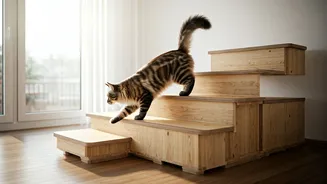
Imagine a set of sturdy, stylish, wall-mounted ledges that you can arrange in any pattern you like. That’s the essence of modular wooden steps. Unlike a single, bulky cat tree that occupies a large footprint on your floor, these steps are space-efficient and fully customisable. They can be configured to create a gentle ramp for older or heavier cats, or a more challenging, staggered path for a younger, more agile feline. Made from wood, they are durable, easy to clean, and can be finished to match your home décor, blending seamlessly into your living space. This makes them a practical and aesthetically pleasing solution for cat owners in apartments and houses alike.
Installation and Safety First
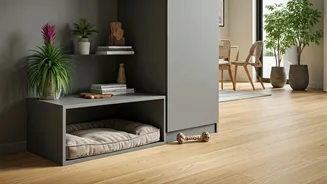
To create a safe and appealing climbing route, planning is essential. Start by mapping out a path on the wall. The goal should be to lead your cat towards a rewarding destination, like a comfortable wall-mounted bed or a perch with a view out the window. Ensure the steps are spaced appropriately for your cat's size and fitness level—start with shorter distances and gentle inclines. The most critical aspect is secure installation. You must anchor the steps firmly into wall studs, not just the plasterboard, using appropriate screws and hardware. A wobbly or unstable step will not only be ignored by your cat but could be dangerous. If you are not confident in your DIY skills, it's worth hiring a professional to ensure everything is rock-solid.
Encouraging Your Cat to Climb
Once your beautiful new steps are installed, your cat may not immediately understand their purpose. You need to be their guide. Use positive reinforcement to introduce them to the new feature. Place their favourite treats on the first few steps to entice them to explore. Use a laser pointer or a feather wand to lead them up the path in a playful chase. You can also rub a little catnip on the steps or use a calming pheromone spray to make the area more attractive. Be patient; it may take a few days or even weeks for a cautious cat to build confidence. The key is to make it a fun, low-pressure experience.