




A Lab Colder Than Deep Space
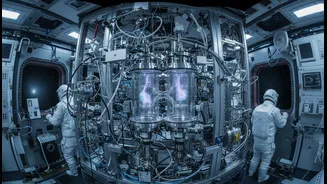
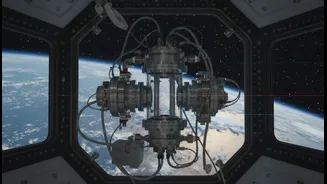
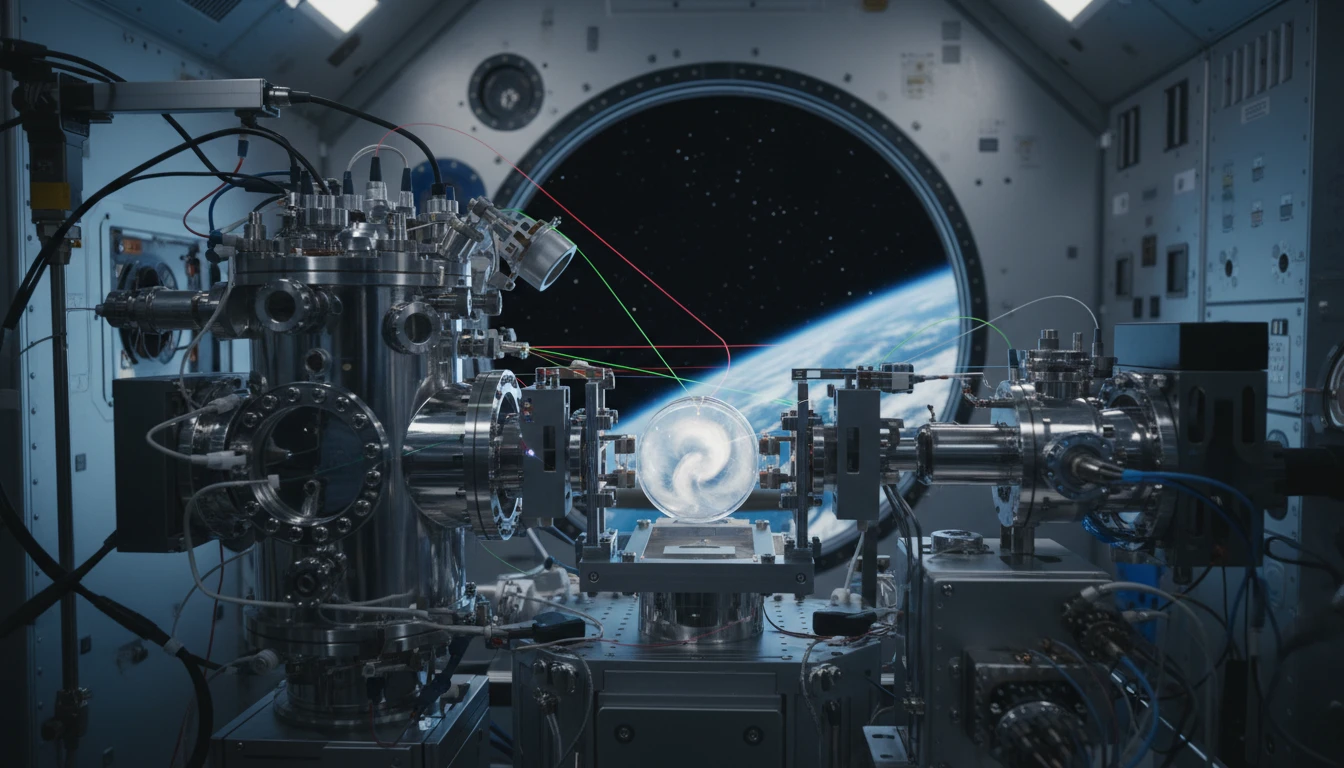
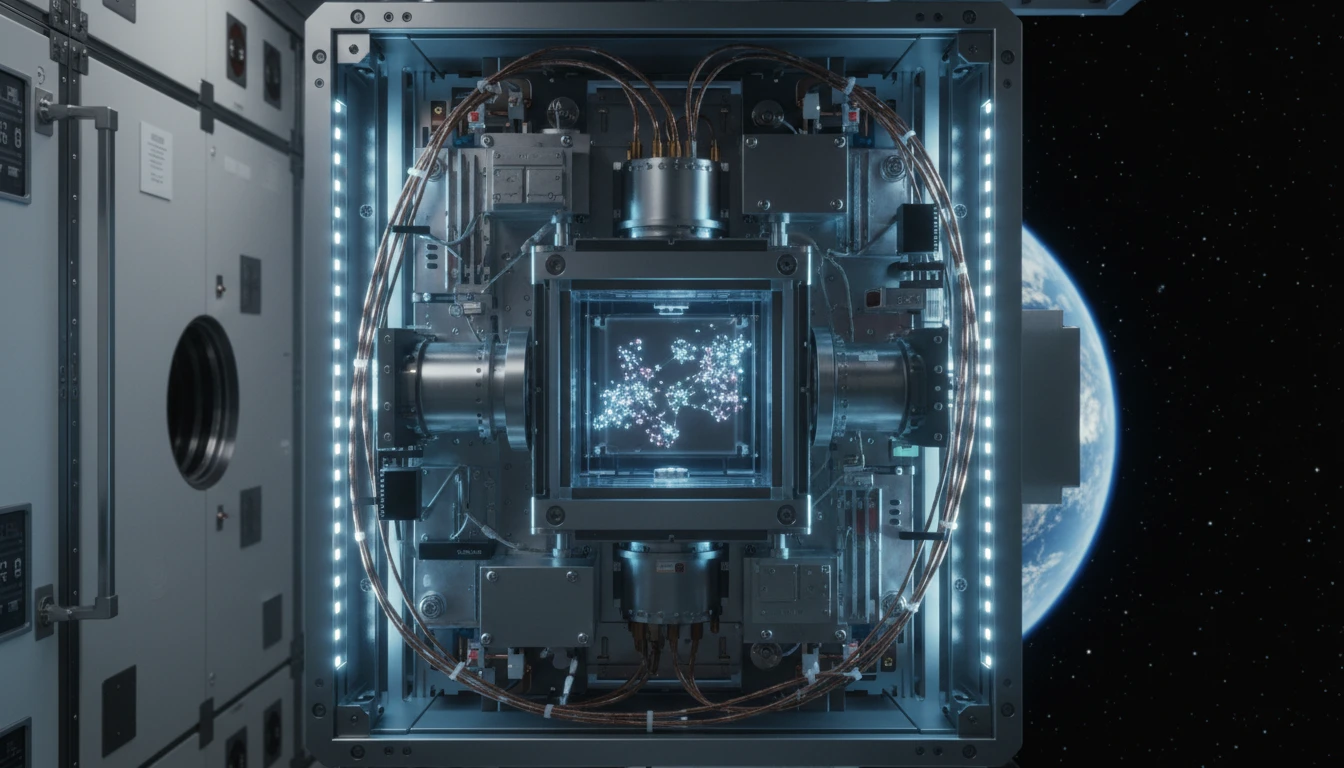
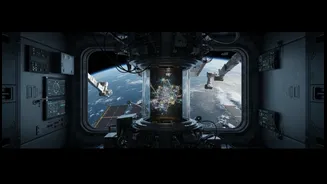
Orbiting 400 kilometres above Earth is a facility regularly recognised as the coldest known spot in the universe. It is not a distant nebula, but a mini-fridge-sized box inside the International Space Station (ISS) called the Cold Atom Laboratory (CAL).
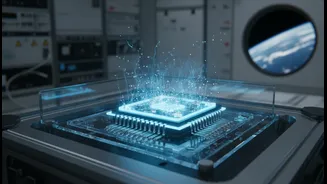
In June 2026, astronauts activated the fourth major upgrade to this remarkable lab since its installation in 2018. This enhancement, involving a redesigned magnetic trap and improved atom sources, gives scientists unprecedented control over clouds of atoms chilled to temperatures just a fraction of a degree above absolute zero, or minus 273.15 degrees Celsius. At these extreme temperatures, matter behaves in bizarre ways that defy our everyday experience, opening a new window into the quantum world. The lab is operated entirely remotely from NASA's Jet Propulsion Laboratory, turning the ISS into a premier hub for quantum research.
The Fifth State of Matter
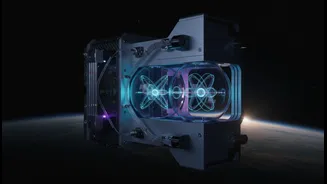
The primary goal of the Cold Atom Lab is to create and study a fifth state of matter, distinct from solids, liquids, gases, and plasmas, known as a Bose-Einstein Condensate (BEC). Predicted by Albert Einstein and Satyendra Nath Bose in the 1920s, a BEC forms when a cloud of atoms is cooled so profoundly that the individual atoms lose their separate identities and begin to behave as a single, massive quantum object or 'super atom'. In this state, the strange wave-like nature of matter, usually confined to the microscopic realm, becomes visible on a macroscopic scale. The process begins by heating a small strip of metal, like rubidium or potassium, to create a gas, which is then cooled using lasers and magnetic fields until it reaches the quantum threshold. This 'super atom' allows scientists to observe quantum phenomena directly in ways that are otherwise impossible.
Why Microgravity Is the Secret Ingredient
While scientists have been creating Bose-Einstein Condensates on Earth for decades, gravity is a constant spoiler. The moment the magnetic trap holding the atoms is released for observation, the delicate condensate is pulled downwards, limiting study time to mere milliseconds. In the microgravity environment of the ISS, this problem vanishes. The atoms are essentially in a continuous state of freefall, allowing them to be observed for much longer periods—up to several seconds. This extended observation time is crucial, as it allows for more precise measurements and the ability to witness subtle quantum effects that would otherwise be masked by gravity's influence. The absence of strong gravitational pull means the matter waves can expand and evolve undisturbed, giving researchers a clearer and more prolonged view into the quantum realm.
Pioneering the Next Technological Revolution
This fundamental research is not just an academic exercise; it is the bedrock of what some call 'Quantum 2.0'. The first quantum revolution gave us lasers, transistors, and MRI machines. This next phase involves directly manipulating large quantum states to build revolutionary technologies. The insights gained from the Cold Atom Lab could lead to the development of ultra-precise quantum sensors capable of monitoring Earth's gravity with incredible accuracy, which could revolutionise climate science and resource management. Other potential applications include creating flawless atomic clocks and navigation systems that do not rely on GPS, a critical technology for deep-space exploration and defence. By testing and maturing these quantum tools in space, NASA is laying the groundwork for the next generation of instruments that will be used to explore Earth, the Moon, and beyond.