







Saturn's All-Night Spectacle
The star of the early month is undoubtedly Saturn. The ringed planet reaches opposition on October 4, an event that places it directly opposite the Sun with Earth in between. This alignment makes it the biggest and brightest it will appear all year. For
observers in India, Saturn will rise in the east around sunset and remain visible throughout the entire night, a brilliant, steady point of light. Around midnight, it will be at its highest point in the sky, offering the clearest views. While the planet itself is easily visible to the naked eye, even a basic pair of binoculars or a small telescope can reveal its magnificent rings, which are currently tilted favourably towards us. The weeks surrounding October 4 will also provide excellent viewing opportunities.
A Morning Parade of Planets
Saturn isn't the only planet gracing our skies. Early risers will be treated to a procession of other worlds in the pre-dawn hours. Keep an eye out for Mars, which rises after midnight and can be identified by its distinct reddish-orange glow in the eastern sky. The Red Planet has a close encounter with the crescent Moon on the morning of October 5, making for a beautiful pairing. Joining the show is the giant of our solar system, Jupiter. It appears as a brilliant, star-like object in the east before sunrise. On October 6, the Moon will pass very close to Jupiter, another must-see event for those willing to set an early alarm. While you might hear about Venus, the 'Evening Star' is too close to the sun's glare this month to be easily observed.
The Main Attraction: The Orionid Meteor Shower
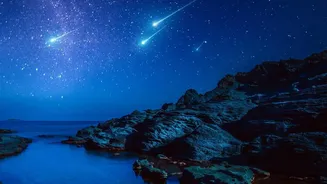
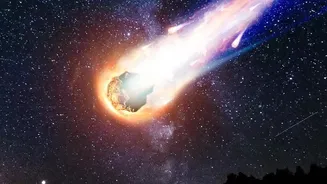
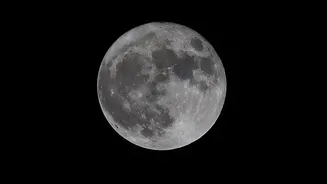
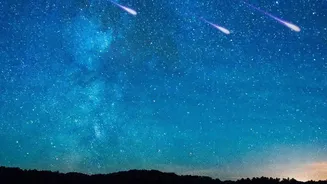
October's celestial highlight is the Orionid meteor shower, active from early October to early November. This annual event is caused by Earth passing through a trail of dusty debris left behind by the famous Halley's Comet. The shower is set to peak on the night of October 21-22, producing up to 20 fast and often bright meteors per hour under perfect conditions. There is a catch this year: a bright waxing gibbous Moon will illuminate the sky for much of the night. However, there is a golden window of opportunity for dedicated viewers. The Moon is expected to set around 3 a.m. local time, leaving the sky dark for the crucial few hours before dawn when the shower's activity is at its best. For the best show, find a dark location and look up during these pre-dawn hours.
Your Guide to a Perfect Night Under the Stars
To make the most of these celestial events, a little preparation goes a long way. The most important step is to escape the light pollution of the city. Even driving an hour away to a darker, rural location can dramatically increase the number of stars and meteors you will see. Once you've found your spot, give your eyes at least 20 to 30 minutes to fully adapt to the darkness; avoid looking at your bright phone screen during this time. If you need light, use a torch with a red filter, as red light is less disruptive to your night vision. Consider using a stargazing app on your phone beforehand to locate constellations like Orion, the radiant point for the meteor shower. Finally, with cooler October nights, remember to dress in warm layers and bring a blanket or a comfortable chair for a pleasant viewing experience.