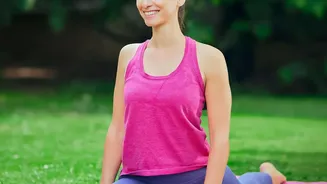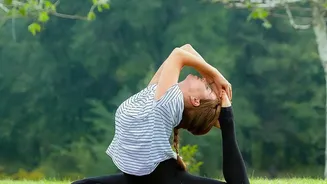




After a long day of meetings, deadlines, and screen time, your body holds onto the stress. Instead of slumping onto the sofa, a few minutes of gentle movement can actively release that tension and calm your racing mind.
Child's Pose (Balasana)
This quintessential resting pose
is a favourite for a reason. It’s deeply calming for the mind and provides a gentle, passive stretch for your entire back, hips, and shoulders—areas that often carry the brunt of work-related tension. To begin, kneel on the floor, touching your big toes together and sitting on your heels. Then, separate your knees about as wide as your hips. Exhale and lay your torso down between your thighs. Allow your forehead to rest softly on the floor. Your arms can be stretched out in front of you or rested alongside your body with palms facing up. Hold for at least 30 seconds, focusing on deep, slow breaths that expand your back and ribs.
Legs-Up-The-Wall Pose (Viparita Karani)
Perhaps the most restorative pose you can do, Legs-Up-The-Wall is a simple inversion that requires minimal effort for maximum reward. It's incredibly effective at calming the nervous system, reducing fatigue, and relieving swollen or tired legs and feet after a long day of sitting or standing. To practice it, sit on the floor with one side of your body against a wall. Gently swing your legs up the wall as you lie back. Your sitting bones should be as close to the wall as is comfortable. Let your arms rest out to your sides, palms up. Close your eyes and stay in this position for 5 to 10 minutes. The reversal of blood flow soothes the body and mind, helping to trigger a relaxation response.
Cat-Cow Stretch (Marjaryasana-Bitilasana)
Sitting at a desk can lead to a stiff, unhappy spine. The Cat-Cow stretch is a gentle, dynamic movement that warms up the spinal column, improves flexibility, and releases tension in the neck, shoulders, and back. Start on your hands and knees in a 'tabletop' position, with your wrists directly under your shoulders and knees under your hips. As you inhale, drop your belly towards the mat, lift your chest and tailbone, and look forward (Cow Pose). As you exhale, round your spine toward the ceiling, tucking your chin to your chest and releasing your neck (Cat Pose). Continue flowing between these two poses for 5 to 10 breaths, linking your breath to the movement.
Supine Spinal Twist (Supta Matsyendrasana)
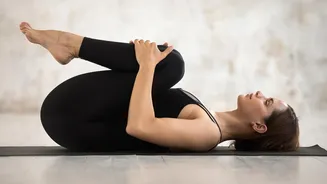
Twisting poses are excellent for 'wringing out' the tension that accumulates in the spine and internal organs throughout the day. This reclined twist is gentle yet effective, helping to stretch the back muscles, shoulders, and chest. Lie on your back and pull your right knee into your chest, keeping the left leg extended. Extend your right arm out to the side at shoulder height. As you exhale, guide your right knee across your body to the left, allowing it to drop towards the floor. Turn your gaze to the right if it's comfortable for your neck. Hold for 5 to 8 deep breaths, feeling the stretch along your spine and hip, then gently return to the center and repeat on the other side.
Standing Forward Bend (Uttanasana)
A gentle forward bend can be a wonderful release for tight hamstrings and a tense lower back, common issues for those who sit for long periods. Stand with your feet hipward apart and place a generous bend in your knees. Hinge forward from your hips, letting your head hang heavy and your hands fall toward the floor or rest on your shins. The key here is not to force the stretch but to let gravity do the work. Gently shake your head 'yes' and 'no' to release any lingering tension in your neck. This pose helps calm the brain and can alleviate stress and mild fatigue.
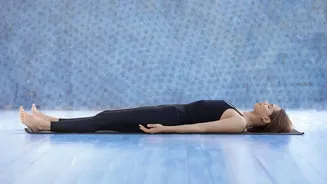
Corpse Pose (Savasana)
No relaxation sequence is complete without Savasana. While it may look like you're just lying down, this pose is a powerful practice of conscious relaxation. It allows your body to integrate the benefits of the previous poses and provides a moment of total stillness for your mind. Lie flat on your back with your legs slightly apart and your arms resting alongside your body, palms facing up. Close your eyes and release control of your breath. Scan your body from your toes to the crown of your head, consciously releasing any tension you find. Stay here for at least 5 minutes, allowing yourself to be fully supported by the floor.