
A New Window on the Dawn of Time
The James Webb Space Telescope (JWST), the largest and most powerful observatory ever sent into space, is engineered to see the universe in infrared light. This capability is crucial because the vast expansion of the universe stretches the light from
the most ancient objects, shifting it from visible light into the infrared spectrum. As a result, JWST can pierce through the obscuring cosmic dust and gas that hides stellar nurseries from view, allowing it to capture images of the universe as it was just a few hundred million years after the Big Bang. This technological prowess gives astronomers a direct line of sight into the 'cosmic dawn,' the epoch when the first stars ignited and began shaping the galaxies we see today. It's a leap in capability far beyond what previous instruments like the Hubble Space Telescope could achieve, which was unable to see this early period.
What Are Ancient Star Nurseries?
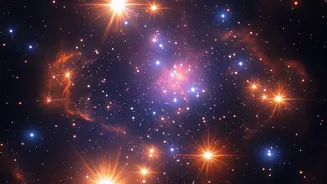
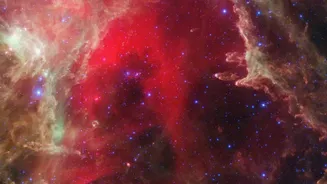
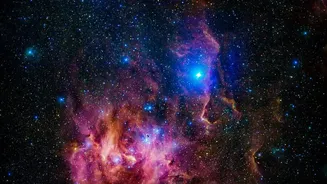
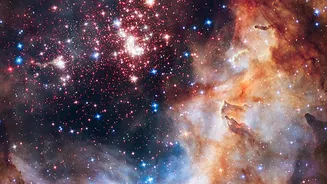
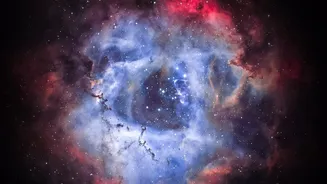
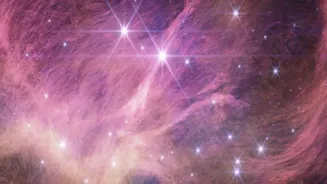
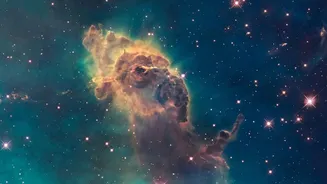
Star nurseries, technically known as molecular clouds, are immense, dense regions of cold gas and dust where stars are born. Think of them as cosmic maternity wards. Within these clouds, gravity pulls material together into dense clumps, which eventually collapse under their own weight to form protostars. Studying nurseries in our own galaxy, like the Tarantula or Carina Nebulas, gives us a real-time look at this process. However, studying ancient star nurseries means looking at galaxies so distant their light has traveled for over 13 billion years to reach us. This allows scientists to study star formation as it happened in the universe's infancy. The chemical composition in these early regions is believed to be similar to when the cosmos was at its peak of star formation, offering a vital analogue to the universe's most prolific era.
Bursts, Not Trickles
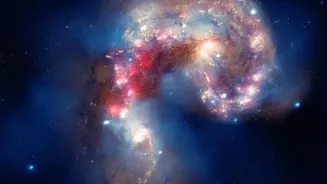
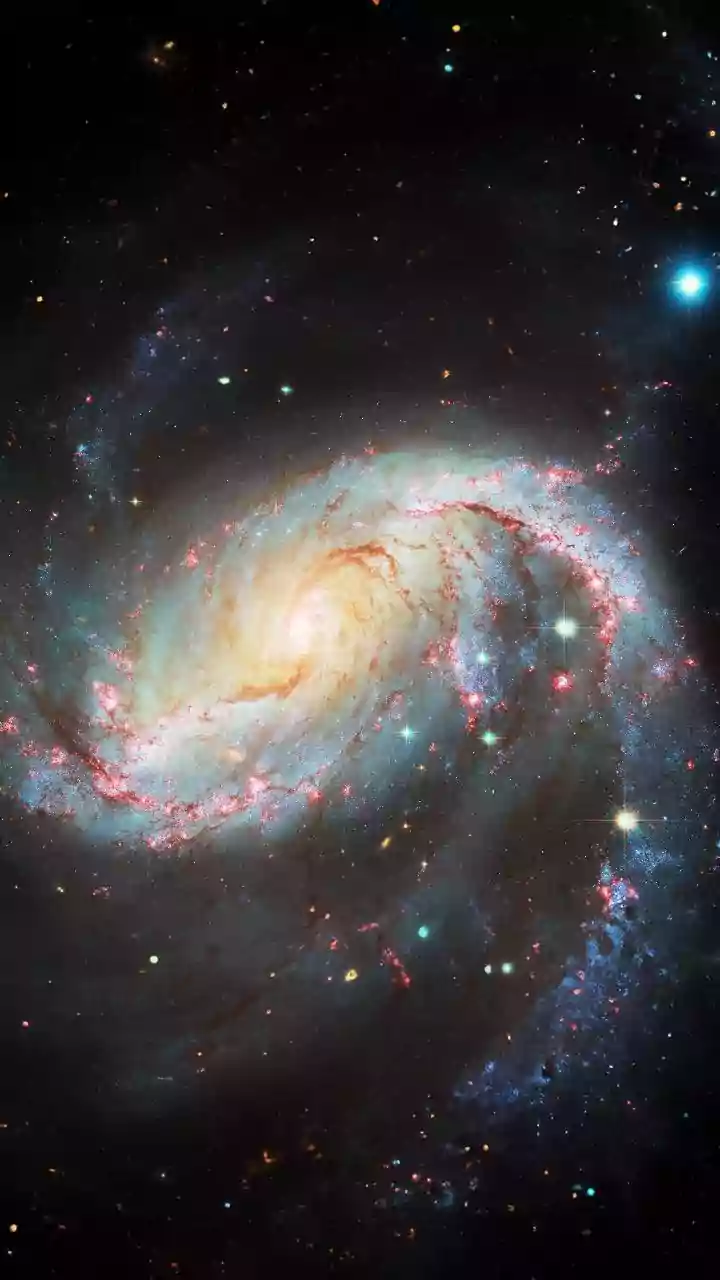
One of the most significant new details from JWST scans is that star formation in the early universe was not the slow, steady process once believed. Instead, it was characterized by intense, rapid bursts. These ancient galaxies were capable of producing stars at rates hundreds of times greater than what we see in the Milky Way today. Recent discoveries have identified galaxies forming stars just a few hundred million years after the Big Bang, far earlier than many models had predicted. This suggests the conditions needed for starbirth were in place much sooner, pointing to a more dynamic and rapidly evolving early cosmos. Powerful stellar winds and intense radiation from massive young stars carved out huge cavities in the surrounding gas, creating the dramatic structures JWST is now revealing with stunning clarity.
A Hidden Population of Stars
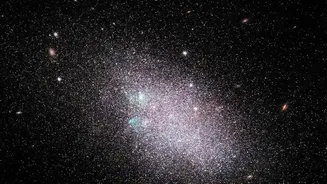
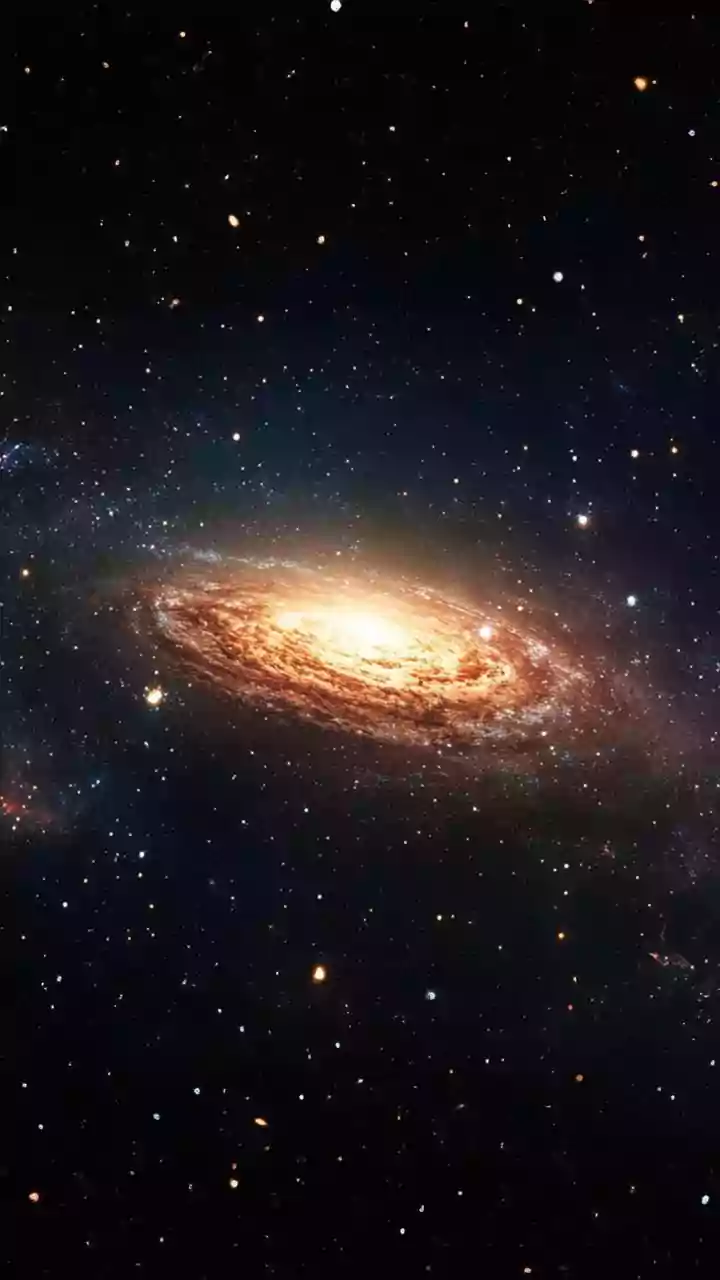
Recent JWST findings have also upended assumptions about the composition of these early galaxies. By studying nine ancient galaxies that had stopped forming stars, an international team discovered they contained a much higher proportion of small, faint stars than is found in modern galaxies. This 'hidden population' was previously undetectable, concealed by the glare of rare, much brighter massive stars. The implication is profound: these early galaxies could be three to four times more massive than previously estimated. This makes it even more challenging for astronomers to explain how such enormous and mature-looking galaxies could have formed so quickly after the Big Bang. It also suggests that planets orbiting low-mass stars might have been more common in the early universe than once thought.
Rewriting the Cosmic Story
Each new dataset from the JWST is adding new pages to our cosmic history book. Observations of regions like NGC 604 in the nearby Triangulum galaxy, which holds a dense concentration of over 200 massive, hot young stars, serve as a local laboratory for understanding the universe's past. The telescope's ability to analyze the chemical makeup of these regions and observe the jets and outflows from protostars is helping scientists refine their models of how both stars and planets form. By comparing nearby stellar nurseries to the faint light from the universe's first galaxies, astronomers are piecing together a more complete and complex story of stellar creation, from the cosmic dawn to the present day.