


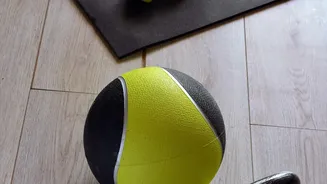

Shilpa Shetty consistently inspires with her dedication to fitness, and her latest workout is no exception. The actor shared a unique ball exercise that does more than build muscle; it’s a playful challenge for your brain and body.
The Coordination Challenge
In a recent video, Shilpa
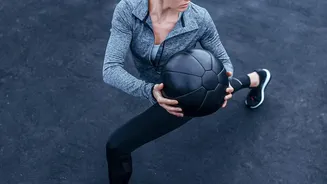
Shetty demonstrated a seemingly simple yet tricky exercise using two small balls. She starts by standing with her feet apart, crossing her arms, and then proceeds to drop and catch the balls in succession without losing rhythm. To increase the difficulty, she then performs the same intricate hand-eye coordination task while balancing on one leg. This isn't just about physical strength; it's a test of focus, timing, and the brain's ability to communicate with the body. Shilpa highlighted that the routine is designed to get the body and brain working together, turning fitness into a blend of physical and cognitive training.
Why Coordination Matters
Coordination is a fundamental skill that often gets overlooked in standard fitness routines. It's the ability to use different parts of the body together smoothly and efficiently. Good coordination is essential not just for athletic performance but for everyday activities, from walking without tripping to carrying groceries. Exercises that challenge coordination, like the one Shilpa demonstrated, improve proprioception—your body's awareness of its position in space. This heightened awareness translates to better balance, quicker reflexes, and a reduced risk of injury, as your body becomes more adept at adjusting to unexpected movements.
The Unsung Hero: The Exercise Ball
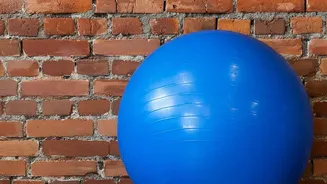
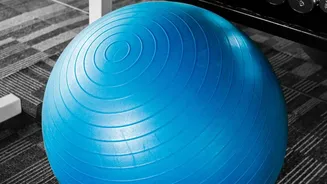
While Shilpa's challenge used small hand-held balls, larger stability balls (also known as Swiss balls) are incredible tools for developing full-body coordination and core strength. Because a stability ball provides an unstable surface, your body must constantly engage smaller stabilizing muscles in your core, back, and hips to maintain balance. This turns a simple exercise like a crunch or a plank into a full-body effort. Research has shown that performing exercises on a stability ball significantly increases the activation of deep core muscles compared to doing them on a flat surface, which is vital for posture and preventing back pain.
Getting Started with Ball Exercises
Inspired to try it yourself? The key is to start slow and prioritise form over speed. For a coordination challenge like Shilpa's, begin by standing on both feet in an open space and just practice the toss-and-catch movement. As you get more comfortable, you can progress to balancing on one leg. If you're using a larger stability ball, your first step is simply learning to sit on it while maintaining a straight back and keeping your feet flat on the floor. This alone engages your core. Once you feel stable, you can move on to beginner-friendly exercises. Remember to choose a ball size appropriate for your height; when you sit on it, your knees should be at a 90-degree angle.
Simple Exercises to Build Your Foundation
Before you're rolling and balancing like a pro, build confidence with these basic stability ball movements. Start with a stability ball crunch, where you lie with the ball under your lower back and perform a standard crunch; the instability will make it more challenging. You can also try a stability ball rollout, where you kneel and roll the ball forward, keeping your core tight to prevent your back from arching. Another great exercise is the hip bridge, where you lie on your back with your feet on the ball and lift your hips off the floor, rolling the ball toward you. These movements build the foundational core strength and balance you'll need for more advanced exercises.