







The Constant Hunt for a Charger
Wearable technology has revolutionised personal health, offering continuous tracking of everything from heart rate to sleep patterns. Yet, this constant monitoring comes at the cost of constant power consumption. The reliance on batteries that need frequent
charging or replacement is a significant barrier for users and limits the potential for truly seamless, long-term health monitoring. This dependency is not just an inconvenience; it can interrupt the flow of vital data and adds to the growing problem of electronic waste. The ideal solution would be a power source that is as persistent and mobile as the device itself, one that never needs to be plugged in.
An Introduction to Thermoelectric Fabrics
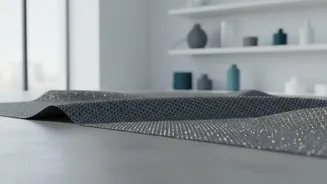
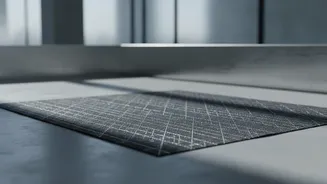
Enter thermoelectric fabrics. These are not just futuristic concepts but an emerging class of smart materials actively being developed by researchers worldwide. At its core, a thermoelectric generator, or TEG, is a device that can convert a temperature difference directly into electrical energy. By embedding innovative thermoelectric materials into flexible, comfortable fabrics, scientists are creating textiles that can be worn like any other piece of clothing. These fabrics are designed to be lightweight, breathable, and durable, making them suitable for everyday use, from athletic shirts to medical bandages.
Turning Your Body Heat Into Power
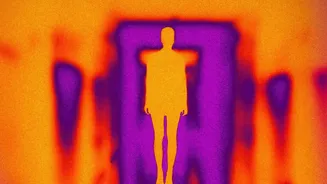
The science behind these smart fabrics is a fascinating principle known as the Seebeck effect. This effect describes how a voltage—and therefore an electric current—is produced when there's a temperature difference across a conductive material. Your body is a constant source of heat, typically around 37°C, while the ambient air is usually cooler. Thermoelectric fabrics are engineered to capture this natural temperature gradient between your skin and the surrounding environment. As your body heat flows outwards through the fabric, specialised polymers or semiconductor materials woven into the textile convert that thermal energy into a small but steady stream of electricity.
Powering the Future of Personal Health
The potential applications for self-powered health sensors are immense. Instead of relying on a battery with a limited lifespan, a continuous glucose monitor or a cardiac sensor could be powered indefinitely by the wearer's own body. This enables uninterrupted, long-term monitoring of chronic conditions without the need for surgical battery replacements for implantable devices like pacemakers. Researchers are developing smart fabrics with integrated sensors that can track vital signs, body temperature, and even chemical indicators in sweat or breath. This technology could lead to smart face masks that help detect viruses or athletic wear that provides real-time performance data without a bulky battery pack.
Challenges on the Road to a Battery-Free Future
Despite the exciting progress, several hurdles remain. The primary challenge is efficiency. While current prototypes can power low-energy sensors, generating enough electricity for more complex devices like a smartwatch remains difficult. The temperature difference between the body and the environment is often small, limiting the amount of power that can be produced. Researchers are experimenting with new materials, such as flexible silver selenide nanowires and nanostructured semiconductors, to boost performance. Another key issue is balancing efficiency with comfort, durability, and cost. For these fabrics to be widely adopted, they must be washable, stretchable, and affordable to produce on a large scale.