




Welcome to the World of Analogue Missions
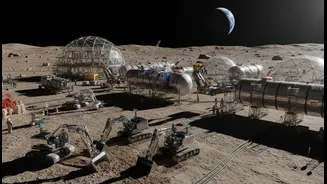
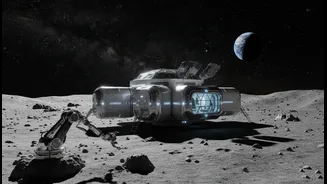
Before humanity takes its next giant leap to Mars or establishes a permanent base on the Moon, every possible challenge must be studied. This is where 'analogue missions' come in. These are sophisticated simulations that recreate the psychological and
physical stresses of space missions in Earth-based locations that mimic extraterrestrial environments. People who participate in these missions are called analogue astronauts, and their job is to live and work as if they were millions of kilometres from home. The goal is to test everything from hardware and food systems to, most importantly, the complex dynamics of human behaviour under intense pressure. By studying how crews handle isolation, confinement, and communication delays on Earth, space agencies like NASA and ESA can better prepare for the real thing.
Living on 'Mars' in Hawaii
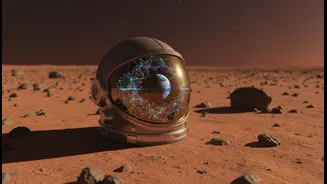
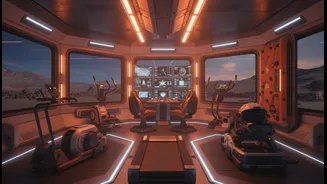
One of the most famous analogue sites is the Hawaii Space Exploration Analog and Simulation (HI-SEAS). Situated on the barren, rocky slopes of the Mauna Loa volcano, the environment looks remarkably like the surface of Mars. Here, small crews live for months at a time inside a 1,200-square-foot geodesic dome. Life inside is strictly controlled. Communication with the outside world has an artificial 20-minute delay to simulate the signal travel time between Earth and Mars. When crew members venture outside, they must wear full simulation spacesuits. These long-duration missions, some lasting up to a year, have provided invaluable data on crew cohesion, stress, and conflict resolution, helping scientists develop strategies for selecting compatible teams for deep-space voyages.
Training for Spacewalks Underwater
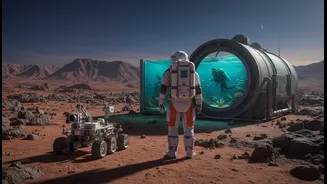
Not all analogues are on dry land. Off the coast of Florida, 19 metres below the surface, lies the Aquarius Reef Base, the world's only undersea research station. This is the home of NASA's Extreme Environment Mission Operations (NEEMO). By living underwater for weeks, 'aquanauts' experience conditions that are a surprisingly good stand-in for space exploration. The near-weightless environment is perfect for simulating spacewalks on an asteroid or the surface of Mars, allowing astronauts to test tools and techniques for collecting geological samples. Living in the cramped quarters of Aquarius also mimics the confinement of a spacecraft, providing a high-fidelity setting to study team dynamics and autonomy.
From Deep Caves to Frozen Deserts
The search for space-like environments on Earth has led researchers to some of the planet's most remote corners. The European Space Agency's CAVES program sends a multicultural team of astronauts into complex cave systems for weeks. Deep underground, they are completely isolated, navigating a dark, alien world where teamwork and careful procedure are critical for survival—much like in space. At the other extreme is Antarctica. Its freezing, desolate landscape is considered one of the highest-fidelity analogues for the Moon and Mars. Research stations there provide the perfect laboratory to study the effects of prolonged isolation, confinement, and altered light cycles on the human immune system and psychological well-being.
The Human Element of Spaceflight
Ultimately, the success of future long-duration missions depends on understanding the human factor. Analogue missions are critical for studying the psychological challenges astronauts will face, including stress, sleep disturbances, and interpersonal conflicts. Researchers monitor everything from mood shifts and team cohesion to the effectiveness of different leadership styles. The data gathered helps psychologists develop better methods for crew selection, training, and support. These 'Earth astronauts' may not leave the planet, but their experiences are essential for mitigating the risks for those who will. They are proving that the most important discoveries for surviving in space are often made right here at home.