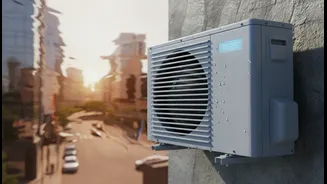









The Great Indian Cooling Dilemma
India is getting hotter, and more people are turning to air conditioners for relief. With rising incomes and more frequent heatwaves, ACs are shifting from a luxury to a necessity. This boom in cooling is understandable, but it creates a dilemma. While
providing much-needed comfort, the massive increase in AC usage puts a heavy strain on India's power grid, especially during peak evening hours when solar power isn't available. Studies show that ACs already account for a huge portion of peak electricity demand, and this is projected to grow significantly. For households, this translates into a financial trap: the comfort of cooling comes at the ever-increasing cost of high electricity bills, which can strain monthly budgets.
Understanding Your AC's Star Power
Not all ACs are created equal. The Bureau of Energy Efficiency (BEE) star rating on your appliance is a crucial guide to its power consumption. The label, with its 1-to-5-star rating, indicates the unit's energy efficiency. A 5-star AC consumes significantly less electricity to provide the same amount of cooling as a 3-star or 1-star model. The rating is based on the Indian Seasonal Energy Efficiency Ratio (ISEER), which measures cooling output versus power input over a season. A higher ISEER value means better efficiency. While a 5-star AC might have a higher initial cost, the savings on your electricity bill can be substantial, often paying back the difference in just a few summers.
Smart Habits for a Cooler Room
The most powerful tool for managing your AC bill is your remote control. The BEE recommends setting your AC to a default temperature of 24°C. For every degree you increase the temperature, you can save approximately 6% on energy consumption. Running your AC at 18°C doesn't cool the room faster; it just makes the compressor work harder and longer, burning more power. Use timers or smart controllers to schedule AC operation, ensuring it runs only when needed. Also, make sure to close all doors and windows to prevent the cool air from escaping. Using a ceiling or table fan along with the AC can help circulate cool air more effectively, allowing you to set the AC at a higher temperature while still feeling comfortable.
Maintenance is Key to Efficiency
An AC is like any other machine: it needs regular maintenance to perform at its best. One of the simplest and most effective tasks is cleaning the air filters. Dirty, clogged filters restrict airflow, forcing the unit to work harder and consume more power. It's recommended to clean them every 15-20 days during periods of heavy use. Additionally, ensure the outdoor unit is clear of debris and has space for proper ventilation, preferably in a shaded area. Annual professional servicing helps keep components like coils clean and checks for issues like refrigerant leaks, ensuring your AC runs efficiently and has a longer lifespan.
Thinking Beyond the Air Conditioner
Your AC shouldn't be your only line of defense against the heat. Simple, low-cost strategies known as passive cooling can make a huge difference. During the hottest parts of the day, use curtains or blinds to block direct sunlight from heating up your rooms. In the cooler early morning or late evening, practice cross-ventilation by opening windows on opposite sides of the house to let breezes flow through. Over the long term, solutions like reflective white paint on the roof, planting shade trees, and using traditional architectural elements like jalis (perforated screens) can significantly reduce a home's heat gain, a core principle of the India Cooling Action Plan.