


The Moment of Recognition
An in-flight emergency doesn't always begin with a dramatic event. Pilot incapacitation can be sudden and obvious, like a heart attack, or subtle and gradual, where a pilot becomes confused or unresponsive. This is why constant monitoring and structured
communication are core parts of cockpit philosophy. The remaining pilot is trained to notice deviations from standard procedure, a missed callout, or changes in behaviour. The first step is always recognising the problem. Once identified, the other pilot must immediately and decisively take full command of the aircraft.
Taking Command of the Cockpit
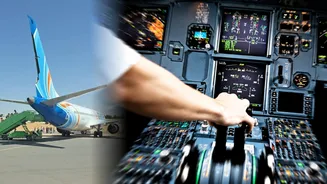
The very first action for the remaining pilot is to state, "I have control." This verbal declaration establishes their authority and helps to mentally frame the shift to a single-pilot operation. Their next priority is to fly the aircraft and ensure it is stable, often by engaging the autopilot to manage the workload. They then turn their attention to the incapacitated crew member. With the help of cabin crew, the pilot will be secured in their seat with the harness locked to prevent them from slumping over and interfering with the controls. Their seat is moved back, and first aid is administered if possible, often with the help of medically qualified passengers.
Communicating the Urgency
With the aircraft stabilised, the pilot's next critical task is communication. They will broadcast a "Pan-Pan" call over the radio. Repeated three times, "Pan-Pan, Pan-Pan, Pan-Pan" is the international signal for an urgent situation that is not an immediate, life-threatening catastrophe (which would be a "Mayday" call). This call alerts Air Traffic Control (ATC) that the aircraft has a serious problem, needs priority assistance, but is not in immediate danger of crashing. The pilot will explain the nature of the emergency—pilot incapacitation—and their intentions, which almost always involve diverting to the nearest suitable airport.
The Coordinated Ground Response
Once the Pan-Pan call is made, a network of support on the ground springs into action. ATC will clear the airspace around the aircraft, providing a direct route to the chosen airport and giving the pilot one less thing to worry about. They will provide continuous weather updates and guide the aircraft along the approach path. Simultaneously, the destination airport is alerted. Emergency services, including fire, medical, and police teams, are scrambled and positioned to meet the aircraft the moment it lands. This ensures that the incapacitated pilot receives immediate medical attention and that the aircraft is safely managed on the ground.
Technology as a Failsafe
Modern airliners are equipped with sophisticated technology designed to reduce pilot workload, which becomes invaluable in a single-pilot scenario. The autopilot can handle navigation, altitude, and speed, flying a pre-programmed route. For the landing itself, many large aircraft have 'autoland' systems. Guided by the airport's Instrument Landing System (ILS) and the aircraft's own sensors, these systems can perform a fully automated landing, from final approach to touchdown and even braking on the runway. This technology acts as a crucial backup, allowing the lone pilot to focus on monitoring the systems and managing the overall situation.
The Final Approach
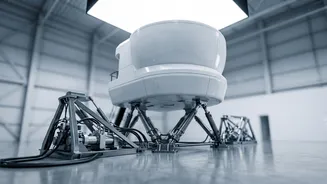
A single-pilot landing is a high-workload task, but it is something pilots train for extensively in simulators. With support from ATC and the use of automation, the pilot follows the same procedures as they would with a co-pilot, just with a much higher level of personal responsibility. They will run through checklists aloud, configure the aircraft for landing by deploying flaps and landing gear, and manage the descent. Whether using the autoland system or flying the final approach manually, the goal is a stable, controlled touchdown. The extensive training ensures that even under immense pressure, the pilot's actions are methodical and precise, guided by countless hours of practice for this exact scenario.