



The Sun’s Hidden Temper
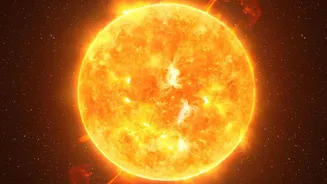
Space weather refers to the changing conditions in space driven by the Sun's activity. While we are shielded on Earth by a magnetic field and atmosphere, the environment beyond is far more volatile. The Sun constantly emits a stream of charged particles
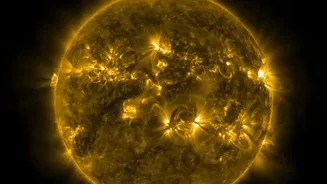
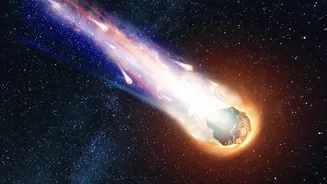
called the solar wind. But sometimes, it unleashes much more powerful events. The two main culprits are solar flares and coronal mass ejections (CMEs). Solar flares are immense bursts of radiation that reach Earth in minutes, capable of causing radio blackouts. CMEs are even larger eruptions, giant clouds of plasma and magnetic fields that travel slower, taking one to three days to reach us, but can trigger powerful geomagnetic storms upon arrival.
Satellites in the Firing Line
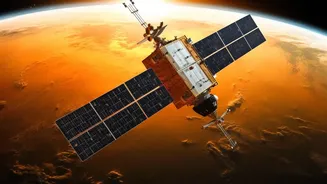
For the thousands of commercial satellites in orbit, space weather is a significant operational risk. Energetic particles from solar events can damage sensitive electronics, corrupt data, or trigger phantom commands that cause a satellite to malfunction. Over time, this radiation degrades solar panels and instruments, shortening a satellite's lifespan. Geomagnetic storms pose another serious threat, especially to satellites in low-Earth orbit (LEO). These storms heat and expand Earth's upper atmosphere, increasing the atmospheric drag on satellites. This increased drag can cause satellites to lose altitude, requiring them to burn precious fuel to stay in their proper orbit. In a worst-case scenario, they can be pulled down to re-enter the atmosphere prematurely.
Our Eyes on the Sun
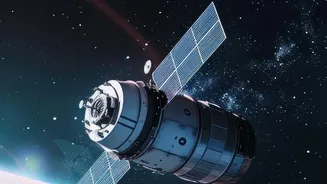
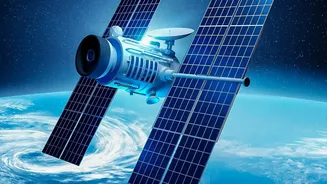
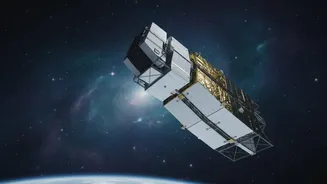
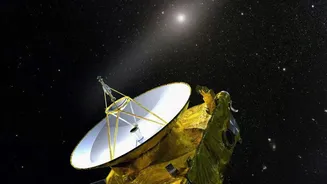
To protect this vital infrastructure, a dedicated fleet of satellites monitors the Sun and the space environment between the Sun and Earth. These space weather sentinels are our early warning system. Key players include NOAA’s Geostationary Operational Environmental Satellites (GOES), which provide real-time imagery of solar flares from Earth orbit. Further out, at a gravitationally stable point nearly a million miles from Earth called Lagrange Point 1 (L1), satellites like the Deep Space Climate Observatory (DSCOVR) and the new SOLAR-1 get a constant, unobstructed view of the Sun. These L1 satellites directly measure the solar wind, giving forecasters crucial advance notice of an incoming CME, typically about an hour before it hits Earth.
From Warning to Action
The data collected by these satellites is streamed to forecasting centers on the ground, like NOAA’s Space Weather Prediction Center (SWPC). There, scientists analyze the information, run it through advanced models, and issue watches, warnings, and alerts to those who might be affected. With advance warning of a major solar storm, satellite operators can take protective measures. They might temporarily put a satellite into a protective 'safe mode' to shield its electronics, reorient the craft to protect sensitive components, or postpone critical maneuvers. For LEO constellations, an accurate forecast provides time to plan engine burns to counteract the expected atmospheric drag, helping to prevent orbital decay and potential collisions. This predictive capability is a cornerstone of risk management for the entire commercial space industry.
The Future of Space Security
As the commercial space industry continues to launch thousands of new satellites, especially into crowded low-Earth orbits, the need for accurate and timely space weather forecasting has never been greater. A single, powerful geomagnetic storm could have cascading effects on these dense constellations, disrupting services we rely on daily. Recognizing this, space agencies like NOAA and NASA are investing in the next generation of monitoring technology. The SOLAR-1 satellite, which recently became operational, provides faster and higher-quality data than its predecessors. Future missions under the Space Weather Next program aim to place even more advanced sensors at strategic vantage points, ensuring we have the resilient observation network needed to safeguard our increasingly space-dependent society.