




The Closed-Loop Challenge
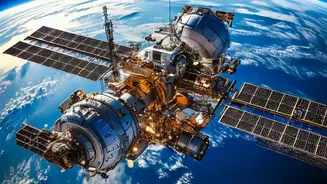
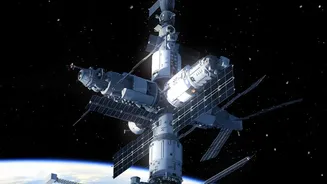
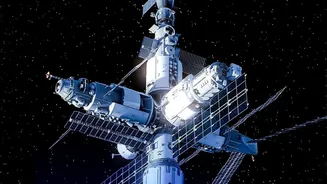
On Earth, a vast ecosystem of plants and oceans naturally recycles the air we breathe, absorbing the carbon dioxide (CO2) we exhale and producing fresh oxygen. In the confines of a spacecraft like the International Space Station (ISS), this process must
be replicated artificially. The goal is to create a 'closed-loop' system, one that endlessly recycles resources with minimal or no resupply from Earth. Currently, the ISS Environmental Control and Life Support System (ECLSS) does a remarkable job, but it’s not a perfectly closed loop. Water is recycled from astronaut breath, sweat, and urine at over 90% efficiency, and this water is then split using electrolysis to create breathable oxygen. However, the systems that scrub CO2 from the air require regular maintenance and parts that must be shipped from Earth, an impossible luxury for a multi-year mission to Mars.
From Waste Gas to Breathable Air
The primary challenge in air revitalisation is dealing with carbon dioxide. While vital for plants, it's toxic to humans in high concentrations. On the ISS, systems like the Carbon Dioxide Removal Assembly (CDRA) use beds of material called zeolite to capture CO2 molecules. A portion of this captured CO2 is then fed into a Sabatier system, which reacts it with hydrogen (a byproduct of oxygen generation) to produce water and methane. The water is then looped back into the system to create more oxygen, while the methane is vented into space. This process recovers some oxygen atoms from CO2, but it’s not fully efficient. Reaching near-100% efficiency is the key to breaking our reliance on terrestrial resupply.
The Next Generation of Life Support
This is where the breakthroughs come in. Space agencies are developing and testing more advanced systems designed for reliability and efficiency. The European Space Agency's Advanced Closed Loop System (ACLS), for instance, was installed on the ISS to demonstrate a more efficient way to process CO2 and reduce the amount of water needed for oxygen generation by about 400 litres per year. It uses special amine materials to capture CO2 more effectively. NASA is also developing advanced solid sorbents and other technologies to create systems that are not only more efficient but also require less maintenance, a critical factor for long journeys where there are no spare parts. These new systems aim to recover far more oxygen from exhaled CO2, closing the loop and making spacecraft more self-sufficient.
Breathing Martian Air
The ultimate test of air recycling is In-Situ Resource Utilisation (ISRU)—the ability to 'live off the land'. Mars' atmosphere is about 96% carbon dioxide, a toxic environment for humans but a potential goldmine for life support. NASA’s Perseverance rover carried a groundbreaking experiment called the Mars Oxygen In-Situ Resource Utilization Experiment, or MOXIE. This toaster-sized device successfully proved it could pull in the Martian atmosphere and convert the CO2 directly into pure oxygen using a process called solid oxide electrolysis. MOXIE produced oxygen on Mars 16 times, generating about 122 grams in total—enough for a small dog to breathe for 10 hours. Though a small-scale demonstration, it's a monumental proof-of-concept. A scaled-up version of MOXIE could one day produce tons of oxygen, not just for astronauts to breathe, but also as a critical component of rocket propellant for the return journey to Earth.