



A New Chapter in Astronomy
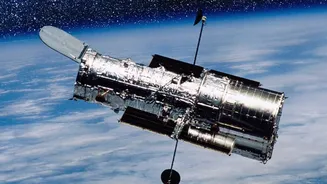
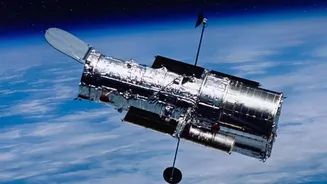
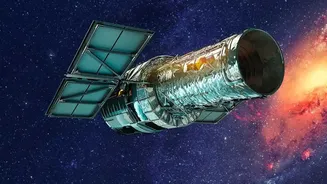
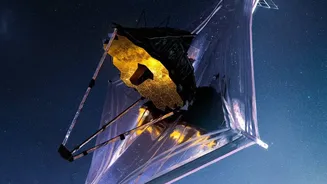
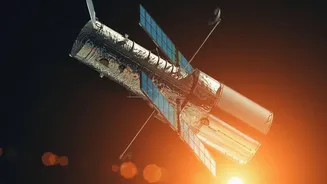
Scheduled to launch by May 2027, the Nancy Grace Roman Space Telescope is NASA's next great observatory, joining the ranks of Hubble and the James Webb Space Telescope (JWST). Named after NASA's first chief of astronomy, Nancy Grace Roman, who was instrumental
in the creation of Hubble, this new mission is designed with a specific and powerful purpose: to see the universe in a way no other telescope can. While Hubble provides stunning, detailed close-ups and Webb peers deep into the dawn of time, Roman is built for breadth. Its primary goal is to conduct massive surveys of the cosmos, imaging huge swathes of the sky to answer fundamental questions about our universe. The telescope has two main objectives: to hunt for thousands of new exoplanets and to investigate the enigmatic forces of dark energy and dark matter that govern the expansion and structure of the cosmos.
Seeing the Bigger Picture
Roman's superpower is its incredible field of view. Though its primary mirror is the same size as Hubble's at 2.4 meters, its Wide Field Instrument (WFI) can capture a patch of sky over 100 times larger than Hubble can in a single shot. Imagine trying to create a mosaic of a sprawling landscape by taking one tiny photo at a time; that’s the challenge for telescopes like Hubble. Roman, by contrast, can capture the entire panorama in a fraction of the time. This ability will allow it to create unprecedented maps of the universe at a high, space-based resolution. In its five-year primary mission, it will measure light from hundreds of millions of galaxies, providing a vast dataset that will help scientists understand how the universe has evolved over billions of years. This wide-angle view is crucial for its two main science goals, as it allows for the repeated observation of large star fields necessary for detecting the subtle clues of hidden objects.
Hunting for Cosmic Wanderers
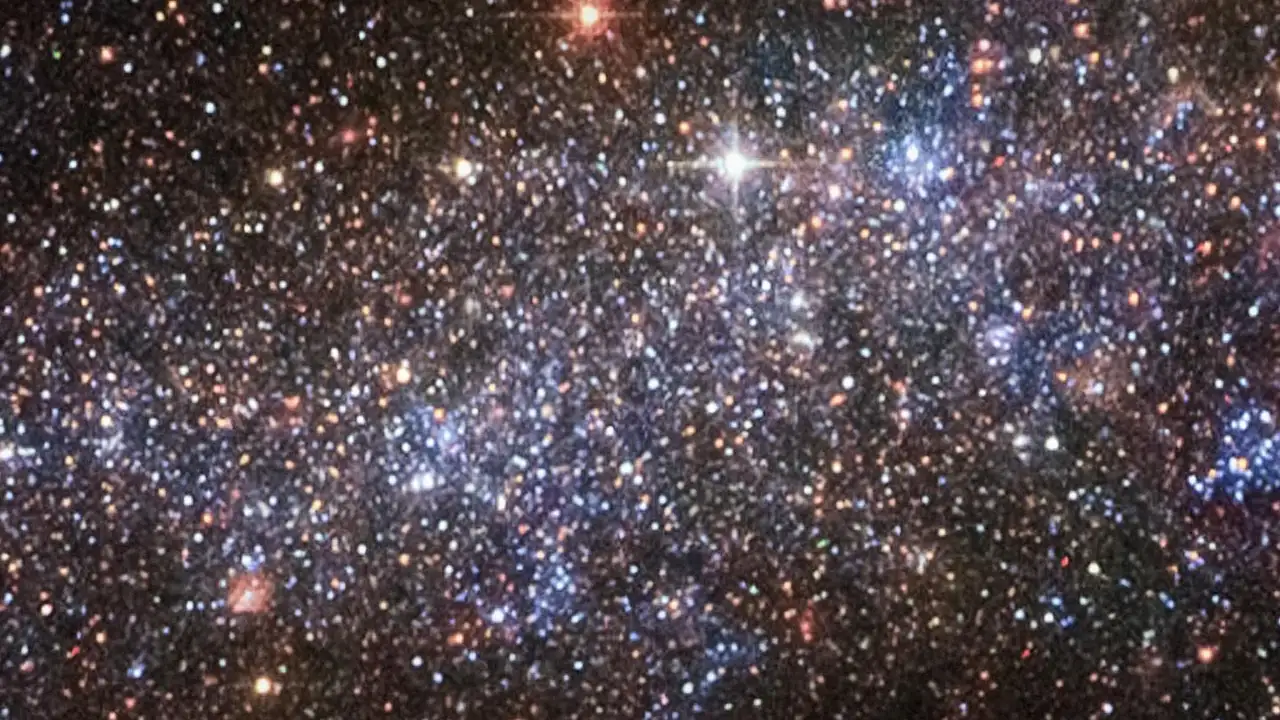
One of Roman's most exciting tasks is to find planets that have been difficult to detect with other methods, particularly rogue planets—worlds that drift through space without a host star. To do this, Roman will use a technique called gravitational microlensing. This effect, predicted by Einstein, occurs when a massive object, like a star or planet, passes almost directly in front of a more distant star from our point of view. The gravity of the foreground object acts like a magnifying glass, bending and amplifying the light of the background star, causing a temporary spike in its brightness. Planets orbiting the foreground star can cause their own smaller, secondary flicker, revealing their presence. Roman's continuous, high-cadence monitoring of the dense star fields in the center of our galaxy will make it exceptionally good at spotting these fleeting events. Scientists estimate Roman could find hundreds of rogue planets, potentially discovering that our galaxy is home to trillions of these wandering worlds.
Illuminating the Dark Universe
Beyond finding new worlds, Roman will tackle one of the biggest puzzles in physics: the nature of dark energy and dark matter. These mysterious components are believed to make up about 95% of the universe, yet they remain invisible and poorly understood. Dark energy is the name given to the force causing the universe's expansion to accelerate, while dark matter is the unseen substance whose gravity holds galaxies together. By surveying over a billion galaxies and thousands of distant stellar explosions called supernovae, Roman will create a 3D map of the cosmos across space and time. This map will allow scientists to study how the distribution of galaxies and the expansion of the universe have changed over cosmic history, providing crucial clues about the properties of dark energy and the influence of dark matter. This massive statistical survey is something only a wide-field telescope like Roman can accomplish.
A Tool for Countless Discoveries
While exoplanet hunting and cosmology are its primary directives, Roman's capabilities will benefit nearly every area of astrophysics. Its sensitive Coronagraph Instrument will be a technology demonstration for directly imaging Jupiter-sized planets, blocking the overwhelming glare of their stars to make the planets themselves visible. This is a crucial step toward future missions that could image Earth-like worlds. The telescope’s vast surveys will also discover a treasure trove of other objects, from new moons around Jupiter and Saturn to distant black holes and the cosmic nurseries where stars are born. By monitoring the sky for changes over time, it will contribute to time-domain astronomy, catching transient events as they happen and providing alerts to other observatories for follow-up studies.