
The Golden Jewel of the Night
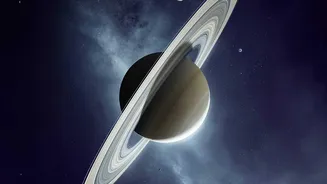
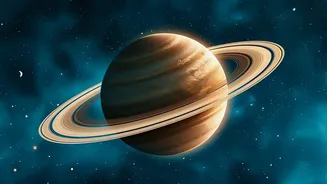
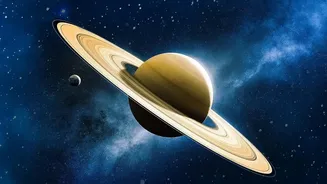
Throughout August 2026, Saturn will be a prominent and beautiful object in the evening sky. Rising in the mid-evening, the planet will be visible for most of the night, appearing as a steady, golden-hued point of light. Unlike twinkling stars, Saturn shines
with a constant glow, making it relatively easy to distinguish. This month is an excellent opportunity for observation as the planet is brightening on its way to opposition—its closest and brightest point for the year—in early October. On the nights of August 30th and 31st, the waning gibbous Moon will pass close to Saturn, creating a beautiful pairing in the sky and making the ringed planet even easier to locate. It will be a fantastic target for anyone looking to connect with the cosmos from their own backyard.
How to Find and View Saturn
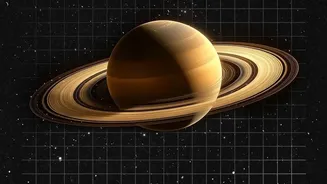
You don’t need to be an expert astronomer to find Saturn. Simply look towards the eastern sky a couple of hours after sunset. It will be visible in the constellation Pisces, climbing higher as the night progresses. While it is bright enough to be seen with the naked eye, the real magic happens when you use optical aid. Even a good pair of binoculars might reveal that the 'star' is not perfectly round, hinting at its famous rings. To truly see the rings, however, you’ll need a telescope. The good news is that you don’t need a massive, expensive instrument. Even a small telescope with a magnification of 25x or 50x is enough to separate the rings from the planet's body, a sight that has captivated viewers for centuries. Larger amateur telescopes will reveal more detail, like the famous Cassini Division, a dark gap between the main rings.
A Universe of Ice and Dust
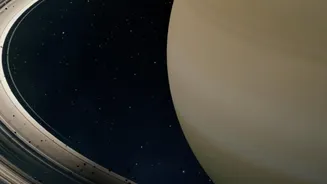
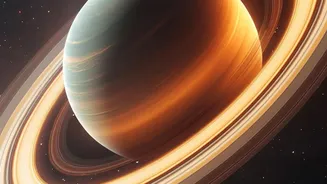
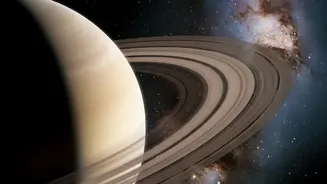
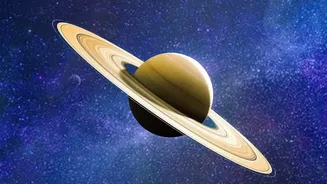
So, what are you actually seeing? Saturn's rings are one of the most stunning sights in our solar system, an expansive system made of billions of individual particles. These particles are composed almost entirely of water ice, with traces of rocky material and dust. They range in size from tiny grains smaller than sand to chunks as large as a house or even a mountain. While the ring system stretches up to 282,000 kilometres from the planet, it is incredibly thin, typically only about 10 meters thick. Astronomers believe the rings are the remnants of comets, asteroids, or even moons that were torn apart by Saturn's immense gravity before they could reach the planet.
A Fleeting Cosmic Wonder
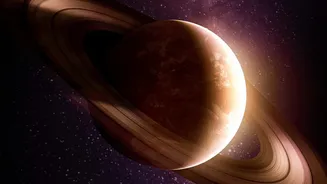
Part of what makes viewing Saturn’s rings so special right now is the knowledge that they are not permanent. Recent research from NASA has confirmed that Saturn is losing its rings at a surprisingly fast rate. This phenomenon, known as 'ring rain', involves particles from the rings being pulled inward by the planet's gravity and magnetic field, essentially raining down into Saturn's upper atmosphere. The rate of this cosmic erosion is significant; scientists estimate an amount of water equivalent to an Olympic-sized swimming pool drains from the rings every half an hour. This discovery suggests that we are fortunate to be alive in an era when Saturn has such a magnificent ring system.
An Invitation to Look Up
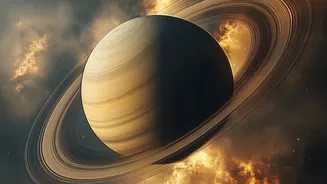
While the rings' eventual disappearance is on a cosmic timescale—they are expected to be completely gone within the next 100 to 300 million years—this knowledge adds a layer of poignancy to our observations. Compared to the solar system's 4.5-billion-year history, the rings are a relatively young and transient feature, possibly having formed during the age of the dinosaurs. Knowing that they won't last forever transforms a simple act of stargazing into a more profound experience. It’s a chance to witness a temporary cosmic marvel. This August provides a perfect opportunity to appreciate this fleeting beauty. So, step outside, look up, and take in the view. You are not just seeing a planet; you are witnessing a magnificent, and temporary, wonder of our solar system.