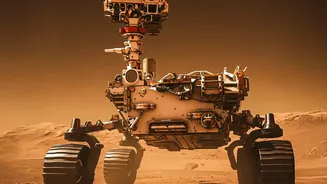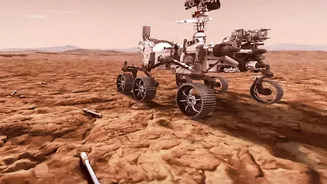






Bringing a piece of Mars back to Earth is one of the most ambitious goals in space exploration. Now, after years of challenges, NASA is hitting the reset button with a new plan to make this historic retrieval mission a reality.
The Ultimate Souvenir
For years, the Mars Sample
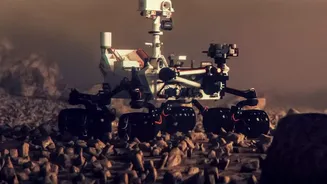
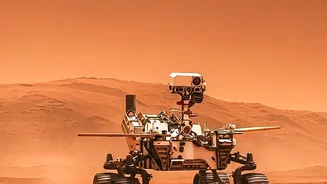
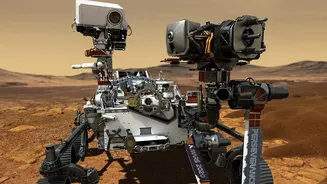
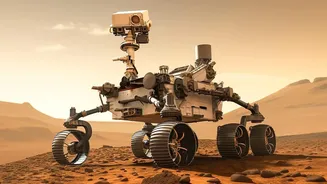
Return (MSR) mission has been a top priority for scientists. The goal is simple to state but incredibly complex to achieve: bring back the rock, soil, and atmospheric samples that NASA's Perseverance rover has been diligently collecting since it landed in 2021. These samples, sealed in titanium tubes, are our best hope for answering a fundamental question: did life ever exist on Mars? By studying them in advanced labs on Earth, scientists could unlock secrets about the Red Planet's ancient past, its potential for habitability, and even our own planet's history. The Perseverance rover has already gathered a diverse collection of specimens from Jezero Crater, a location believed to have once been a lakebed, making these samples invaluable.
Why the Original Plan Stalled
The original plan, a joint effort with the European Space Agency (ESA), involved a complex ballet of multiple spacecraft to land on Mars, collect the samples, and launch them back to Earth. However, the mission's complexity led to significant hurdles. Independent reviews highlighted a ballooning budget, with estimates climbing as high as $11 billion, and a delayed timeline that pushed the samples' arrival to 2040. NASA Administrator Bill Nelson stated that such a cost and schedule were 'too expensive' and 'too far away', putting other critical science missions at risk. Faced with budget cuts and technical challenges, NASA acknowledged the original architecture was no longer feasible, prompting a complete rethink.
Introducing the PSRA
On November 9, 2026, NASA officials announced a new path forward: the Perseverance Sample Retrieval Architecture, or PSRA. This isn't a finalized mission plan but rather a new initiative to develop 'impartial recommendations' for a more streamlined, faster, and cost-effective way to bring the samples home. A dedicated PSRA strategy team will kick off its work in January 2027. Their job is to review lessons learned, evaluate current technologies, and propose a new, credible plan. The final report, expected in the winter of 2027-2028, will form the blueprint for the revamped mission.
A New Space Race?
The push to redesign the mission is also influenced by external factors. China is making significant progress with its own Mars sample return mission, Tianwen-3. Chinese space officials have stated they aim to launch their mission around 2028 and return samples to Earth as early as 2031. This has added a sense of urgency to NASA's efforts, framing the scientific endeavor within a broader context of international competition and leadership in space exploration. The PSRA's success is now seen not only as a scientific imperative but also a strategic one for maintaining a leading edge in planetary science.
The Road Ahead
The PSRA initiative marks a critical turning point for one of NASA's flagship scientific goals. While Perseverance continues its work on Mars, recently collecting its first sample in over a year, the focus back on Earth is on the drawing board. The new architecture will need to be innovative and robust, likely simplifying the number of spacecraft and landings required. The ultimate goal is to present a mission profile that is not only scientifically ambitious but also politically and financially viable, with some analyses suggesting a more realistic target could be a 2035 return for around $8 billion. The findings of the PSRA team will determine the fate and timeline for retrieving the most sought after rocks in the solar system.