






A Policy Shift Opens the Stars
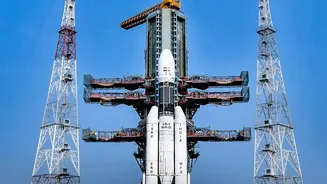
For decades, space in India meant one thing: ISRO. The government-run agency earned national pride with its cost-effective missions to the Moon and Mars. But in June 2020, a landmark policy decision changed the landscape forever, opening the sector to private
companies. This wasn't just about letting private firms be suppliers anymore; it was about empowering them to build and launch their own rockets, deploy their own satellite constellations, and commercialise space-based services. The goal was to move from a government-dictated, 'supply-based' model to a market-driven, 'demand-based' one, fostering innovation and aiming to significantly increase India's share of the global space economy. Projections now see India's space economy potentially growing from around $8 billion today to over $40 billion by the next decade.
IN-SPACe: The New Mission Control
To manage this new era, the government created the Indian National Space Promotion and Authorisation Centre (IN-SPACe) as a single-window agency. Think of it as a friendly but firm mission control for the private sector. Its job is to promote, authorise, and supervise private space activities, ensuring safety and compliance without stifling innovation. Critically, IN-SPACe acts as a bridge, giving startups access to ISRO's invaluable and often prohibitively expensive facilities, from test sites to technical expertise. In just a few years, the agency has received hundreds of applications, authorised over a hundred missions and activities, and facilitated the transfer of key ISRO-developed technologies to private industry, fuelling the rapid growth.
The Trailblazers: Building Rockets and Satellites
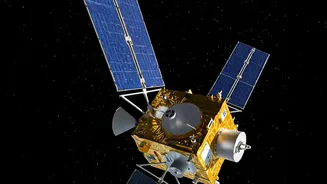
The results of this policy shift are no longer theoretical. The headline "hundreds of new ventures" is a reality, with the number of space startups soaring from just one in 2014 to over 450 by mid-2026. Leading the charge are companies like Skyroot Aerospace, which made history with the launch of its Vikram-1 rocket, making India only the third country with a privately developed orbital launch vehicle. Then there's Agnikul Cosmos, pioneering 3D-printed rocket engines to slash costs and offer on-demand launches for small satellites. In the satellite domain, Bengaluru-based Pixxel is deploying a constellation of hyperspectral imaging satellites. These can 'see' the Earth in hundreds of colours, providing data for agriculture, mining, and climate change monitoring that is invisible to conventional cameras. These companies are not just building hardware; they are creating the foundational infrastructure for a new Indian space ecosystem.
Beyond the Launchpad: The Downstream Data Gold Rush
The boom isn't just about sending rockets up; it's about the valuable information that comes back down. A significant portion of the new ventures are 'downstream' companies focused on using satellite data. This is where space becomes relevant to everyday life and business. Satellite communications, for instance, are crucial for bridging the digital divide in remote and hilly areas and providing resilient connectivity during natural disasters. Earth observation data from companies like Pixxel can help farmers with precision agriculture, allow insurance companies to assess damage more accurately, and help urban planners manage city growth. This data-driven side of the industry is attracting talent and investment, proving that some of the most valuable assets in space are the insights it provides about Earth.
Fueling the Ambition: A Surge in Investment
Ambitious projects require significant capital, and investors are taking note. Indian space startups have attracted hundreds of millions of dollars in funding in recent years. Skyroot Aerospace achieved unicorn status, and the sector is seeing a steady inflow of venture capital. The government is also catalysing this growth, not only through policy but through initiatives like a dedicated venture capital fund and liberalised Foreign Direct Investment (FDI) norms to attract global investors. This financial backing is crucial, enabling startups to move from drawing boards to launchpads, hire top engineering talent, and compete on a global stage where, until recently, only nations could play.