






The Silent Thirst of Forests
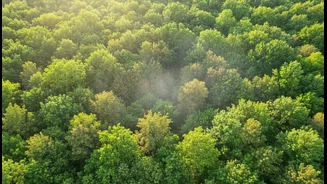
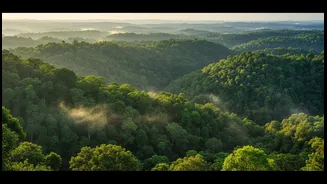
From the Western Ghats to the forests of the Northeast, India's diverse woodlands are facing a growing threat: drought. As climate change alters weather patterns, periods of low rainfall are becoming more frequent and severe. This puts immense stress
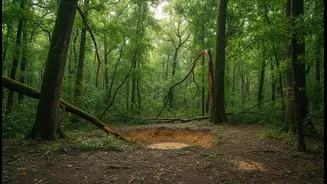
on forests, which are crucial for biodiversity, clean water, and absorbing carbon dioxide from the atmosphere. For years, a key question for scientists has been understanding how different trees cope with this water stress. The answer, it turns out, lies deep within the tree itself, in its internal 'plumbing' system. Understanding this system is vital, as ecological droughts are already causing 'browning' and vegetation stress across India, threatening to turn our precious forests from carbon sinks into carbon sources.
A Tree's Inner Plumbing
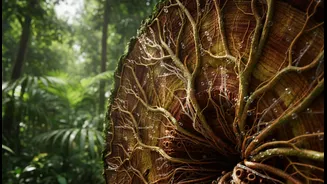
Imagine trying to drink through a straw that's hundreds of feet long. That's the challenge a tall tree faces every day. To transport water from its roots up to its leaves, a tree relies on a network of tiny tubes called xylem. This is the tree's hydraulic system. The efficiency and safety of this system are known as its 'hydraulic traits'. When water is scarce, tension in these tubes increases, creating the risk of air bubbles forming—an event called an embolism. This is like a blockage in the plumbing, which can stop water flow and, in severe cases, kill the tree. It’s a delicate balancing act between pulling water high into the canopy and preventing the entire system from failing under the strain.
The Tall vs. The Small
For a long time, scientists assumed that the tallest trees were the most vulnerable to drought. It seemed logical: moving water to a greater height against gravity requires more effort and puts the xylem under greater strain, making a hydraulic failure more likely. However, groundbreaking new research has challenged this assumption. A recent study found that giant tropical trees have evolved remarkable adaptations. As they grow taller, they actually rebuild their internal plumbing. For instance, the xylem vessels are often wider at the base, and the leaves at the very top are tougher and more resistant to wilting. This means that during a drought, giant trees may not be more vulnerable than their smaller neighbours. Both tall and short trees appear to be affected in similar ways, a finding that changes how we view forest resilience.
Smarter Forecasts for a Hotter World
This new understanding of how individual trees cope with drought has massive implications for forecasting the future of entire forests. The health of the largest trees is particularly important because they store a disproportionately large amount of carbon. If previous models assumed these giants were highly vulnerable, they might have been overestimating the immediate risk of mass die-offs in some scenarios. By incorporating these more nuanced hydraulic traits—how both tall and small trees actually manage water—scientists can build more accurate climate models. This allows for better predictions of which forests are most at risk and helps guide conservation and restoration efforts to be more effective in a world with more frequent and intense droughts.
What This Means for India's Forests
This global research is directly relevant to India, where forests from the Himalayas to the Western Ghats are already experiencing ecological drought. Recent studies have noted that dry deciduous forests, such as the teak forests of central India, are particularly vulnerable, showing significant losses in canopy cover due to rising temperatures and shifting rainfall. Understanding the specific hydraulic traits of Indian tree species—from the towering Sal to the hardy Teak—is crucial. By applying these new scientific methods, we can better assess the drought resilience of our own forests. This knowledge can inform forest management policies, helping to protect these vital ecosystems that are critical to India's water security, biodiversity, and climate change mitigation efforts.