

From Hints to High Definition
For decades, scientists suspected water might be hiding on the Moon. Early missions saw hints of hydrogen, but it was India's Chandrayaan-1 mission in 2008 that provided the first direct, definitive evidence of water ice tucked away in the shadows of lunar
craters. Fast forward to today, and a flurry of recent findings have turned those early hints into a detailed treasure map. Data from multiple sources, including NASA's Lunar Reconnaissance Orbiter (LRO) and the SOFIA airborne observatory, have been building a clearer picture. Most recently, new analysis of radar data from India's Chandrayaan-2 orbiter has provided compelling evidence of significant ice deposits not just on the surface, but buried beneath it—making it more stable and protected. We are moving from knowing water is there to knowing precisely where and how much. These aren't just maps; they are blueprints for exploration.
Location, Location, Location
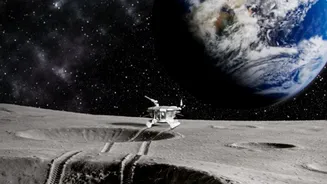
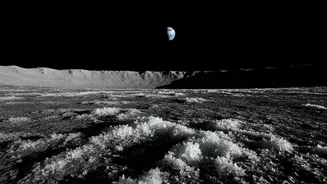
The new lunar real estate rush is focused squarely on one location: the south pole. The key lies in a unique feature of the Moon's polar regions—'Permanently Shadowed Regions' or PSRs. These are the floors of deep craters that, due to the Moon's slight axial tilt, have not seen direct sunlight in billions of years. Temperatures in these PSRs are colder than the surface of Pluto, making them perfect 'cold traps' where water ice, likely delivered by comets and asteroids, can remain frozen in time. What makes the south pole particularly attractive is the combination of these dark, icy craters with nearby crater rims and peaks that are in near-constant sunlight. This creates a perfect scenario for a future base: astronauts could land in a sunlit area to set up solar panels for continuous power, while robotic rovers venture into the nearby shadows to mine the precious ice.
Water: The Moon's Liquid Gold
Why is this discovery so important? Because on the Moon, water is everything. The ability to source it locally, a concept known as In-Situ Resource Utilization (ISRU), is the key to unlocking sustainable human settlement. Launching materials from Earth is incredibly expensive; every kilogram costs thousands of dollars. Finding water on the Moon changes the entire economic equation. Firstly, it provides life support. The ice can be melted for drinking water and used to grow plants for food. Secondly, it can be split into its component elements: oxygen and hydrogen. This provides breathable air for astronauts. Thirdly, and perhaps most importantly, liquid oxygen and liquid hydrogen are the primary components of powerful rocket fuel. A lunar base with access to water could become a refueling station for missions venturing deeper into our solar system, to Mars and beyond.
A New Global Race to the Pole
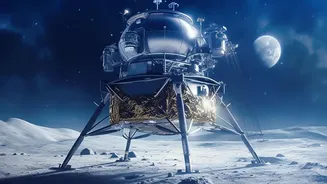
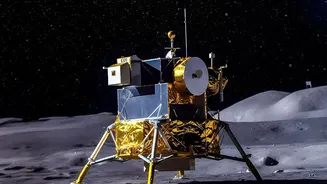
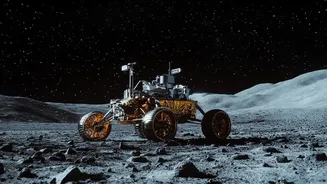
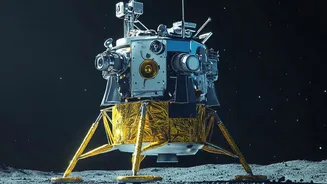
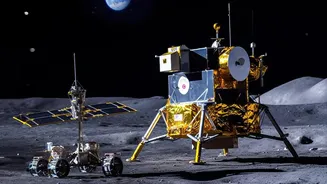
These new maps are not just scientific curiosities; they are strategic documents fueling a new, 21st-century space race. NASA's Artemis program is already planning to send astronauts to the lunar south pole. To prepare, it is sending the VIPER rover, a robotic prospector set to launch in 2027, specifically to drill into the surface and analyze the quantity and quality of this water ice. China, in partnership with Russia, also has ambitious plans for an International Lunar Research Station at the south pole. India, whose Chandrayaan missions were instrumental in confirming and mapping this water, is a central player. Following the historic landing of Chandrayaan-3 and the recent radar findings from Chandrayaan-2, the Indian Space Research Organisation (ISRO) is planning Chandrayaan-4, a sample-return mission that will bring back materials from the south pole around 2027, further cementing India's leadership role in this new era of lunar exploration.