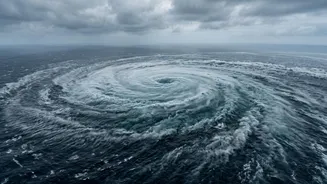








As India's coastlines brace for cyclonic storms, the focus sharpens on two distinct bodies of water: the Bay of Bengal and the Arabian Sea. While both can produce devastating weather, they are not the same. Understanding their unique characters is key.
The Bay of Bengal: A Traditional Hotspot
For centuries, the Bay of Bengal has been the undisputed epicentre of cyclonic activity in the North Indian Ocean. It is responsible for a disproportionately high number of the world's deadliest storms. Several factors make this region a fertile breeding ground for cyclones. The bay is semi-enclosed, which traps heat and results in significantly higher sea surface temperatures compared to the Arabian Sea. This warm water, extending to a considerable depth, acts as powerful fuel for storms. Furthermore, the Bay of Bengal receives larger inflows of fresh water from major rivers like the Ganga and Brahmaputra. This creates a layer of relatively less dense water on the surface, which prevents the cooler, deeper ocean water from mixing and cooling the surface, thus maintaining the high temperatures needed for cyclone formation and intensification. The prevailing weather patterns and weaker vertical wind shear in the region also provide a more stable atmospheric environment for storms to organise and strengthen without being torn apart.
The Arabian Sea: A Newfound Ferocity
Historically, the Arabian Sea was considered a far more benign environment. Cyclones were less frequent, and those that did form were typically weaker than their Bay of Bengal counterparts. However, this is changing. In recent years, scientists have observed a noticeable uptick in both the frequency and intensity of cyclones in the Arabian Sea, a trend directly linked to the effects of climate change. Rising global temperatures have led to a significant warming of the Arabian Sea's surface waters. This additional thermal energy is now available to fuel more powerful storms. While it is still cooler on average than the Bay of Bengal, the gap is narrowing, making the Arabian Sea increasingly capable of sustaining intense cyclones for longer periods. This shift is forcing a major reassessment of risk for India's western coastline, which was traditionally considered less vulnerable than the east.
Key Differences That Define The Risk
The primary distinction lies in frequency and intensity. The Bay of Bengal spawns roughly four to five times more cyclones than the Arabian Sea annually. Storms in the bay also tend to intensify more rapidly and reach higher peak strengths. This is largely due to its 'storm-friendly' conditions: warmer waters and lower wind shear. In contrast, the Arabian Sea historically had higher wind shear—the difference in wind speed and direction at different altitudes—which acts to disrupt a cyclone's vertical structure. Another crucial difference is the typical storm track. Cyclones from the Bay of Bengal often make landfall along the densely populated coastlines of eastern India, Bangladesh, and Myanmar. Storms from the Arabian Sea have historically been more likely to veer towards the Arabian Peninsula or dissipate over the open ocean, though recent trends show an increase in storms tracking towards the Indian state of Gujarat and even Pakistan.
Impact on Preparedness and Warnings
These regional differences have profound implications for disaster management. The eastern coast of India, long accustomed to the fury of the Bay of Bengal, has developed robust and frequently tested evacuation protocols and early warning systems. Generations of experience have embedded a certain level of preparedness into the coastal communities and administrative machinery. For the western coast, the challenge is newer and, in some ways, more complex. As the Arabian Sea threat grows, states like Gujarat, Maharashtra, and Kerala must rapidly scale up their infrastructure and public awareness campaigns. The historical rarity of severe storms meant that infrastructure and planning were not always prioritized to the same degree as on the eastern seaboard. Now, authorities are faced with the urgent task of adapting to a new normal, where a once-calmer sea is showing an increasingly volatile and dangerous side, demanding a similar level of vigilance and readiness.