
More Than Just Decoration
Integrating vintage fabrics into your home is about more than just aesthetics; it's a celebration of history, craftsmanship, and sustainability. These textiles, often passed down through generations, carry with them the stories of their makers and the traditions
of their region. An old saree or a forgotten shawl is not merely cloth; it's a piece of lived history. By giving these fabrics a new life as cushion covers, wall art, or upholstery, you are preserving a craft and making a conscious choice to move away from disposable trends. This approach allows you to create a space that is not only beautiful but also deeply personal and layered with meaning.
Weaving Gardens: Phulkari from Punjab
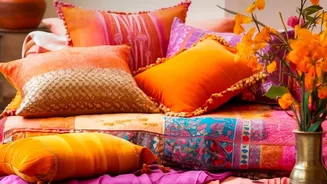
Phulkari, which literally translates to 'flower work', is a vibrant embroidery style from Punjab. Traditionally, women would craft intricate floral and geometric patterns on coarse cotton (khaddar) fabric using colourful silk threads. These designs were not just decorative; they were symbolic, telling stories of community life, emotions, and nature. Imagine a bold Phulkari dupatta, with its dense, garden-like embroidery, repurposed as a stunning wall tapestry that becomes an instant conversation starter. Smaller pieces can be transformed into striking cushion covers that add a burst of colour and handcrafted elegance to a neutral sofa. The rich textures and vivid hues beautifully bridge traditional art with contemporary design.
Royal Threads: Banarasi Brocade
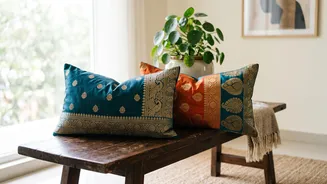
For a touch of regal opulence, look no further than Banarasi brocade. Hailing from Varanasi, this luxurious fabric is known for its intricate jacquard weaves of silk and metallic zari threads, often inspired by Mughal-era designs. Once the fabric of choice for royalty, brocade's richness and structure make it ideal for statement decor pieces. While a full brocade sofa might feel overwhelming, using it for targeted accents creates a powerful impact. Consider reupholstering a single accent chair or a small ottoman in a jewel-toned brocade. Even a single, lustrous brocade cushion can add a sense of heritage and visual richness to your living room. The way the metallic threads catch the light brings a dynamic and luxurious quality to the space.
The Art of Resist-Dyeing: Ikat and Bandhani
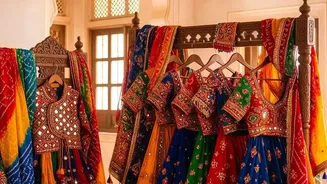
Ikat and Bandhani are two distinct but equally captivating resist-dyeing techniques that produce stunning patterns. Ikat, known for its characteristic 'blurred' geometric designs, is created by dyeing the yarns before they are woven. Bandhani, from Gujarat and Rajasthan, involves tying the fabric into tiny knots before dyeing, resulting in a field of delicate dots. Both fabrics are perfect for adding a dose of bohemian flair. A lightweight Ikat or Bandhani saree can be repurposed into beautiful, breezy curtains that filter sunlight softly. Their vibrant patterns also work wonderfully on lampshades, adding a pop of colour and creating a warm, inviting glow. For a simpler touch, a colourful Ikat throw draped over an armchair can instantly liven up a quiet corner.
Sourcing and Caring For Your Finds
The hunt for vintage textiles is part of the adventure. Start by looking through family heirlooms; your mother's or grandmother's old sarees are a treasure trove of memories and material. Beyond that, explore local thrift stores, antique shops, and online marketplaces. When you find a piece you love, care is crucial. Most vintage Indian textiles, especially silk and those with embroidery, require a gentle touch. Professional dry cleaning is often the safest bet for heavily embellished or delicate fabrics like Banarasi brocade. For cottons, a gentle hand wash in cold water is usually sufficient, but always wash separately the first few times as natural dyes can bleed. Avoid direct sunlight, which can fade colours, and store your textiles in a cool, dry place, preferably wrapped in breathable muslin cloth rather than plastic.