

Myth: Houseplants Are Powerful Air Purifiers
This is one of the most persistent myths, born from a famous 1989 NASA study. While it's true that plants can absorb certain airborne pollutants, the effect in a typical home or office is negligible. The NASA experiment was conducted in a small, sealed
chamber, a controlled environment that doesn't resemble a real room with drafts, open doors, and normal air exchange. More recent studies have clarified that you would need a huge number of plants—some estimate between 10 and 1,000 per square metre—to meaningfully clean the air in a room and compete with what basic ventilation already accomplishes. So, while your plants do add life and beauty to your space, they aren't a substitute for opening a window.
Myth: Yellow Leaves Always Mean Overwatering
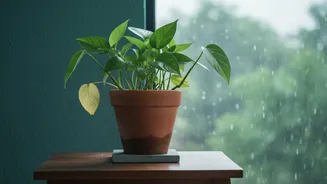
Seeing a yellow leaf is a common cause for panic, and overwatering is often the first suspect. While soggy soil is a frequent culprit, it's not the only one. Underwatering can also cause leaves to yellow and wilt as the plant becomes dehydrated. The key is to check the soil. If it's soggy and the leaves feel soft or mushy, you've likely overwatered. If the soil is bone dry and the yellowing leaves are crispy, the plant is thirsty. But the diagnosis doesn't stop there. Yellow leaves can also signal a nutrient deficiency, pest problems, or simply be older leaves at the end of their natural life cycle. The solution is not to guess, but to investigate by feeling the soil a couple of inches down.
Myth: Misting Is a Great Way to Increase Humidity
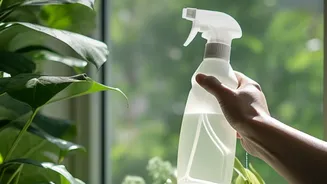
Many popular houseplants come from tropical regions and love humidity. For years, misting has been recommended as the go-to solution. However, research and expert consensus now show that misting is largely ineffective for raising ambient humidity long-term. The fine spray of water evaporates within minutes, providing only a fleeting benefit while leaving foliage wet. This can actually do more harm than good, as persistently damp leaves can create an ideal environment for fungal and bacterial diseases. While misting can be useful for cleaning dust off leaves or deterring spider mites, it's not a real humidity strategy. For a more effective and sustained boost, group plants together, use a pebble tray with water, or invest in a small room humidifier.
Myth: A Strict Watering Schedule is Best
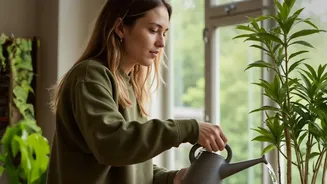
It seems logical to water your plants every Saturday, but this rigid approach ignores a plant's actual needs. How much water a plant requires can change dramatically based on the season, the amount of light it's receiving, the room's temperature, and its growth stage. A plant in a bright, warm spot in summer will need far more water than the same plant in a darker corner during winter dormancy. Instead of watering by the calendar, get into the habit of checking the soil. Stick your finger about an inch or two into the potting mix. If it feels dry at that depth, it's time to water thoroughly until it runs from the drainage holes. If it's still moist, wait a few more days and check again. This method ensures you're responding to what the plant actually needs.
Myth: Bigger Pots Lead to Faster Growth
When a plant seems to be thriving, it’s tempting to move it into a much larger pot to give it room to grow. This is a classic mistake called "over-potting." A pot that is too large for the root ball holds a massive amount of soil that the roots can't yet reach. This excess soil stays wet for too long after watering, creating a swampy environment that displaces oxygen and can lead to root rot. Instead of encouraging growth, this can stunt the plant or even kill it. A good rule of thumb is to repot only when a plant has become root-bound (roots are circling the bottom or poking out of the drainage holes). When you do, choose a new pot that is only about one to two inches wider in diameter than the previous one.