


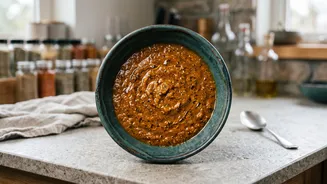
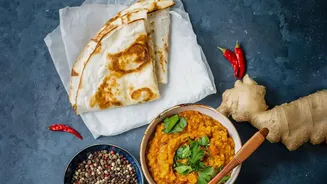
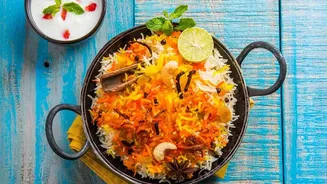
It’s a familiar, almost magical experience: the leftover curry you reheat for lunch is somehow richer, deeper, and more delicious than the meal you enjoyed the night before. You're not imagining it. There is real food science behind this phenomenon.
A Symphony of Molecules
The
secret to next-day curry perfection lies in a process food scientists sometimes call 'flavor equilibration'. Think of a freshly cooked curry as a crowded room where different groups of people are still talking amongst themselves. Give them some time, and they start to mingle and form new connections. Similarly, when a curry rests in the fridge, the various ingredients—spices, aromatics, fats, and proteins—continue to interact. The cooking process is just the beginning; the 'marination' that happens overnight in the cool, quiet environment of your refrigerator is what allows these disparate elements to truly become one. This slow, continuous process allows flavor compounds to meld and migrate, creating a more cohesive and harmonious taste profile that simply isn't present right after cooking.
The Science of Spice
Indian cooking is built on layers of spices, many of which contain aromatic oils that are fat-soluble, not water-soluble. During cooking, techniques like 'tadka' or 'blooming' spices in hot ghee or oil begin the process of extracting these flavor compounds. However, it doesn't stop there. As the curry cools and rests, these oil-based flavors have more time to disperse evenly throughout the sauce and, crucially, to penetrate the other ingredients. The sharp, individual notes of ginger, garlic, or chilli mellow and integrate, losing their raw edge. Instead of getting a blast of cumin in one bite and turmeric in another, the entire dish becomes infused with a rounded, unified flavor that is complex and deep.
Texture Transforms Everything
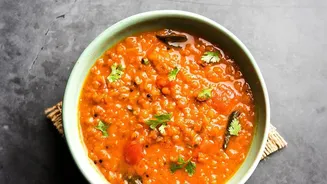
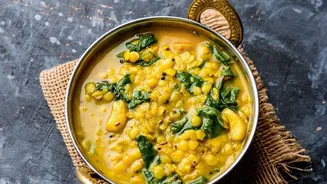
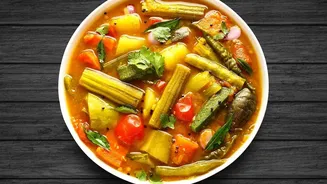
Flavor isn't the only thing that improves overnight; texture undergoes a significant transformation as well. For meat-based curries, especially those using tougher cuts or cooked on the bone, the magic ingredient is collagen. After the initial cooking, this connective tissue continues to break down into rich, silky gelatin. When the curry cools, this gelatin forms a light jelly, and upon reheating, it melts to create a luxuriously smooth mouthfeel that a fresh curry can't match. In vegetarian curries, starches from ingredients like potatoes, lentils (dal), and even onions continue to do their work. They absorb excess liquid and release their own starches into the gravy, naturally thickening the sauce. This results in a gravy that clings beautifully to rice or bread, delivering more concentrated flavor in every mouthful.
The Great Absorption
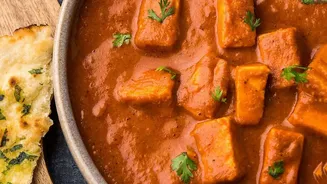
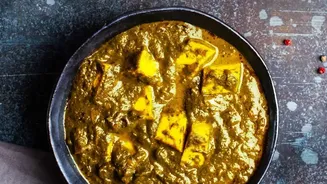
Think of the pieces of chicken, lamb, paneer, or vegetables in your freshly made curry. While they are coated in sauce on the outside, their interiors are still relatively plain. As the dish cools, the protein and vegetable structures relax and begin to act like sponges, drawing the flavorful sauce deep into their core. This is why a day old piece of potato or chickpea from a chana masala is so satisfying—the flavor isn't just on it, but in it. This process of absorption ensures that every component of the dish is seasoned from the inside out, providing a much more integrated and satisfying eating experience the next day. The ingredients are no longer just sitting in the sauce; they have become one with it.