



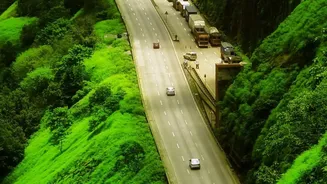


A New Digital Co-Pilot for Travellers
The India Meteorological Department has expanded its public services with a dedicated highway forecast system, accessible through its digital platforms. This tool is specifically designed to provide real-time weather information and warnings for major
national highways, aiming to reduce the number of accidents and travel disruptions caused by adverse weather. By integrating meteorological data with geospatial technology, the system offers forecasts for specific stretches of road, moving beyond generic city-based predictions. It serves as a crucial planning aid for commuters, long-distance truckers, and tourists who need to traverse India's vast road network, especially during volatile weather seasons like the monsoon. The service is part of a broader push by the IMD to provide more granular, impact-based forecasts that cater to specific sectors.
Why This Matters for Monsoon Journeys
The Indian monsoon, while essential, poses severe challenges to road infrastructure and driver safety. Heavy rainfall frequently leads to waterlogging, which weakens road foundations, creates dangerous potholes, and conceals road-surface hazards. Studies have shown that rains can reduce road capacity by 10-30% and vehicle speeds by up to 16%, leading to significant delays. More critically, weather is a major contributor to road accidents. Wet pavements reduce friction, and poor visibility during downpours drastically increases risks. In recent years, intense monsoon spells have led to washed-out national highways, cave-ins on expressways, and landslides in hilly regions, underscoring the vulnerability of India's transport infrastructure. An accessible, route-specific forecast allows drivers to anticipate these dangers and make informed decisions, such as delaying a trip, choosing an alternative route, or preparing for challenging conditions.
How the System Works
The highway forecast service is part of the IMD's Multi-Hazard Early Warning Decision Support System (MHEW-DSS), a sophisticated platform that integrates data from satellites, radars, and ground observation stations. This system uses advanced weather prediction models to generate location-specific forecasts. For its highway service, the IMD provides route-based weather information, allowing users to input a start and end point to see the expected conditions along their journey. The platform provides hourly forecasts for the immediate future and 3-hourly forecasts for up to five days. This allows for both short-term and long-term planning. The goal is to provide actionable intelligence on phenomena like heavy rain, thunderstorms, fog, and strong winds that directly impact road travel.
A Guide to Using the Forecasts
Travellers can access the forecasts through the IMD's official website, which includes MausamGram and other specialised portals. The system often uses a simple, colour-coded system to indicate the severity of expected weather, similar to its general public alerts. Green typically signifies 'No Warning,' yellow advises to 'Be Updated,' orange means 'Be Prepared' for potentially disruptive weather, and red signals a 'Take Action' warning due to a high likelihood of severe weather. For rainfall, these alerts correspond to the expected volume over 24 hours. For example, a yellow alert might indicate 64.5–115.5 mm of rain, while an orange alert warns of 115.6–204.4 mm. By checking their route, drivers can see if they are likely to pass through an area under a yellow, orange, or red alert and plan accordingly.
Beyond the Forecast: A Complete Safety Checklist
While the IMD's tool is a powerful asset, it should be part of a broader safety strategy. Before embarking on a monsoon road trip, drivers should ensure their vehicle is in optimal condition, with particular attention to tyres, wipers, and headlights. It is also wise to check for real-time traffic updates and road closures, which can be caused by accidents or sudden weather events not yet reflected in a forecast. Packing an emergency kit with essentials like a first-aid kit, torch, and extra food and water is always recommended. Finally, drivers should exercise caution on the road, reduce speed in wet conditions, and avoid driving through waterlogged areas where the depth is uncertain. The forecast is a guide to help you prepare, not a guarantee of absolute safety.