



Your Car's Monsoon Health Check
Before you even think about starting a journey into the hills during the rains, a thorough vehicle check is non-negotiable. Your car is your first line of defence against the elements. Start with the most critical components for wet conditions. Your tyres
are the only part of the car in contact with the road; ensure they have adequate tread depth, ideally more than 3mm, to channel water away and prevent skidding. Bald or worn tyres are a major risk. Check that your windshield wipers are not cracked or worn out, as they are essential for maintaining clear vision in a downpour. Replace them if they leave streaks. Equally important are your lights—headlights, tail lamps, and indicators must all be functional so you can see and be seen in low visibility. Finally, have your brakes inspected. Wet roads increase stopping distances, so your braking system must be in top condition.
The Art of Driving on Wet Slopes
Driving on hills is different from driving on plains, and rain adds another layer of complexity. The most important rule is to slow down. Speed is a major factor in losing control on wet surfaces. Maintain a much larger following distance than you would in the dry, giving yourself more time to react. When ascending or descending, use a lower gear than you normally would. Going uphill, this provides more power and prevents stalling. Going downhill, it allows for 'engine braking', which helps control your speed without overheating your brakes. Never coast downhill in neutral; this is extremely dangerous as it removes engine braking and puts immense pressure on your brakes, risking failure. Be gentle and smooth with your steering, acceleration, and braking. Sudden, jerky movements can easily cause a loss of traction.
Navigating Water and Hidden Dangers
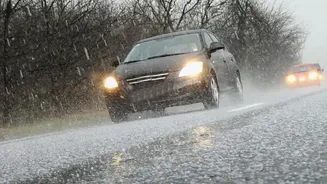
The biggest threat on rain-slicked roads is hydroplaning. This occurs when a layer of water builds up between your tyres and the road surface, causing you to lose all steering and braking control. It feels like floating or skidding on ice. The best way to avoid it is to reduce speed significantly. If you feel your car start to hydroplane, do not panic and do not slam the brakes. Instead, gently ease your foot off the accelerator and steer in the direction you want the car to go until you feel the tyres regain grip. Another hazard is standing water. Avoid driving through large puddles as they can conceal deep potholes or debris that could damage your car. If you must cross a waterlogged patch, do so slowly and steadily in a low gear to avoid stalling the engine.
Visibility and Defensive Techniques
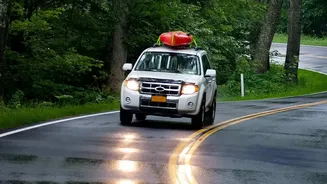
In heavy rain, seeing and being seen is paramount. Use your low-beam headlights to improve your visibility to others. Avoid using high beams, as the light reflects off the raindrops and can worsen visibility for you and oncoming drivers. Keep your windows from fogging up by using the air conditioner or defogger. On winding ghat roads, always honk before blind corners and hairpin bends to alert unseen traffic to your presence. A golden rule of hill driving is to give way to traffic coming uphill. Vehicles climbing a slope are working harder and have less momentum, making it difficult for them to stop and start again. Be patient and pull over to let them pass. Avoid unnecessary overtaking, as visibility is often limited on twisting roads.
Preparing for the Unexpected
Even with the best preparation, things can go wrong. A basic emergency kit is essential for any monsoon road trip. Your kit should include a flashlight, a first-aid kit, a tow rope, jumper cables, and a puncture repair kit. It's also wise to carry waterproof gear and extra food and water. If you get caught in extremely heavy rain or see signs of a landslide, find a safe spot to pull over and wait for conditions to improve. Do not stop on narrow turns or in areas where you could block traffic. If your car stalls in a waterlogged area, do not try to restart the engine, as this can cause severe and permanent damage known as a hydrostatic lock. Wait for the water to recede or call for assistance.