





Nature’s Living Seawall
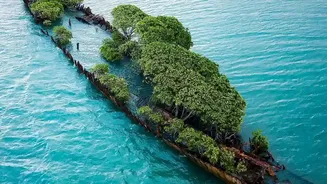
Imagine a wall that repairs itself, grows stronger over time, and supports the local economy. That is the reality of mangrove forests, which serve as 'bio-shields' along coastlines. These are not man-made structures but dense networks of salt-tolerant
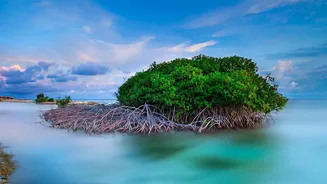
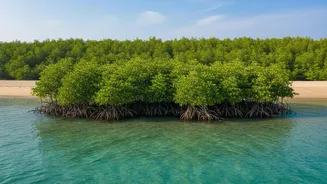
trees and shrubs. Their tangled, sturdy root systems anchor the shoreline, while their trunks and canopies act as a formidable barrier. Unlike a concrete seawall, which simply blocks waves, a mangrove forest absorbs and dissipates their energy, significantly reducing the force of storm surges before they can inundate coastal villages and farmlands.
The Science of Calming the Storm
The protective power of mangroves is not anecdotal; it is a matter of physics. When a powerful storm surge, a wall of water pushed ashore by cyclone winds, encounters a mangrove forest, the impact is dramatically lessened. Studies have shown that mangroves can reduce wave energy by up to 66% within the first 100 metres of the forest. The dense web of roots, trunks, and branches creates friction, slowing the water's velocity and reducing its height. One landmark study following the 1999 Odisha super cyclone provided robust evidence of this life-saving effect. Researchers found that villages buffered by wider mangrove belts experienced significantly fewer deaths compared to those with little or no mangrove cover. The data showed that the natural vegetation, not just the landscape, was responsible for the protection.
A Smarter Investment in Safety
Beyond their effectiveness, mangroves are an exceptionally cost-effective solution for coastal defence. Building and maintaining engineered structures like seawalls and embankments is incredibly expensive. In contrast, the cost of restoring and protecting mangrove forests is significantly lower. Some analyses suggest that mangrove restoration projects can be two to five times cheaper than constructing a breakwater for the same level of protection. The economic benefits extend far beyond disaster mitigation. Healthy mangrove ecosystems are rich in biodiversity, serving as crucial nursery grounds for fish and crustaceans. This directly supports local fishing livelihoods, provides resources like honey and timber, and boosts ecotourism, creating a sustainable local economy that engineered solutions cannot offer. One study estimated the average total economic benefit of India's mangroves to be over ₹9.5 lakh per hectare per year.
Success Stories from India’s East Coast
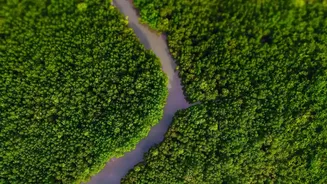
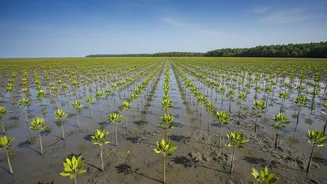
The lessons from the 1999 Odisha cyclone served as a powerful catalyst. Regions like Bhitarkanika, with its dense mangrove cover, provided clear proof of their protective value. Since then, there has been a growing appreciation for these natural assets. In the Sundarbans of West Bengal, the world's largest mangrove forest has been credited with reducing cyclone wind speeds, saving Kolkata and surrounding areas from more catastrophic damage during storms like Cyclone Bulbul. Government initiatives like the Mangrove Initiative for Shoreline Habitats & Tangible Incomes (MISHTI) scheme, announced in 2023, aim to expand mangrove cover across the country, signalling a national recognition of their importance. Just recently, a new five-year initiative was launched to plant 500,000 mangrove trees in degraded areas of the Indian Sundarbans.
The Challenges Ahead
Despite their proven value, India's mangrove forests face persistent threats. Encroachment for agriculture, aquaculture (especially shrimp farming), and urban development continues to degrade these vital habitats. Pollution from industrial effluents and solid waste, along with reduced freshwater flow from upstream dams, also puts immense stress on these ecosystems. While community-led conservation and government programmes show promise, their success hinges on long-term commitment and addressing the socio-economic pressures that lead to mangrove destruction in the first place. Protecting these bio-shields requires a holistic approach that integrates conservation with sustainable livelihood opportunities for the communities who live alongside them.