




The Sweet Soul of the Festival
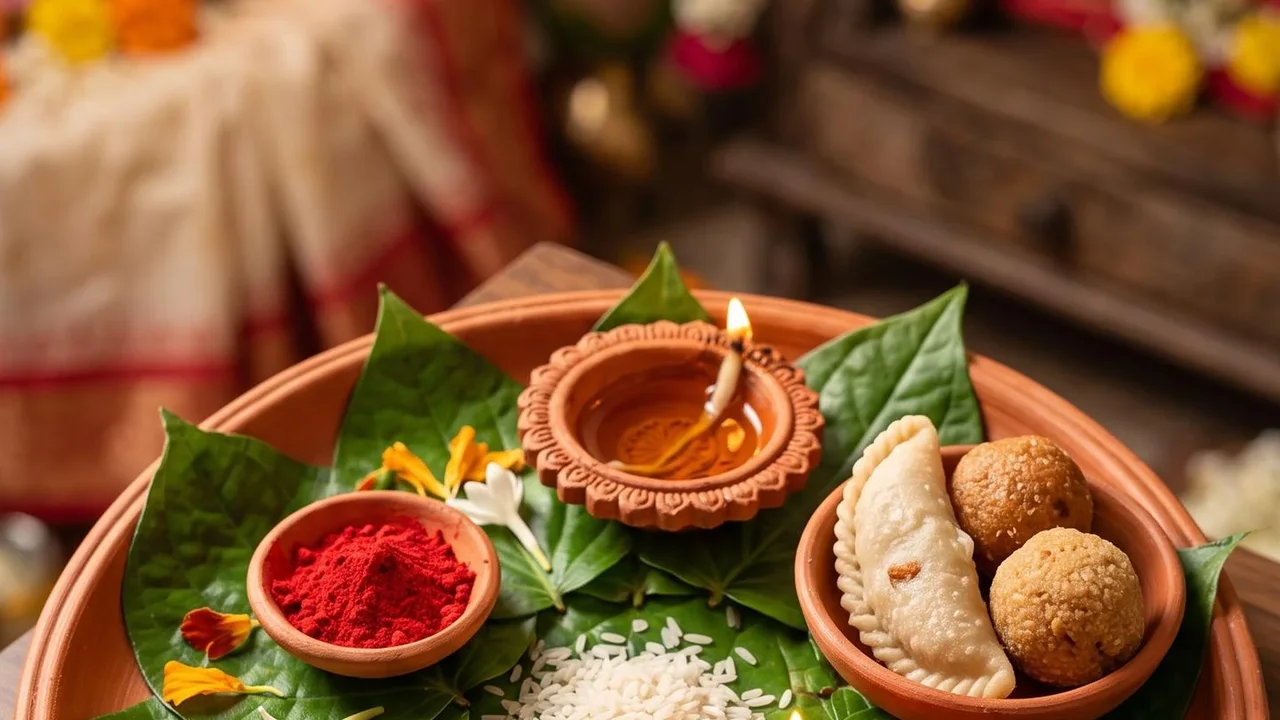
In Bengal, sweets, or 'mishti', are not just a concluding course; they are an integral part of culture, hospitality, and ritual. During Durga Puja, this connection deepens. Sweets are central to the 'bhog'—the sacred food offered to the goddess—and act
as a symbol of devotion, gratitude, and purity. Sharing these blessed sweets, or 'prasad', among family, friends, and community members fosters a sense of togetherness that is the essence of the festival. Every exchange of a Sandesh or Rosogolla is a gesture of goodwill and shared joy.
The Undisputed Icons
At the heart of the Puja platter are the timeless icons. The Rosogolla, a spongy ball of fresh cottage cheese (chhena) soaked in a light sugar syrup, is arguably the most famous. Its clean, simple sweetness makes it a perfect offering and a crowd-pleaser. Then there is the Sandesh, a more delicate and technically demanding sweet, also made from chhena kneaded with sugar. Available in hundreds of varieties, from the simple 'korapak' (harder) to the soft 'norom pak', Sandesh is an emblem of Bengali culinary artistry, often shaped in intricate moulds.
The Comfort of Homemade Classics
Beyond the famous shop-bought varieties, many sweets that define Puja are those made at home, carrying the taste of nostalgia. Narkel Naru, small, round coconut laddoos, are a prime example. Made with either sugar or the smoky, fragrant date palm jaggery ('nolen gur'), these sweets are a staple for 'Bijoya Dashami', the final day of the festival when families visit each other. The very act of rolling the naru is a cherished family activity, embedding these little coconut balls with memories and love, making them taste even sweeter.
Why Their Appeal Endures
In a world of fleeting food trends, the lasting power of these recipes lies in their connection to identity and memory. For many, the flavour of a Nolen Gurer Sandesh or a homemade Narkel Naru is the taste of childhood, of family gatherings, and of the unwavering festive spirit. These sweets are not just food; they are edible heritage. They represent a culinary tradition passed down through generations, a comforting constant in an ever-changing world. Their preparation follows time-honoured methods, and their flavours are deeply rooted in the cultural fabric of Bengal.
A Tradition That Breathes
While tradition is key, the world of Bengali sweets is not static. Modern confectioners and home cooks alike find ways to innovate, creating new flavour infusions like mango or rosewater-filled Sandesh, or crafting contemporary versions of classics. Yet, these innovations rarely replace the originals. Instead, they exist alongside them, proving that the foundation of these classic recipes is strong enough to inspire new creations while keeping the soul of the tradition intact. This balance of the classic and the contemporary ensures that Bengali sweets will continue to captivate foodies for many Pujas to come.