




The Philosophy of the Fast
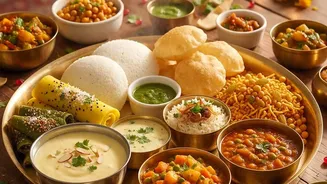
For many communities, Navratri is a period of fasting, or 'vrat'. This isn't about deprivation but about discipline and purification. The rules generally involve abstaining from grains like wheat and rice, lentils, onions, garlic, and regular table salt.
This shared framework, however, doesn't create uniformity. Instead, it sparks immense culinary innovation as home cooks turn to a pantry of permitted 'falahari' ingredients. This alternative food system, built on pseudo-grains, fruits, dairy, and specific vegetables, tells a story of local agriculture, seasonal eating, and the sheer genius of making abundance out of restriction.
Northern Ingenuity with Pseudo-Grains
In North India, the fast is defined by a hearty array of dishes made from pseudo-grains. Buckwheat flour (kuttu ka atta), water chestnut flour (singhare ka atta), and amaranth flour (rajgira ka atta) become the stars. These are not true grains but seeds from fruits or plants, making them acceptable for fasting. From the earthy, nutty flavour of Kuttu ki Puri served with a simple potato curry to the fluffy Rajgira Parathas, these dishes are designed to be nourishing and satisfying. Sabudana (tapioca pearls) is another hero, used to make the beloved Sabudana Khichdi—a delightful mix of soft pearls, crunchy peanuts, and mild spices that provides sustained energy. This reliance on locally available, robust ingredients showcases a culinary tradition deeply connected to the land and its produce.
The Savoury Feasts of the West
Travel to Gujarat and Maharashtra, and the fasting plate takes on a different character. In Gujarat, known for its love of snacks, the 'farali' (fasting) menu is extensive and inventive. You'll find Farali Handvo, a savoury cake made from barnyard millet (sama) and sago, and crispy Sabudana Vadas served with a sweet yogurt dip. Sweet potatoes and yams are used extensively, transformed into flavourful shaaks (curries) or chaats. The creativity extends to turning fasting-approved flours into dosas and other snacks, demonstrating a cultural knack for creating complex textures and flavours even within the confines of vrat rules.
A Different Tradition in the East
In stark contrast, Navratri in West Bengal, celebrated as Durga Puja, is a time of feasting, not fasting. The festival marks the homecoming of the goddess, and she is welcomed with abundance. The communal 'bhog' offered at pandals is a vegetarian affair, featuring dishes like Khichuri (made with rice and lentils), Labra (a mixed vegetable dish), and Beguni (eggplant fritters). However, at home, non-vegetarian dishes, especially those with fish and mutton, are an integral part of the celebration for many families. This highlights how the same festival is interpreted differently, with food customs reflecting the region's distinct cultural identity and culinary staples.
Southern Offerings of Protein-Rich Sundal
In South India, particularly Tamil Nadu, Navratri is synonymous with 'Golu', the festive display of dolls. Here, the quintessential Navratri offering is 'sundal'. Sundal is a simple yet flavourful dish made by boiling legumes like chickpeas, peanuts, or black-eyed peas, and then tempering them with mustard seeds, curry leaves, and fresh coconut. A different variety of sundal is often prepared on each of the nine nights as a 'prasadam' or offering, which is then shared with guests. This tradition reveals a focus on plant-based protein and light, nutritious offerings that are easy to prepare and share, reflecting a different philosophy of festive food that is both wholesome and communal.