






A Tale of Two Landings
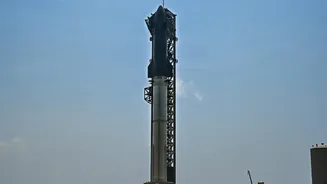
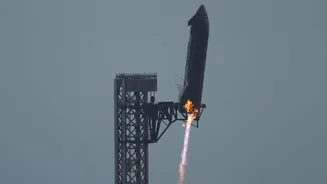
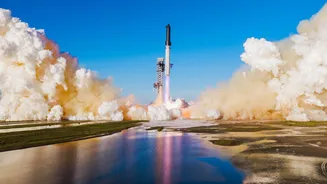
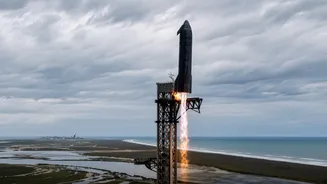
The mission plan for Starship's Flight 15 was the most ambitious yet: launch the world's largest rocket, send the upper stage 'Ship' into orbit, and then bring both the Super Heavy booster and the Ship back to be caught by the launch tower's giant mechanical
arms. This 'double catch' has been called the holy grail of rocketry because it is the key to making the entire system rapidly and fully reusable. During the launch on November 13 from Starbase, Texas, everything started perfectly. The 33 Raptor engines on the Super Heavy booster roared to life, propelling the massive vehicle toward orbit. However, the mission's narrative quickly split into two very different stories—one of a setback, and one of a breakthrough.
The Booster's Unplanned Splashdown
Minutes after a clean separation, the Super Heavy booster began its journey back to Texas. The goal was a pinpoint landing back at the launch site, where the 'Mechazilla' tower arms would catch it. This had been achieved on three previous test flights. This time, however, something went wrong. The booster's guidance system detected it was not in the correct position for a safe catch and automatically aborted the attempt. A low-fuel alarm was reportedly a contributing factor. Instead of returning to the pad, the booster was diverted for a splashdown in the Gulf of Mexico, where it exploded before hitting the water. While the loss of the booster was a disappointment, the mission was far from over.
A Historic Catch from Orbit
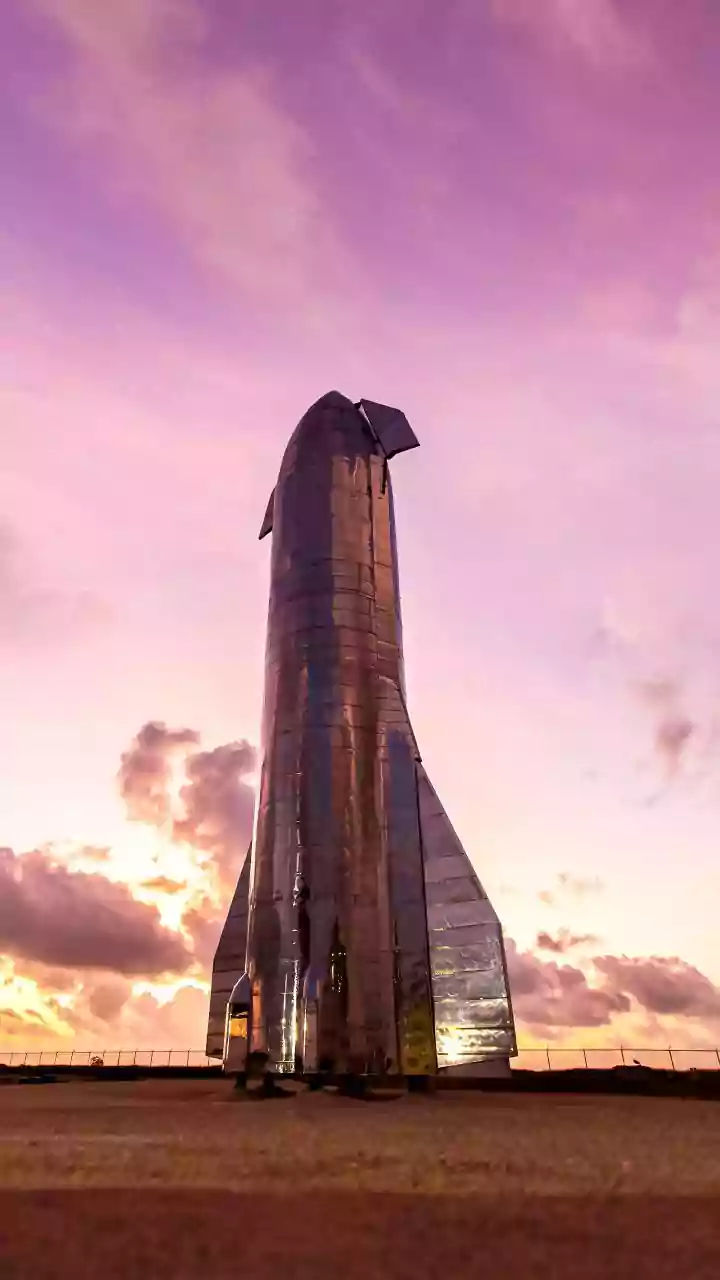
While the booster met its end, the Starship upper stage, Ship 42, continued its mission flawlessly. It successfully reached orbit, where it spent the next 22.5 hours circling the Earth 14 times. It even deployed a payload of 26 Starlink internet satellites, turning the test into a partial commercial mission. Then came the main event. After re-entering the atmosphere, the Ship descended toward Starbase. In a maneuver never before attempted with an orbital-class spacecraft, it positioned itself perfectly between the waiting 'chopstick' arms of the launch tower, which closed around it for a successful catch. It marked the first time in history that a spacecraft returning from orbit was caught for reuse, a moment one SpaceX commentator called 'the Holy Grail of spaceflight'.
Why Reusability Is the Ultimate Goal
So why is losing a booster acceptable when catching the ship is considered a monumental success? It comes down to the economics of space. For decades, rockets have been single-use, like throwing away an airplane after one flight. SpaceX's Falcon 9 program changed that by landing and reusing boosters, dramatically cutting launch costs. Starship aims to take this concept to its logical conclusion by making every part of the rocket reusable. Catching the Ship is arguably the harder part of the challenge. The upper stage travels much faster and must endure the intense heat of atmospheric re-entry before attempting its precision landing. By proving this maneuver is possible, SpaceX has cleared a huge hurdle. This success paves the way for the rapid turnaround needed for future missions, including NASA's Artemis program to return humans to the Moon and Elon Musk's long-term vision of building a city on Mars.