




Before You Buy: A Quick Reality Check
Before you fill your cart with greenery, take a moment to assess your space and lifestyle. The key to a thriving indoor garden is matching the plant to the environment. Notice the light in your rooms: is it bright, indirect sunlight, or a shadier corner?
Consider your routine. Are you someone who remembers to water plants weekly, or do you need a plant that thrives on a bit of neglect? A little self-awareness is the first step. Choosing a plant that fits your home's conditions and your personal habits is the secret to success, ensuring your new green friend doesn't just survive, but thrives.
The Snake Plant: Modern and Tough
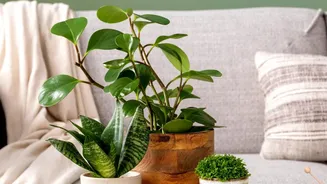
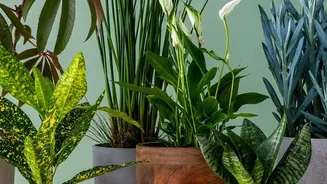
The Snake Plant, or Sansevieria, is the definition of stylish resilience, making it a favourite in Indian homes. Its upright, sword-like leaves create a modern, architectural statement in any room. Available in various patterns of green, yellow, and silver, it acts as a living sculpture. But its true beauty lies in its near-indestructible nature. The Snake Plant tolerates low light and infrequent watering, actually preferring its soil to dry out completely between drinks. This makes it perfect for beginners, busy professionals, or anyone who considers themselves a 'plant killer'. It’s a plant you can almost forget about, yet it will continue to purify the air and look effortlessly chic.
The Money Plant: A Versatile Classic
No list of easy-care plants in India is complete without the Money Plant (Epipremnum aureum or Pothos). Its heart-shaped leaves and trailing vines can be trained to climb walls, cascade from hanging baskets, or simply sit pretty on a shelf. This versatility makes it a decorator’s dream. It's incredibly forgiving and will tell you what it needs; droopy leaves mean it's thirsty. It thrives in a wide range of light conditions, from low to bright indirect light, though its variegation may fade in deeper shade. Money Plants are also famously easy to propagate—just snip a cutting and place it in water. They grow quickly, offering the satisfying feeling of a lush home without a steep learning curve.
The ZZ Plant: Glossy and Drought-Proof
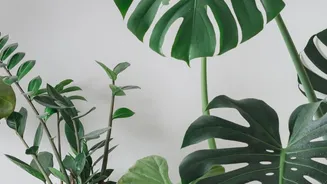
If you are looking for a plant that looks polished with minimal effort, meet the ZZ Plant (Zamioculcas zamiifolia). Its wide, glossy, dark green leaves look perpetually waxed and healthy, adding a touch of sophisticated drama. The ZZ Plant is the ultimate choice for those who are forgetful with watering. It has underground rhizomes that store water, meaning it is extremely drought-tolerant and only needs watering every 2-4 weeks, when the soil is completely dry. In fact, overwatering is its biggest enemy. It’s perfectly happy in low-light environments like offices or darker corners of a room, making it one of the most adaptable and low-maintenance plants you can own.
The Spider Plant: Charming and Forgiving
The Spider Plant (Chlorophytum comosum) is a retro classic that has made a major comeback, and for good reason. Its arching leaves create a fountain-like effect, and it gets its name from the baby 'spiderettes' that dangle from the mother plant, which can be easily repotted to create new plants. This plant is non-toxic, making it a safe choice for homes with pets and children. It is adaptable to various light conditions but prefers bright, indirect sun. While it likes consistent moisture, it’s forgiving if you forget to water it now and then. Beyond its charming looks, the Spider Plant is also known for its air-purifying qualities, helping to make your home healthier.
The Peace Lily: Elegant and Communicative
For those who want a flowering plant without the fuss, the Peace Lily (Spathiphyllum) is an excellent choice. It offers lush, dark green foliage and elegant white spathes that look like flags of peace. It can tolerate lower light levels, making it suitable for apartments and offices, though it will flower more with brighter, indirect light. The best feature for a beginner is its communicative nature: the leaves will dramatically droop when it needs water, taking all the guesswork out of your watering schedule. Give it a drink, and it will perk back up within hours. This visual cue makes it easy to learn its needs and keep it thriving.