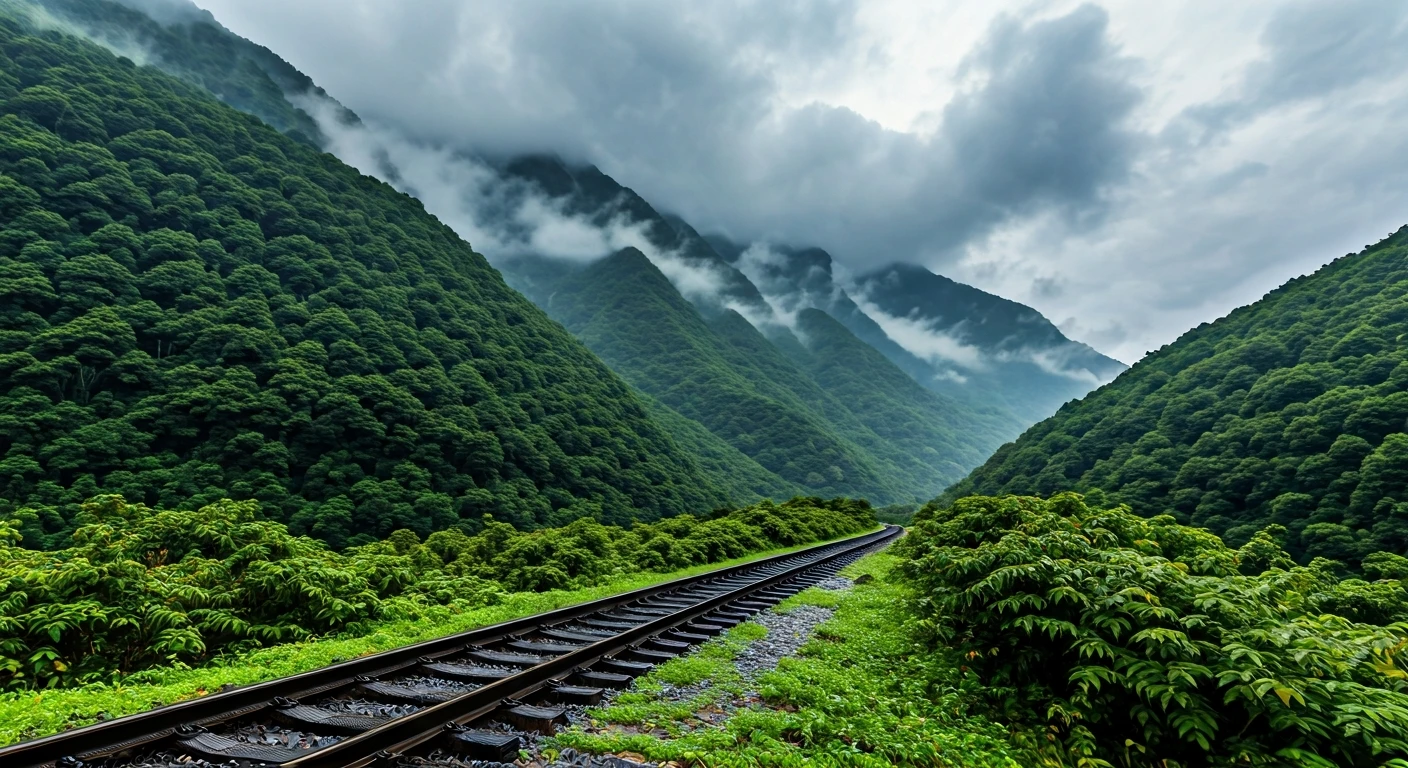




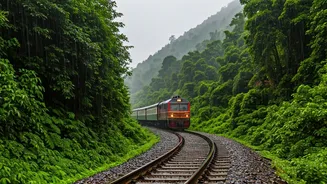


The Romance of a Rain-Soaked Journey
There’s a reason why so many travellers dream of taking a train through India during the monsoon. It’s a sensory overload in the best possible way. The dry, dusty landscapes of summer transform into a lush, vibrant tapestry. Waterfalls, non-existent just
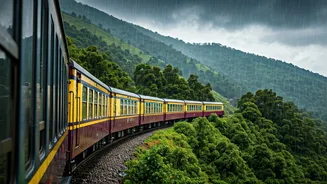
weeks before, suddenly cascade down cliffs right beside the tracks on routes like the Konkan Railway. The journey from Mumbai to Goa, for instance, becomes a spectacular show of nature's power and beauty, with the Western Ghats shrouded in mist and paddy fields glowing under dramatic skies. Similarly, the heritage toy trains to Shimla and Ooty offer a different kind of magic, climbing slowly through misty mountains, pine forests, and fragrant tea estates. It’s an experience that promises not just travel, but a deep, restorative connection with nature.
The Reality: Delays, Diversions, and Dampness
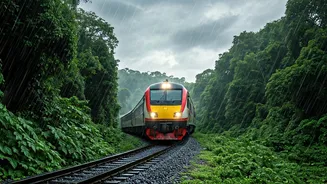
The same rain that creates this beauty also brings significant operational challenges. For Indian Railways, the monsoon is a season of high alert. Landslides are a frequent and serious threat on hill routes, particularly the Kalka-Shimla track and the ghat sections near Mumbai and Pune. These incidents can lead to track blockages that suspend services for hours or even days. In low-lying coastal and urban areas, waterlogging is the main culprit, with tracks submerging and forcing trains to be cancelled, diverted, or heavily delayed. Even onboard, the experience can be less than ideal, with reports of leaky air-conditioned coaches and damp, humid conditions making the journey uncomfortable. These aren't just minor inconveniences; they can derail entire travel plans.
Know Before You Go: The Monsoon Timetable
One of the most crucial pieces of information many travellers miss is the existence of the official Monsoon Timetable. The Konkan Railway, a route especially vulnerable to the elements, implements this special schedule from mid-June to late October annually. Under this timetable, train speeds are reduced for safety, and the departure and arrival times for many popular services—including the Vande Bharat and Tejas Express—are significantly changed. Some trains may also run with reduced frequency. Assuming the regular timetable is a recipe for disaster, leading to missed connections or long, frustrating waits at the station. This is the first and most important step of any good travel guide: check the official, updated monsoon schedule before you even think about booking.
A Practical Pre-Travel Checklist
Being prepared can mean the difference between a memorable adventure and a miserable trip. First, build flexibility into your itinerary. Add buffer days to your plan to account for potential delays. Second, pack smart. Waterproofing is non-negotiable. Use waterproof bags or dry sacks for your electronics, documents, and a change of clothes. A quick-dry towel, a sturdy raincoat, and anti-slip footwear are your best friends. Third, stay informed. Download the NTES app or use other reliable railway apps to track your train's live status. This real-time information is far more valuable than the static schedule, especially when disruptions occur. Finally, consider your health. Pack a small medical kit and be cautious about eating from platform vendors where hygiene might be compromised by the damp conditions.
Onboard Smarts for a Smoother Ride
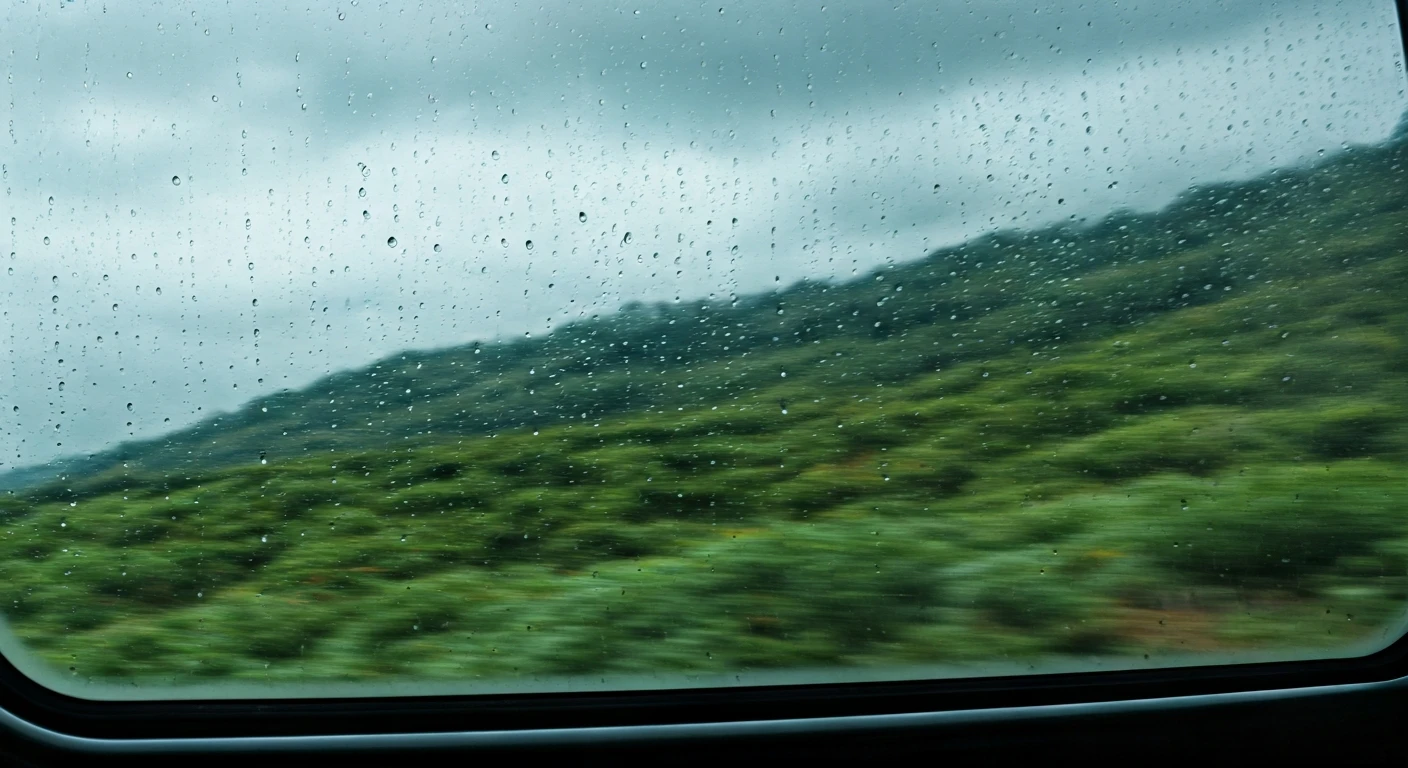
Once you're on the train, a few simple habits can improve your journey. Secure your luggage, especially if you're in a lower berth, to protect it from damp floors or potential leaks. While the urge to stand at the open door and feel the rain is strong, it's a significant safety risk. The train floor can be slippery, visibility is poor, and sudden lurches are common. Find a window seat instead—the views are just as good and infinitely safer. For food, it’s wise to carry your own snacks and a reusable water bottle. If you do buy food, opt for hot, freshly cooked items. During long, unscheduled stops—a real possibility during the monsoon—having a fully charged power bank, a good book, or downloaded movies can be a lifesaver.