




The Great Unlocking: A Policy Revolution
The pivotal moment for India's private space industry arrived in June 2020. The government announced a landmark policy shift, formally ending the state's monopoly and opening the final frontier to private enterprise. This wasn't about privatising ISRO,
but empowering it to focus on deep-space research and strategic missions while private players take over routine manufacturing and commercial launches. To guide this transition, the Indian National Space Promotion and Authorisation Centre (IN-SPACe) was established. Acting as a single-window agency, IN-SPACe's role is to promote, authorise, and supervise private space activities, giving startups access to ISRO's world-class testing facilities and expertise. This created the foundation for a vibrant ecosystem to emerge.
Meet The Trailblazers: Skyroot and Agnikul
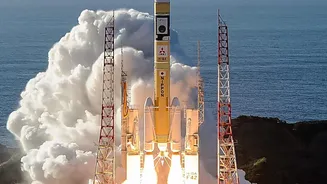
Out of this new environment, several stars have emerged, none brighter than Skyroot Aerospace and Agnikul Cosmos. Founded by former ISRO scientists, Hyderabad-based Skyroot Aerospace made history in July 2026 by successfully launching Vikram-1, India's first privately-built orbital-class rocket. This milestone launch demonstrated a capability previously held by only the US and China. The company is already preparing for its second Vikram-1 mission, signalling a clear intent to establish a regular and reliable launch service for the booming small satellite market. Meanwhile, Chennai-based Agnikul Cosmos is carving its own niche with cutting-edge technology. The company is a pioneer in 3D-printed rocket engines, which drastically reduce manufacturing time and complexity. Agnikul is also aiming for the holy grail of modern rocketry: reusability. It has announced ambitious plans to recover its rocket boosters, a technology that could dramatically lower the cost of accessing space.
More Than Just Rockets
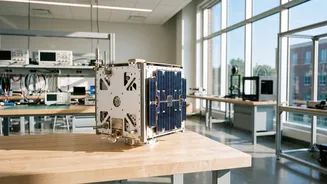
The private space race extends far beyond launch vehicles. A whole ecosystem of companies is building out different parts of the space value chain. Bengaluru-based Pixxel, for example, is deploying a constellation of the world's highest-resolution hyperspectral imaging satellites. These satellites provide incredibly detailed data that can be used to monitor everything from crop health to environmental pollution. While they currently launch on foreign rockets, companies like Pixxel represent the built-in domestic demand that will fuel India’s private launch providers. Other startups like Dhruva Space are building satellite platforms, while OrbitAID is developing technology for in-orbit services like satellite refueling, a key component for a sustainable space economy.
The Economic Stakes
The push to privatise is fueled by massive economic potential. India's space economy, currently valued at around $8.4 billion, accounts for about 2-3% of the global market. However, with the surge in private activity, projections estimate it could grow five-fold to $44 billion within the next decade. The number of registered space startups has exploded from just one in 2014 to nearly 440 in 2026. This growth is being supercharged by liberalised Foreign Direct Investment (FDI) policies and a clear signal from the government that private enterprise is a critical partner in India's future space endeavours. This transformation isn't just about big numbers; it's about creating high-skilled jobs and fostering a culture of deep-tech innovation.
The Road Ahead: Reliability and The Next Frontier
For companies like Skyroot, the next few years will be about moving from a historic first launch to a proven, reliable cadence that can win over international customers. For Agnikul, the challenge lies in mastering its 3D-printing process at scale and turning its reusability ambitions into reality. For the entire sector, the journey involves scaling from prototypes to commercial production, a path that requires significant capital and specialised infrastructure. The government's role will continue to be crucial, not just as a regulator but as an anchor customer. As ISRO increasingly focuses on its Gaganyaan human spaceflight program and a future Indian space station, it will rely on these private partners to service Low Earth Orbit, creating a powerful domestic market that will allow these companies to compete globally.