






The Problem with 'Plane Time' Meals
Long-haul flights are a modern marvel, but the dining experience can feel stuck in the past. Meal services on planes often operate on a schedule dictated by airline logistics rather than passenger wellness. Typically, a main meal is served shortly after
takeoff and a smaller one before landing. While this is efficient for the crew, it often means you're eating a heavy dinner at 4 p.m. or a breakfast box when your body clock is screaming it's the middle of the night. This disruption to your normal eating schedule is more than just a minor annoyance; it’s a key contributor to the fatigue, bloating, and general grogginess we often blame entirely on jet lag.
How Flying Affects Your Body and Appetite
The environment inside an airplane cabin is unique, and it has a significant effect on your body. The low humidity is dehydrating, while the cabin pressure, equivalent to being at an altitude of about 8,000 feet, can cause gas in your digestive system to expand. This is why many travellers experience bloating. Furthermore, our sense of taste is dulled at altitude. To compensate, airline food is often loaded with extra salt and sugar to make it more palatable, which can leave you feeling sluggish and even more dehydrated. When you combine these physiological stresses with eating at odd hours, your digestive system, which is already working slower, can become overwhelmed.
The Simple Solution: Pack Your Own Comfort
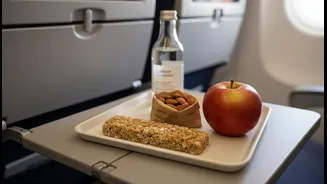
The most effective way to combat the misaligned meal schedule is to take control yourself. This is where the “familiar snack” comes into play. By packing your own light, healthy, and easily digestible foods, you can eat when you are genuinely hungry, not just when the trolley comes around. This simple act puts you in charge of your own circadian rhythm, helping your body adjust more smoothly to a new time zone. Opting out of the heavy, processed airline meal in favour of your own snack can help you avoid the common pitfalls of in-flight dining, such as bloating, sugar crashes, and excess sodium.
What Makes an Ideal 'Familiar Snack'?
The best travel snacks are simple, non-messy, and nutrient-dense. Think of things that are easy to pack and don't have strong odours. A banana is a perfect example; it is packed with potassium and magnesium, which help with hydration and muscle relaxation. Other excellent choices include unsalted nuts like almonds or walnuts, which provide protein and healthy fats for sustained energy. Whole-grain crackers, oatmeal cups (just add hot water), or homemade granola bars offer complex carbohydrates for a steady release of energy. Fresh options like apple slices, grapes, or cucumber sticks are hydrating and rich in vitamins. The key is to choose foods that are gentle on your stomach and provide lasting fuel.
A Strategy for Your Next Flight
On your next long-haul journey, consider this strategy: eat a balanced, nutritious meal at the airport before you board. Then, during the flight, rely on your packed snacks to manage hunger. This allows you to align your eating with your destination's time zone. For instance, if the airline is serving dinner but it’s the middle of the night where you're heading, you can skip the large meal and have a light snack if needed. Always remember to stay hydrated by drinking plenty of water, which is even more crucial than food for combating travel fatigue. Bringing an empty reusable water bottle to fill up past security is a great way to ensure you always have water on hand.